Sarat Chandra Das – författare
Visar alla böcker från författaren Sarat Chandra Das. Handla med fri frakt och snabb leverans.
20 produkter
A Tibetan-English Dictionary with Sanskrit Synonyms; Volume 1
Av Sarat Chandra Das, Graham Sandberg m. fl.
Häftad, 2022
508 kr
Lägg i varukorg
Introduction to the Grammar of the Tibetan Language
Av Sarat Chandra Das, Situ Panchen
Inbunden, 2022
459 kr
Lägg i varukorg
Introduction to the Grammar of the Tibetan Language
Av Sarat Chandra Das, Situ Panchen
Häftad, 2022
328 kr
Lägg i varukorg
A Tibetan-English Dictionary with Sanskrit Synonyms; Volume 1
Av Sarat Chandra Das, Graham Sandberg m. fl.
Inbunden, 2022
642 kr
Lägg i varukorg
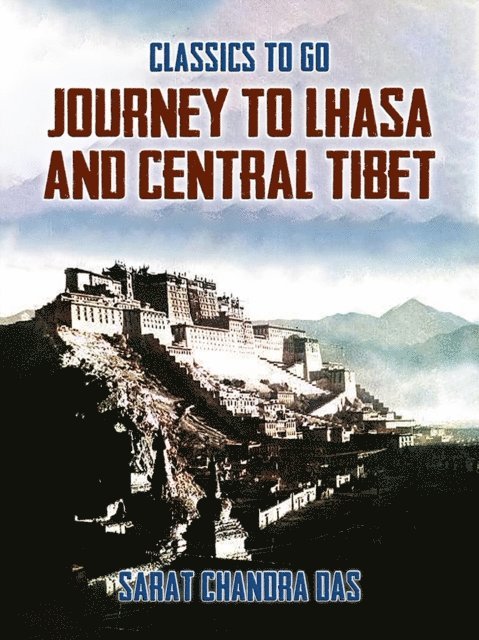
Journey to Lhasa and Central Tibet
Av Sarat Chandra Das, William Woodville Rockhill
Häftad, 2025
187 kr
Lägg i varukorg
A Tibetan-English Dictionary: With Sanskrit Synonyms (1902)
Av Sarat Chandra Das, Graham Sandberg
Häftad
896 kr
Lägg i varukorg
A Tibetan-English Dictionary: With Sanskrit Synonyms (1902)
Av Sarat Chandra Das, Graham Sandberg
Inbunden
1065 kr
Lägg i varukorg
Indian Pandits in the land of snow
Av Sarat Chandra Das, Nobin Chandra Das
Häftad, 2016
308 kr
Lägg i varukorg
Journey to Lhasa and Central Tibet
E-bok, 2022
29 kr
Lägg i varukorg
A classic book describing the journey the Author has made to Lhasa, the capital city of Tibet and to Central Tibet, when the land was untouched by the outside world, before the Chinese occupation. (Amazon)
Journey to Lhasa
The Diary of a Spy
E-bok, 2017
119 kr
Lägg i varukorg
In 1874, the brilliant civil engineer Sarat Chandra Das was recruited by the British as a spy in Darjeeling. The Empire wanted to train local agents to gather in-depth intelligence about Tibet—a mysterious kingdom closed off to all outsiders for years—in order to consolidate their position in South …