Sareta Ashraph – författare
Visar alla böcker från författaren Sareta Ashraph. Handla med fri frakt och snabb leverans.
4 produkter
4 produkter
Inbunden, Engelska, 2020
1 308 kr
Skickas inom 7-10 vardagar
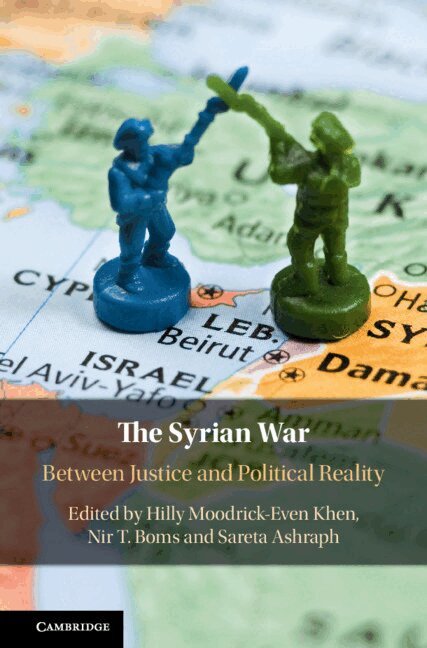
Starting as a civil uprising calling for liberal reforms in March 2011, the unrest in Syria rapidly deteriorated into a proxy-led armed conflict involving multiple state-sponsored and non-state actors, including foreign militias and local armed groups. The current state of affairs in Syria, and the uncertainty regarding its future, raise numerous questions for scholars and practitioners of both international law and politics about justice within the context of a changing political reality in Syria. This book contributes uniquely to the scholarship on the Syrian war, raising voices from the Middle East and beyond not often heard within this research context. The volume is divided into three sections: Part I sets the factual and legal framework for the Syrian conflict; Part II focuses on the implications of the conflict for the Syrian neighbourhood; and Part III analyses possible post-conflict scenarios. Together, they address the key themes and questions of the conflicts.
Häftad, Engelska, 2021
427 kr
Skickas inom 7-10 vardagar
Starting as a civil uprising calling for liberal reforms in March 2011, the unrest in Syria rapidly deteriorated into a proxy-led armed conflict involving multiple state-sponsored and non-state actors, including foreign militias and local armed groups. The current state of affairs in Syria, and the uncertainty regarding its future, raise numerous questions for scholars and practitioners of both international law and politics about justice within the context of a changing political reality in Syria. This book contributes uniquely to the scholarship on the Syrian war, raising voices from the Middle East and beyond not often heard within this research context. The volume is divided into three sections: Part I sets the factual and legal framework for the Syrian conflict; Part II focuses on the implications of the conflict for the Syrian neighbourhood; and Part III analyses possible post-conflict scenarios. Together, they address the key themes and questions of the conflicts.
E-bok
PDF, Engelska, 2020495 kr
Läs direkt efter köp
Starting as a civil uprising calling for liberal reforms in March 2011, the unrest in Syria rapidly deteriorated into a proxy-led armed conflict involving multiple state-sponsored and non-state actors, including foreign militias and local armed groups. The current state of affairs in Syria, and the uncertainty regarding its future, raise numerous questions for scholars and practitioners of both international law and politics about justice within the context of a changing political reality in Syria. This book contributes uniquely to the scholarship on the Syrian war, raising voices from the Middle East and beyond not often heard within this research context. The volume is divided into three sections: Part I sets the factual and legal framework for the Syrian conflict; Part II focuses on the implications of the conflict for the Syrian neighbourhood; and Part III analyses possible post-conflict scenarios. Together, they address the key themes and questions of the conflicts.
E-bok
Engelska, 2020495 kr
Läs direkt efter köp
Starting as a civil uprising calling for liberal reforms in March 2011, the unrest in Syria rapidly deteriorated into a proxy-led armed conflict involving multiple state-sponsored and non-state actors, including foreign militias and local armed groups. The current state of affairs in Syria, and the uncertainty regarding its future, raise numerous questions for scholars and practitioners of both international law and politics about justice within the context of a changing political reality in Syria. This book contributes uniquely to the scholarship on the Syrian war, raising voices from the Middle East and beyond not often heard within this research context. The volume is divided into three sections: Part I sets the factual and legal framework for the Syrian conflict; Part II focuses on the implications of the conflict for the Syrian neighbourhood; and Part III analyses possible post-conflict scenarios. Together, they address the key themes and questions of the conflicts.