Sarfaraz Ahmed Khan – författare
Visar alla böcker från författaren . Handla med fri frakt och snabb leverans.
6 produkter
6 produkter
E-bok
PDF, Engelska, 2026805 kr
Läs direkt efter köp
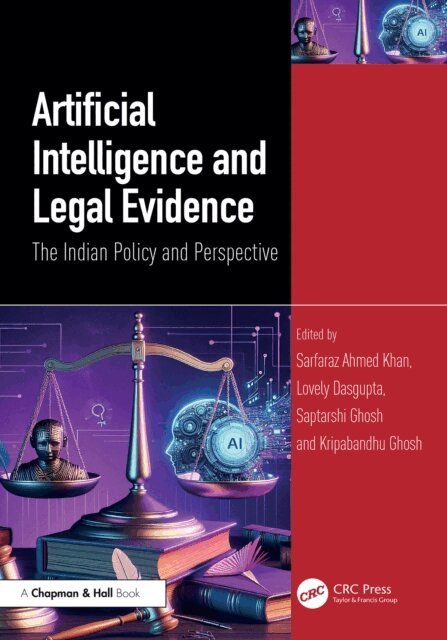
This book explores AI's impact on legal evidence, with a particular focus on its use within Indian law, by identifying the key feature of an Artificial intelligence-driven Justice Delivery System. It seeks to bridge the gap in the literature on the intersection of AI and law, specifically the evaluation of evidence. The book focuses on AI's potential to enhance the evaluation of evidence in various legal contexts. It considers the reliability, admissibility, and standardisation of AI-generated evidence in legal proceedings.The key features of the book are:* Presents case studies and examples from multiple branches of law, exploring AI's use in evidence collection, analysis, and evaluation across diverse legal domains.* Offering a unique perspective on AI and legal evidence within India, the book provides a critical look at how AI can be integrated into India's legal framework and the implications for the country's judicial system.* Addresses the policy gaps and regulatory frameworks needed to govern AI in the legal sphere, with a focus on India's evolving stance on AI.* Emphasizes the need for ethical standards and privacy protection while using AI to evaluate legal evidence, examines the challenges in ensuring the validity and fairness of AI-generated evidence.* Highlights the future potential of AI in transforming the legal industry, particularly in terms of improving efficiency, reducing bias, and enabling more effective evidence evaluation.The book will be useful for academicians and scholars interested in Artificial Intelligence's impact and use in the legal system.
E-bok
Engelska, 2026805 kr
Läs direkt efter köp
This book explores AI's impact on legal evidence, with a particular focus on its use within Indian law, by identifying the key feature of an Artificial intelligence-driven Justice Delivery System. It seeks to bridge the gap in the literature on the intersection of AI and law, specifically the evaluation of evidence. The book focuses on AI's potential to enhance the evaluation of evidence in various legal contexts. It considers the reliability, admissibility, and standardisation of AI-generated evidence in legal proceedings.The key features of the book are:* Presents case studies and examples from multiple branches of law, exploring AI's use in evidence collection, analysis, and evaluation across diverse legal domains.* Offering a unique perspective on AI and legal evidence within India, the book provides a critical look at how AI can be integrated into India's legal framework and the implications for the country's judicial system.* Addresses the policy gaps and regulatory frameworks needed to govern AI in the legal sphere, with a focus on India's evolving stance on AI.* Emphasizes the need for ethical standards and privacy protection while using AI to evaluate legal evidence, examines the challenges in ensuring the validity and fairness of AI-generated evidence.* Highlights the future potential of AI in transforming the legal industry, particularly in terms of improving efficiency, reducing bias, and enabling more effective evidence evaluation.The book will be useful for academicians and scholars interested in Artificial Intelligence's impact and use in the legal system.
Inbunden, Engelska, 2026
1 058 kr
Skickas inom 10-15 vardagar
Inbunden, Engelska, 2021
1 486 kr
Skickas inom 10-15 vardagar
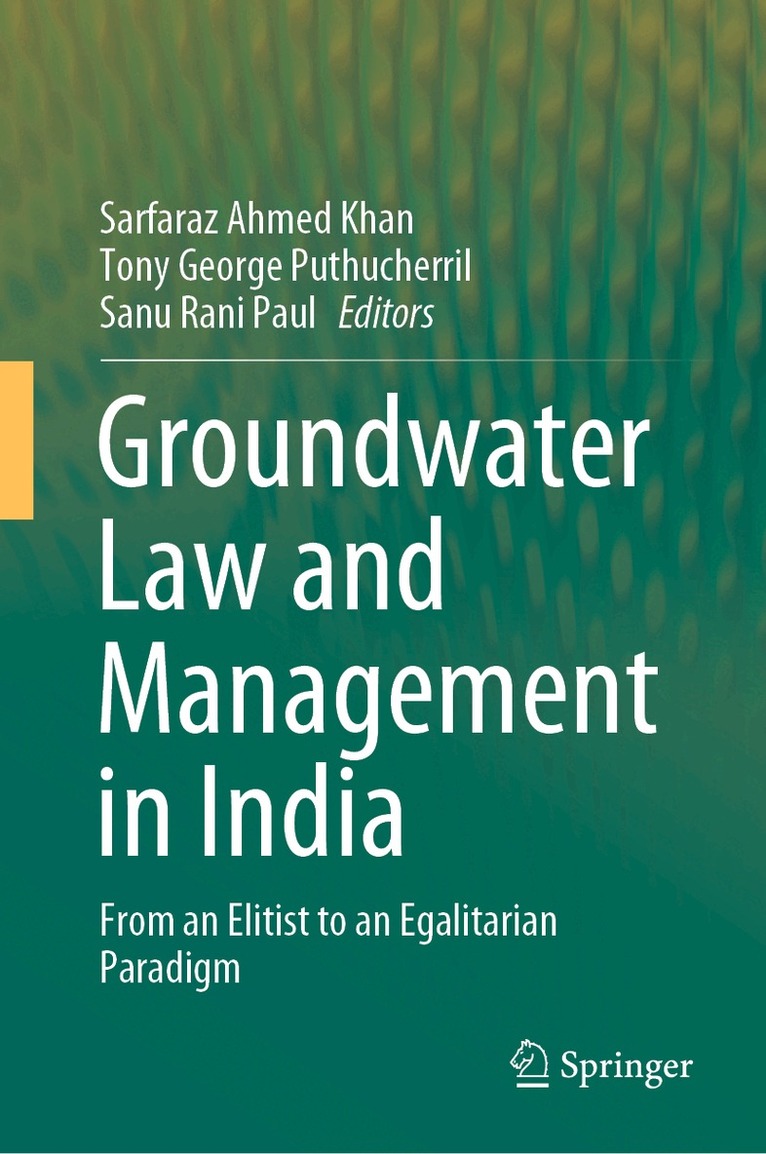
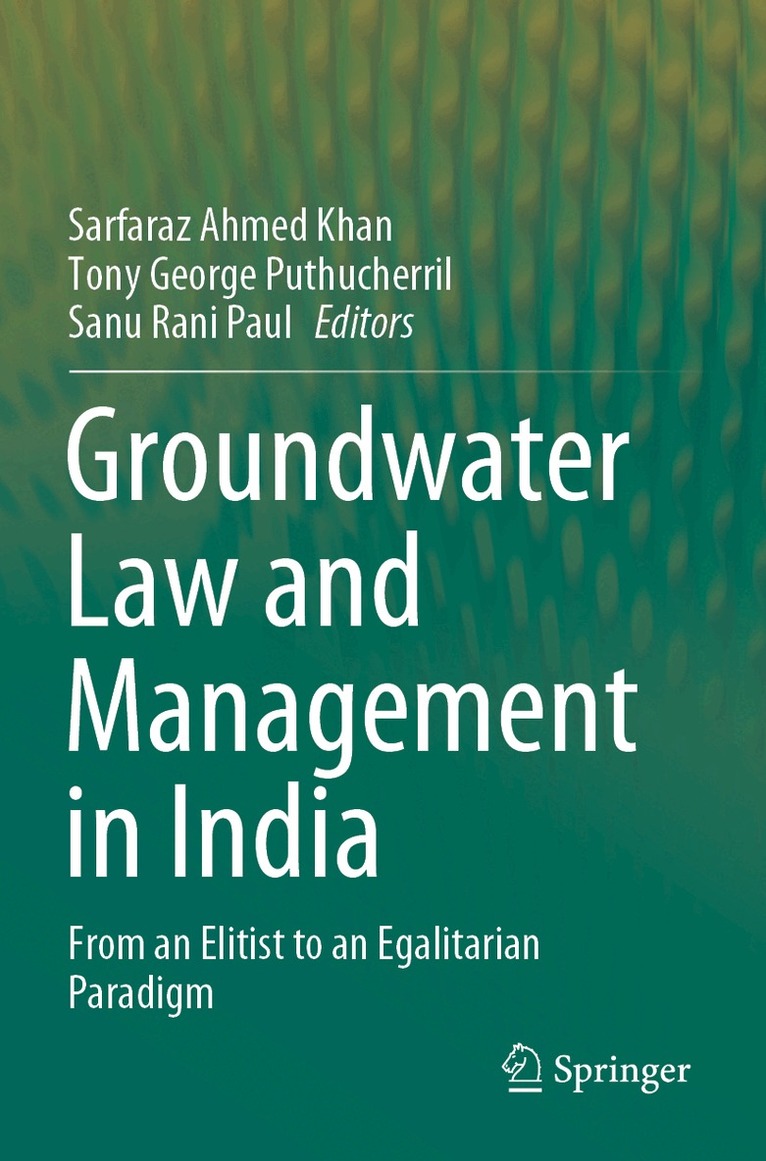
This book presents a comprehensive analysis of the existing nature of India’s groundwater laws. In the backdrop of the gravity of groundwater crisis that threatens to engulf the country, the book examines the correlation between the imperfections in the law and water crisis and advocates a reform agenda to overhaul the legal framework. It accomplishes this objective by examining how some of the States and Union Territories regulate and manage groundwater through the legal instrumentality against the backdrop of the two conflicting paradigms: the “elitist” and the “egalitarian.” The book’s fundamental premise is that despite being an extraordinarily critical resource that supports India’s burgeoning population’s ever-increasing water demands, groundwater is abused and mismanaged. The key argument that it posits is that the elitist paradigm must give way to an egalitarian one where groundwater is treated as a common property resource. To place this message in perspective, the book’s introduction explains the dichotomy between the two paradigms in the context of groundwater. This sets the stage, after which the book is divided thematically into three parts. The first part deals with some of the general groundwater management concerns brought to the fore by the operation of the elitist paradigm. Since water is constitutionally a State subject, the second part analyses the groundwater legislations of different States and Union Territories set against their unique circumstances. As these laws do not dismantle the elitist paradigm that interlocks groundwater rights to land rights, the next part articulates the legal reform agenda where a case is made to re-engineer groundwater laws to reflect a more sustainable basis. The findings and arguments resonate with the situation in many developing countries around the world due to which the book is a valuable resource for researchers across disciplines studying this area, and also for policy makers, think tanks, and NGOs.Groundwater Management–Inter-state Water Conflicts–Aquifers–Water Markets–Water Security–Water Law Reform–Groundwater Law–Water Law–Sustainable Development–Hydrology
E-bok
Engelska, 20211 885 kr
Läs direkt efter köp
This book presents a comprehensive analysis of the existing nature of India’s groundwater laws. In the backdrop of the gravity of groundwater crisis that threatens to engulf the country, the book examines the correlation between the imperfections in the law and water crisis and advocates a reform agenda to overhaul the legal framework. It accomplishes this objective by examining how some of the States and Union Territories regulate and manage groundwater through the legal instrumentality against the backdrop of the two conflicting paradigms: the “elitist” and the “egalitarian.” The book’s fundamental premise is that despite being an extraordinarily critical resource that supports India’s burgeoning population’s ever-increasing water demands, groundwater is abused and mismanaged. The key argument that it posits is that the elitist paradigm must give way to an egalitarian one where groundwater is treated as a common property resource. To place this message in perspective, the book’s introduction explains the dichotomy between the two paradigms in the context of groundwater. This sets the stage, after which the book is divided thematically into three parts. The first part deals with some of the general groundwater management concerns brought to the fore by the operation of the elitist paradigm. Since water is constitutionally a State subject, the second part analyses the groundwater legislations of different States and Union Territories set against their unique circumstances. As these laws do not dismantle the elitist paradigm that interlocks groundwater rights to land rights, the next part articulates the legal reform agenda where a case is made to re-engineer groundwater laws to reflect a more sustainable basis. The findings and arguments resonate with the situation in many developing countries around the world due to which the book is a valuable resource for researchers across disciplines studying this area, and also for policy makers, think tanks, and NGOs.
Groundwater Management–Inter-state Water Conflicts–Aquifers–Water Markets–Water Security–Water Law Reform–Groundwater Law–Water Law–Sustainable Development–Hydrology
Häftad, Engelska, 2022
1 486 kr
Skickas inom 10-15 vardagar
This book presents a comprehensive analysis of the existing nature of India’s groundwater laws. In the backdrop of the gravity of groundwater crisis that threatens to engulf the country, the book examines the correlation between the imperfections in the law and water crisis and advocates a reform agenda to overhaul the legal framework. It accomplishes this objective by examining how some of the States and Union Territories regulate and manage groundwater through the legal instrumentality against the backdrop of the two conflicting paradigms: the “elitist” and the “egalitarian.” The book’s fundamental premise is that despite being an extraordinarily critical resource that supports India’s burgeoning population’s ever-increasing water demands, groundwater is abused and mismanaged. The key argument that it posits is that the elitist paradigm must give way to an egalitarian one where groundwater is treated as a common property resource. To place this message in perspective, the book’s introduction explains the dichotomy between the two paradigms in the context of groundwater. This sets the stage, after which the book is divided thematically into three parts. The first part deals with some of the general groundwater management concerns brought to the fore by the operation of the elitist paradigm. Since water is constitutionally a State subject, the second part analyses the groundwater legislations of different States and Union Territories set against their unique circumstances. As these laws do not dismantle the elitist paradigm that interlocks groundwater rights to land rights, the next part articulates the legal reform agenda where a case is made to re-engineer groundwater laws to reflect a more sustainable basis. The findings and arguments resonate with the situation in many developing countries around the world due to which the book is a valuable resource for researchers across disciplines studying this area, and also for policy makers, think tanks, and NGOs.Groundwater Management–Inter-state Water Conflicts–Aquifers–Water Markets–Water Security–Water Law Reform–Groundwater Law–Water Law–Sustainable Development–Hydrology