Tony George Puthucherril – författare
Visar alla böcker från författaren Tony George Puthucherril. Handla med fri frakt och snabb leverans.
4 produkter
4 produkter
Del 5 - Legal Aspects of Sustainable Development
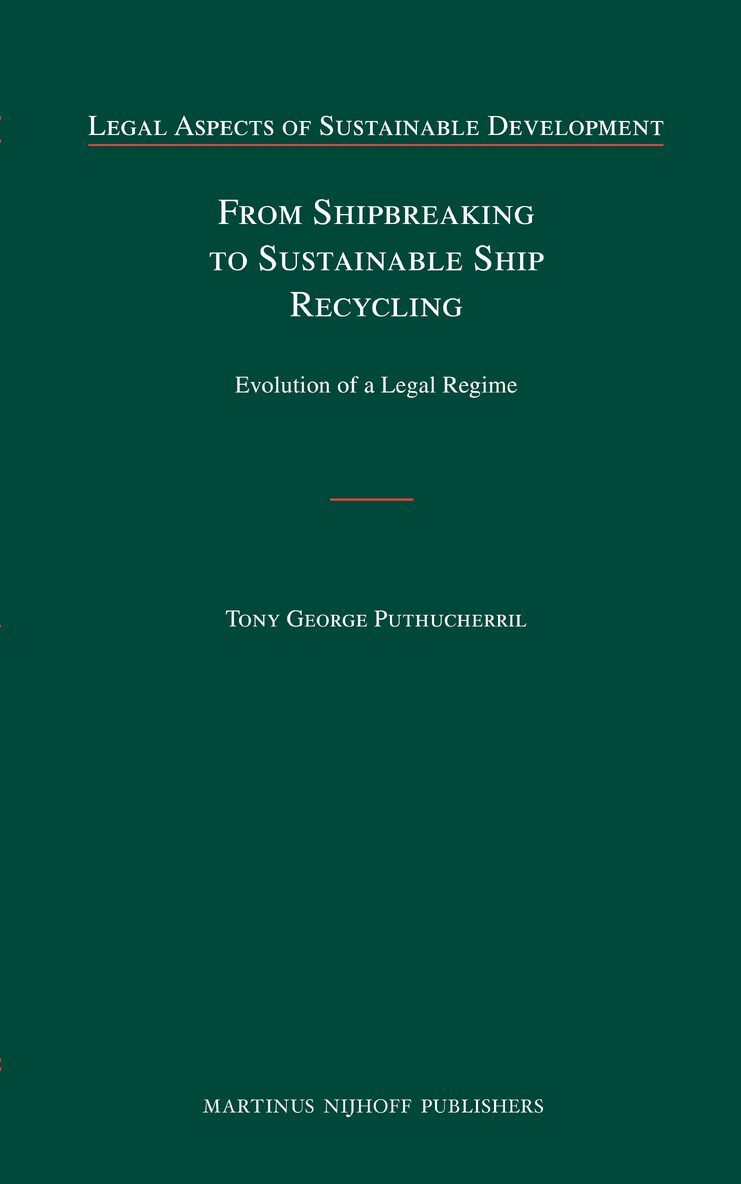
From Shipbreaking to Sustainable Ship Recycling
Evolution of a Legal Regime
Inbunden, Engelska, 2010
2 366 kr
Skickas inom 5-8 vardagar
Ship recycling conserves resources, employs an unskilled workforce, and removes outdated tonnage. Operating mainly on the Indian subcontinent, this ‘primitive’ industry often results in loss of human life and pollution of the marine environment. Despite moral indignation, the international community has struggled to manage this industry and only recently completed the IMO International Convention for the Safe and Environmentally Sound Recycling of Ships. Using the Indian experience on shipbreaking as a case study, this book assesses the strengths and weaknesses of the Convention. The author argues that the Convention may not succeed because it fails to strike a balance between environmental protection, human rights, and commercial realities. The book offers recommendations for a holistic and integrated approach to a sustainable ship recycling industry.
Inbunden, Engelska, 2021
1 487 kr
Skickas inom 10-15 vardagar
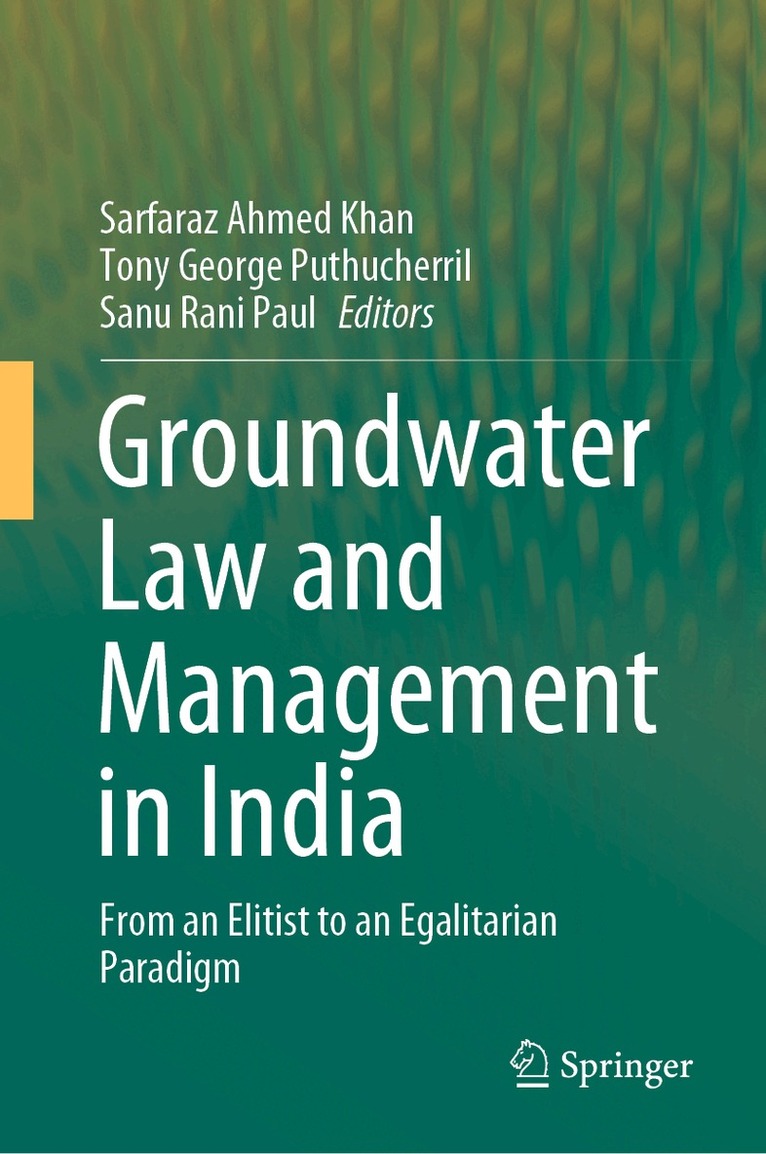
This book presents a comprehensive analysis of the existing nature of India’s groundwater laws. In the backdrop of the gravity of groundwater crisis that threatens to engulf the country, the book examines the correlation between the imperfections in the law and water crisis and advocates a reform agenda to overhaul the legal framework. It accomplishes this objective by examining how some of the States and Union Territories regulate and manage groundwater through the legal instrumentality against the backdrop of the two conflicting paradigms: the “elitist” and the “egalitarian.” The book’s fundamental premise is that despite being an extraordinarily critical resource that supports India’s burgeoning population’s ever-increasing water demands, groundwater is abused and mismanaged. The key argument that it posits is that the elitist paradigm must give way to an egalitarian one where groundwater is treated as a common property resource. To place this message in perspective, the book’s introduction explains the dichotomy between the two paradigms in the context of groundwater. This sets the stage, after which the book is divided thematically into three parts. The first part deals with some of the general groundwater management concerns brought to the fore by the operation of the elitist paradigm. Since water is constitutionally a State subject, the second part analyses the groundwater legislations of different States and Union Territories set against their unique circumstances. As these laws do not dismantle the elitist paradigm that interlocks groundwater rights to land rights, the next part articulates the legal reform agenda where a case is made to re-engineer groundwater laws to reflect a more sustainable basis. The findings and arguments resonate with the situation in many developing countries around the world due to which the book is a valuable resource for researchers across disciplines studying this area, and also for policy makers, think tanks, and NGOs.Groundwater Management–Inter-state Water Conflicts–Aquifers–Water Markets–Water Security–Water Law Reform–Groundwater Law–Water Law–Sustainable Development–Hydrology
E-bok
Engelska, 20211 885 kr
Läs direkt efter köp
This book presents a comprehensive analysis of the existing nature of India’s groundwater laws. In the backdrop of the gravity of groundwater crisis that threatens to engulf the country, the book examines the correlation between the imperfections in the law and water crisis and advocates a reform agenda to overhaul the legal framework. It accomplishes this objective by examining how some of the States and Union Territories regulate and manage groundwater through the legal instrumentality against the backdrop of the two conflicting paradigms: the “elitist” and the “egalitarian.” The book’s fundamental premise is that despite being an extraordinarily critical resource that supports India’s burgeoning population’s ever-increasing water demands, groundwater is abused and mismanaged. The key argument that it posits is that the elitist paradigm must give way to an egalitarian one where groundwater is treated as a common property resource. To place this message in perspective, the book’s introduction explains the dichotomy between the two paradigms in the context of groundwater. This sets the stage, after which the book is divided thematically into three parts. The first part deals with some of the general groundwater management concerns brought to the fore by the operation of the elitist paradigm. Since water is constitutionally a State subject, the second part analyses the groundwater legislations of different States and Union Territories set against their unique circumstances. As these laws do not dismantle the elitist paradigm that interlocks groundwater rights to land rights, the next part articulates the legal reform agenda where a case is made to re-engineer groundwater laws to reflect a more sustainable basis. The findings and arguments resonate with the situation in many developing countries around the world due to which the book is a valuable resource for researchers across disciplines studying this area, and also for policy makers, think tanks, and NGOs.
Groundwater Management–Inter-state Water Conflicts–Aquifers–Water Markets–Water Security–Water Law Reform–Groundwater Law–Water Law–Sustainable Development–Hydrology
Häftad, Engelska, 2022
1 487 kr
Skickas inom 10-15 vardagar
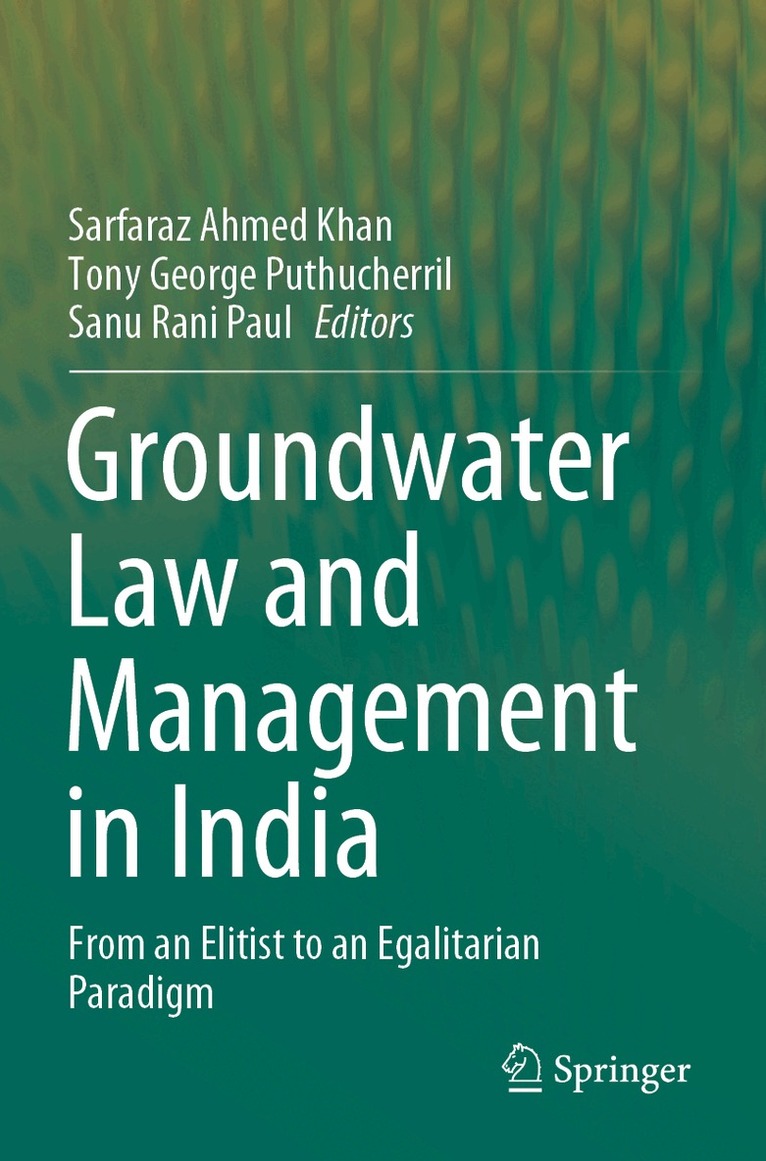
This book presents a comprehensive analysis of the existing nature of India’s groundwater laws. In the backdrop of the gravity of groundwater crisis that threatens to engulf the country, the book examines the correlation between the imperfections in the law and water crisis and advocates a reform agenda to overhaul the legal framework. It accomplishes this objective by examining how some of the States and Union Territories regulate and manage groundwater through the legal instrumentality against the backdrop of the two conflicting paradigms: the “elitist” and the “egalitarian.” The book’s fundamental premise is that despite being an extraordinarily critical resource that supports India’s burgeoning population’s ever-increasing water demands, groundwater is abused and mismanaged. The key argument that it posits is that the elitist paradigm must give way to an egalitarian one where groundwater is treated as a common property resource. To place this message in perspective, the book’s introduction explains the dichotomy between the two paradigms in the context of groundwater. This sets the stage, after which the book is divided thematically into three parts. The first part deals with some of the general groundwater management concerns brought to the fore by the operation of the elitist paradigm. Since water is constitutionally a State subject, the second part analyses the groundwater legislations of different States and Union Territories set against their unique circumstances. As these laws do not dismantle the elitist paradigm that interlocks groundwater rights to land rights, the next part articulates the legal reform agenda where a case is made to re-engineer groundwater laws to reflect a more sustainable basis. The findings and arguments resonate with the situation in many developing countries around the world due to which the book is a valuable resource for researchers across disciplines studying this area, and also for policy makers, think tanks, and NGOs.Groundwater Management–Inter-state Water Conflicts–Aquifers–Water Markets–Water Security–Water Law Reform–Groundwater Law–Water Law–Sustainable Development–Hydrology