Sarnath Ramnath – författare
Visar alla böcker från författaren Sarnath Ramnath. Handla med fri frakt och snabb leverans.
4 produkter
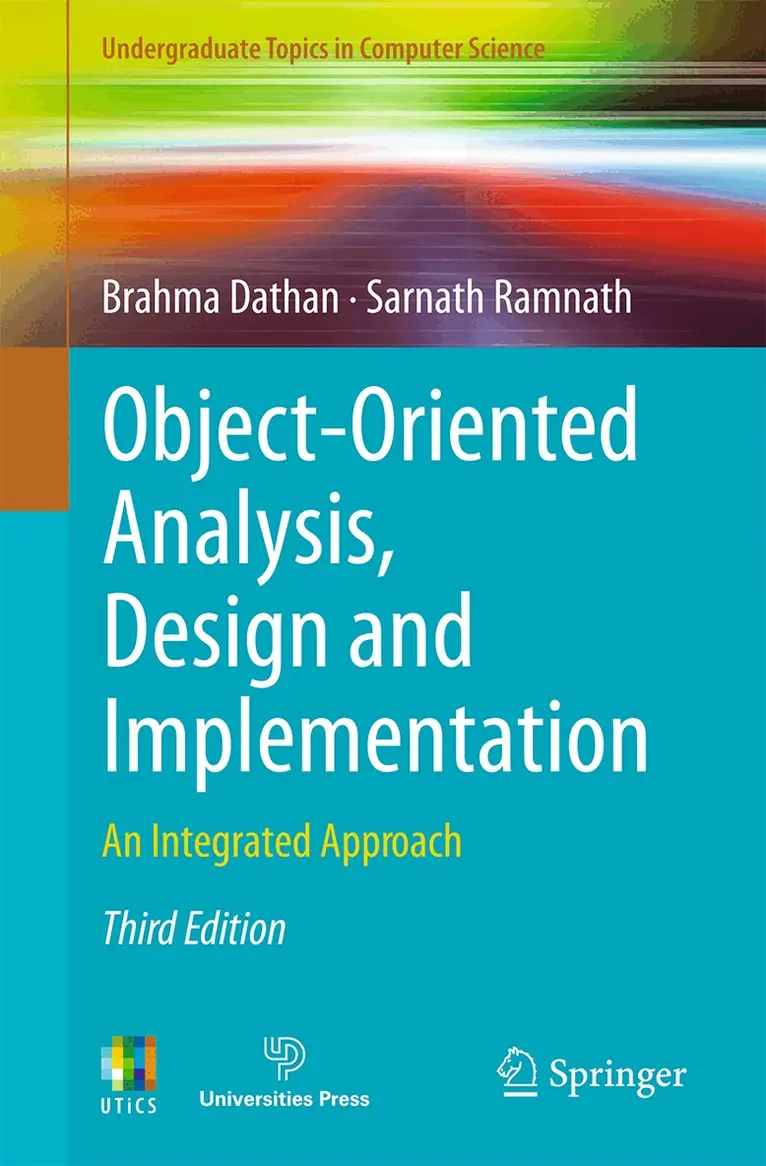
Object-Oriented Analysis, Design and Implementation
An Integrated Approach
Av Brahma Dathan, Sarnath Ramnath
Häftad, 2025
678 kr
Lägg i varukorg
This new edition demonstrates a modeling-based approach to object-oriented development. It is a significant and comprehensive revision of the book. While the central focus remains the same as in previous editions, the reader will notice substantial improvements in the presentation.Salient …
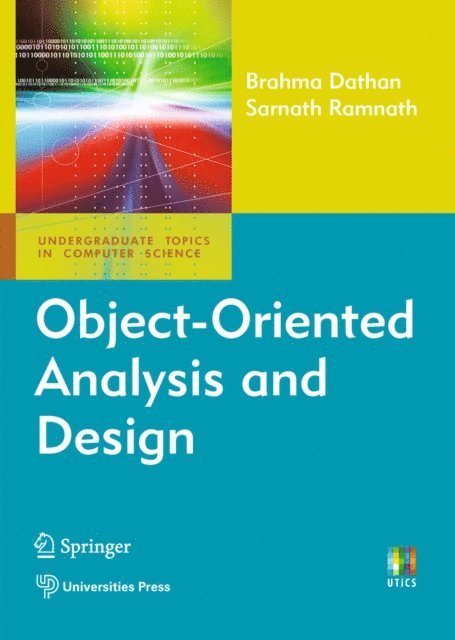
Object-Oriented Analysis and Design
Av Brahma Dathan, Sarnath Ramnath
E-bok, 2010
453 kr
Lägg i varukorg
Object-oriented analysis and design (OOAD) has over the years, become a vast field, encompassing such diverse topics as design process and principles, documentation tools, refactoring, and design and architectural patterns. For most students the learning experience is incomplete without …
Object-Oriented Analysis, Design and Implementation
An Integrated Approach
Av Sarnath Ramnath, Brahma Dathan
E-bok, 2025
923 kr
Lägg i varukorg
This new edition demonstrates a modeling-based approach to object-oriented development. It is a significant and comprehensive revision of the book. While the central focus remains the same as in previous editions, the reader will notice substantial improvements in the presentation. Salient features …
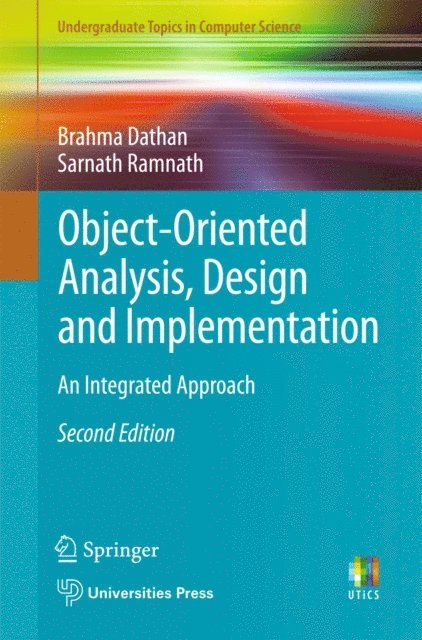
Object-Oriented Analysis, Design and Implementation
An Integrated Approach
Av Sarnath Ramnath, Brahma Dathan
E-bok, 2015
453 kr
Lägg i varukorg
The second edition of this textbook includes revisions based on the feedback on the first edition. In a new chapter the authors provide a concise introduction to the remainder of UML diagrams, adopting the same holistic approach as the first edition. Using a case-study-based approach for providing …