Satbir Singh Gosal - Böcker
Visar alla böcker från författaren Satbir Singh Gosal. Handla med fri frakt och snabb leverans.
16 produkter
16 produkter
3 281 kr
Skickas inom 7-10 vardagar
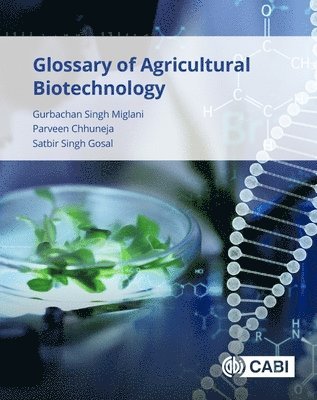
The rapid progress in molecular genetic techniques and molecular biology has led to a great expansion in the range of biotechnology applications in agriculture. The field is supported by a large number of basic and applied sciences, and agricultural biotechnology has become a multidisciplinary field. A vast amount of technical terms is required to be grasped by students, teachers and research workers and this new Glossary of Agricultural Biotechnology covers all the scientific areas in this important field, including agricultural biotechnology, artificial intelligence, bioinformatics, biostatistics, cell biology, computer science, CRISPR/Cas, cytogenetics, DNA nanotechnology, epigenetics, epigenomics, genetics, genome editing, genomics, intellectual property rights, molecular biology, molecular genetics, nanobiotechnology, plant breeding, plant pathology, plant physiology, remote sensing, therapeutics, and tissue culture. The book includes: · Common abbreviations in agricultural biotechnology · Brief descriptions and definitions of each term written in a user-friendly style · A comprehensive bibliography. This book is designed to be an easy-to-use reference for students, teachers, research workers, workers in biotechnology-related government agencies, and the biotechnology industry.
1 588 kr
Skickas inom 10-15 vardagar
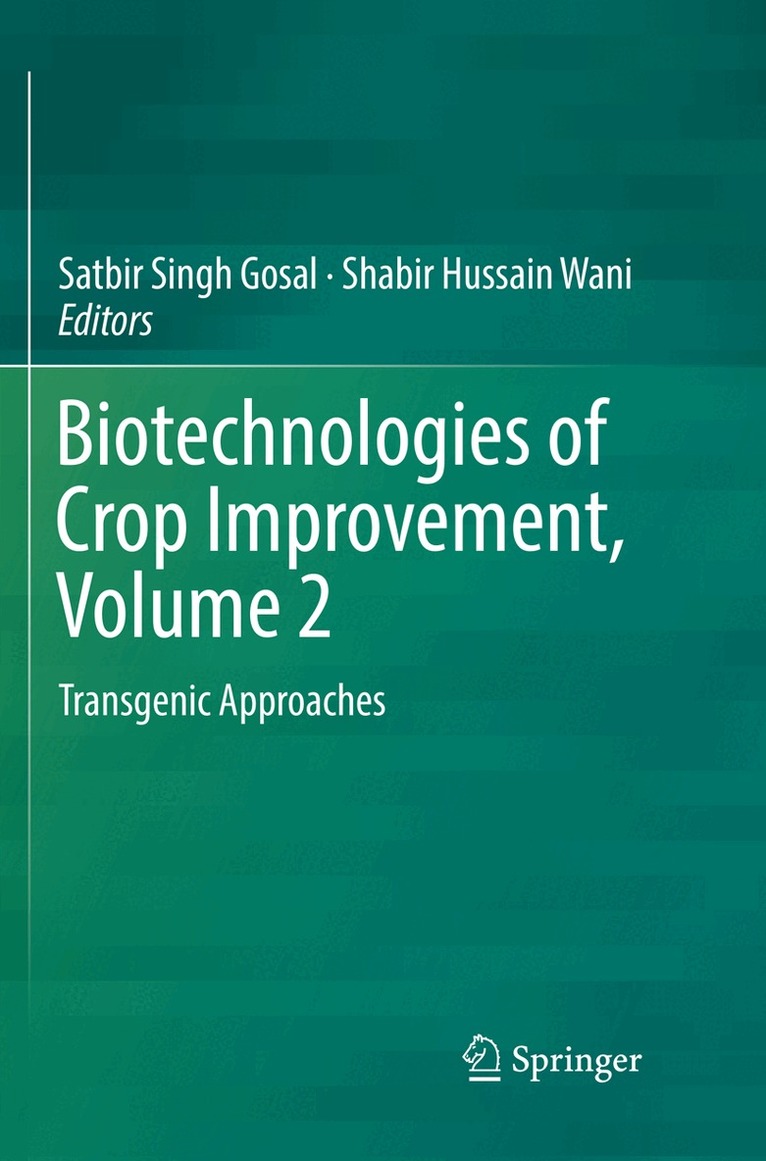
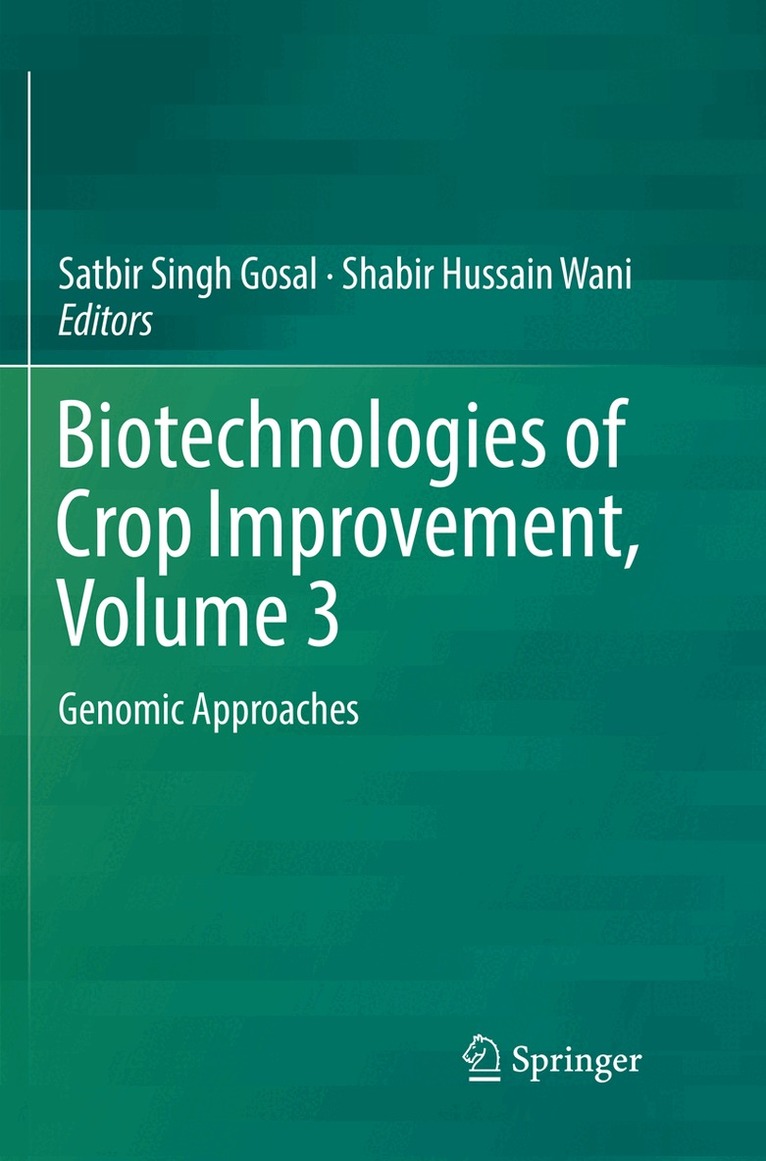
Likewise, significant advances have been made towards increasing crop yields, improving nutritional quality, enabling crops to be raised under adverse conditions and developing resistance to pests and diseases for sustaining global food and nutritional security.
1 482 kr
Skickas inom 10-15 vardagar
Likewise, significant advances have been made towards increasing crop yields, improving nutritional quality, enabling crops to be raised under adverse conditions and developing resistance to pests and diseases for sustaining global food and nutritional security.
2 115 kr
Skickas inom 10-15 vardagar
Likewise, significant advances have been made towards increasing crop yields, improving nutritional quality, enabling crops to be raised under adverse conditions and developing resistance to pests and diseases for sustaining global food and nutritional security.
1 588 kr
Skickas inom 10-15 vardagar
Plant improvement has shifted its focus from yield, quality and disease resistance to factors that will enhance commerical export, such as early maturity, shelf life and better processing quality. Conventional plant breeding methods aiming at the improvement of a self-pollinating crop, such as wheat, usually take 10-12 years to develop and release of the new variety. During the past 10 years, significant advances have been made and accelerated methods have been developed for precision breeding and early release of crop varieties. This work summarizes concepts dealing with germplasm enhancement and development of improved varieties based on innovative methodologies that include doubled haploidy, marker assisted selection, marker assisted background selection, genetic mapping, genomic selection, high-throughput genotyping, high-throughput phenotyping, mutation breeding, reverse breeding, transgenic breeding, shuttle breeding, speed breeding, low cost high-throughput field phenotyping, etc. It is an important reference with special focus on accelerated development of improved crop varieties.
1 588 kr
Skickas inom 10-15 vardagar
Plant improvement has shifted its focus from yield, quality and disease resistance to factors that will enhance commerical export, such as early maturity, shelf life and better processing quality. Conventional plant breeding methods aiming at the improvement of a self-pollinating crop, such as wheat, usually take 10-12 years to develop and release of the new variety. During the past 10 years, significant advances have been made and accelerated methods have been developed for precision breeding and early release of crop varieties. This work summarizes concepts dealing with germplasm enhancement and development of improved varieties based on innovative methodologies that include doubled haploidy, marker assisted selection, marker assisted background selection, genetic mapping, genomic selection, high-throughput genotyping, high-throughput phenotyping, mutation breeding, reverse breeding, transgenic breeding, shuttle breeding, speed breeding, low cost high-throughput field phenotyping, etc. It is an important reference with special focus on accelerated development of improved crop varieties.
2 115 kr
Skickas inom 10-15 vardagar
Plant improvement has shifted its focus from yield, quality and disease resistance to factors that will enhance commercial export, such as early maturity, shelf life and better processing quality. Conventional plant breeding methods aiming at the improvement of a self-pollinating crop, such as wheat, usually take 10-12 years to develop and release of the new variety. During the past 10 years, significant advances have been made and accelerated methods have been developed for precision breeding and early release of crop varieties. This edited volume summarizes concepts dealing with germplasm enhancement and development of improved varieties based on innovative methodologies that include doubled haploidy, marker assisted selection, marker assisted background selection, genetic mapping, genomic selection, high-throughput genotyping, high-throughput phenotyping, mutation breeding, reverse breeding, transgenic breeding, shuttle breeding, speed breeding, low cost high-throughput field phenotyping, etc. It is an important reference with special focus on accelerated development of improved crop varieties.
2 115 kr
Skickas inom 10-15 vardagar
Plant improvement has shifted its focus from yield, quality and disease resistance to factors that will enhance commercial export, such as early maturity, shelf life and better processing quality. Conventional plant breeding methods aiming at the improvement of a self-pollinating crop, such as wheat, usually take 10-12 years to develop and release of the new variety. During the past 10 years, significant advances have been made and accelerated methods have been developed for precision breeding and early release of crop varieties. This edited volume summarizes concepts dealing with germplasm enhancement and development of improved varieties based on innovative methodologies that include doubled haploidy, marker assisted selection, marker assisted background selection, genetic mapping, genomic selection, high-throughput genotyping, high-throughput phenotyping, mutation breeding, reverse breeding, transgenic breeding, shuttle breeding, speed breeding, low cost high-throughput field phenotyping, etc. It is an important reference with special focus on accelerated development of improved crop varieties.
1 588 kr
Skickas inom 10-15 vardagar
Plant improvement has shifted its focus from yield, quality and disease resistance to factors that will enhance commercial export, such as early maturity, shelf life and better processing quality. Conventional plant breeding methods aiming at the improvement of a self-pollinating crop, such as wheat, usually take 10-12 years to develop and release of the new variety. During the past 10 years, significant advances have been made and accelerated methods have been developed for precision breeding and early release of crop varieties. This work summarizes concepts dealing with germplasm enhancement and development of improved varieties based on innovative methodologies that include doubled haploidy, marker assisted selection, marker assisted background selection, genetic mapping, genomic selection, high-throughput genotyping, high-throughput phenotyping, mutation breeding, reverse breeding, transgenic breeding, shuttle breeding, speed breeding, low cost high-throughput field phenotyping, etc. It is an important reference with special focus on accelerated development of improved crop varieties.
1 588 kr
Skickas inom 10-15 vardagar
Plant improvement has shifted its focus from yield, quality and disease resistance to factors that will enhance commercial export, such as early maturity, shelf life and better processing quality. Conventional plant breeding methods aiming at the improvement of a self-pollinating crop, such as wheat, usually take 10-12 years to develop and release of the new variety. During the past 10 years, significant advances have been made and accelerated methods have been developed for precision breeding and early release of crop varieties. This work summarizes concepts dealing with germplasm enhancement and development of improved varieties based on innovative methodologies that include doubled haploidy, marker assisted selection, marker assisted background selection, genetic mapping, genomic selection, high-throughput genotyping, high-throughput phenotyping, mutation breeding, reverse breeding, transgenic breeding, shuttle breeding, speed breeding, low cost high-throughput field phenotyping, etc. It is an important reference with special focus on accelerated development of improved crop varieties.
1 798 kr
Skickas inom 10-15 vardagar
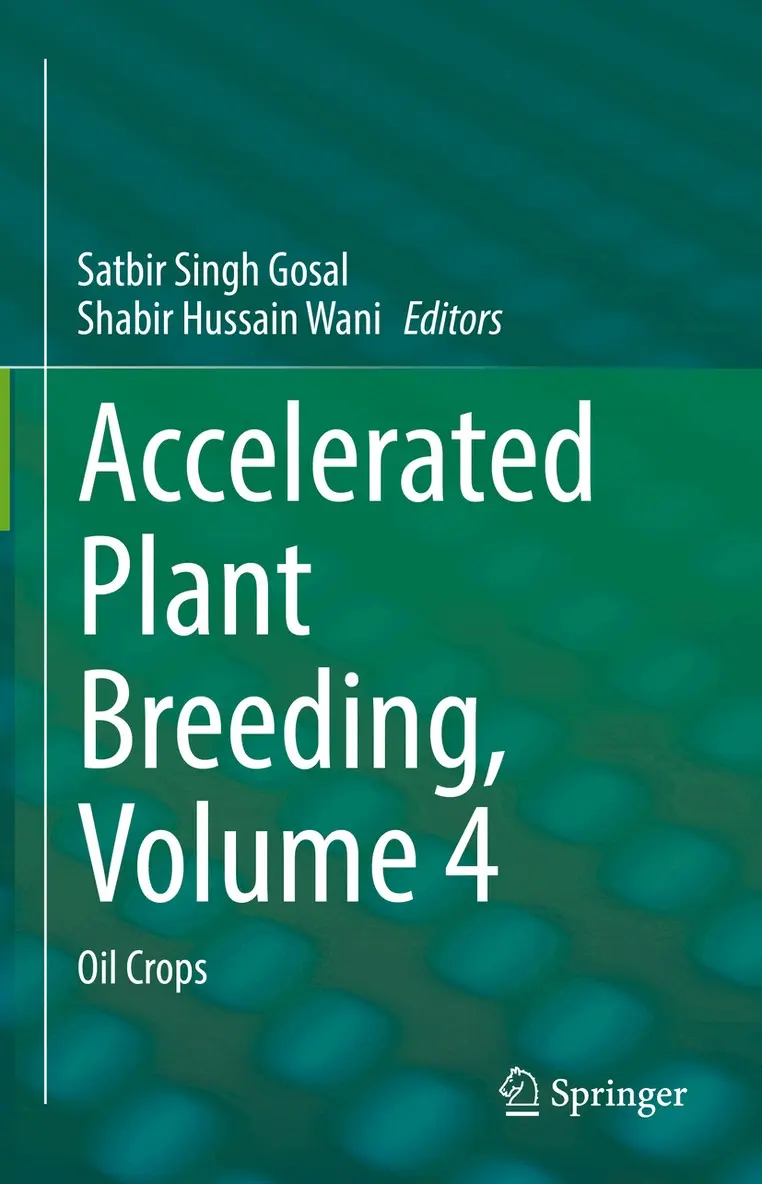
Plant improvement has shifted its focus from yield, quality and disease resistance to factors that will enhance commercial export, such as early maturity, shelf life and better processing quality. Conventional plant breeding methods aiming at the improvement of a self-pollinating crop usually take 10-12 years to develop and release of the new variety. During the past 10 years, significant advances have been made and accelerated methods have been developed for precision breeding and early release of crop varieties. This book focuses on the accelerated breeding technologies that have been adopted for major oil crops. It summarizes concepts dealing with germplasm enhancement and development of improved varieties based on innovative methodologies that include doubled haploidy, marker assisted selection, marker assisted background selection, genetic mapping, genomic selection, high-throughput genotyping, high-throughput phenotyping, mutation breeding, reverse breeding, transgenic breeding, shuttle breeding, speed breeding, low cost high-throughput field phenotyping, etc. This edited volume is therefore an excellent reference on accelerated development of improved crop varieties.
1 798 kr
Skickas inom 10-15 vardagar
Plant improvement has shifted its focus from yield, quality and disease resistance to factors that will enhance commercial export, such as early maturity, shelf life and better processing quality. Conventional plant breeding methods aiming at the improvement of a self-pollinating crop usually take 10-12 years to develop and release of the new variety. During the past 10 years, significant advances have been made and accelerated methods have been developed for precision breeding and early release of crop varieties. This book focuses on the accelerated breeding technologies that have been adopted for major oil crops. It summarizes concepts dealing with germplasm enhancement and development of improved varieties based on innovative methodologies that include doubled haploidy, marker assisted selection, marker assisted background selection, genetic mapping, genomic selection, high-throughput genotyping, high-throughput phenotyping, mutation breeding, reverse breeding, transgenic breeding, shuttle breeding, speed breeding, low cost high-throughput field phenotyping, etc. This edited volume is therefore an excellent reference on accelerated development of improved crop varieties.
1 904 kr
Skickas inom 10-15 vardagar
Human population growth and potentially irreversible climate changes have raised worldwide concerns regarding food and nutritional security. Plant breeding that once considered “art and science for changing and improving the characteristics of plants” is now heavily dependent on biotechnologies. The endeavor is a continuous process which results in new varieties required by farmers to improve their crop yields and quality of the produce. On the other hand, in the current scenarios of challenging environmental impact, there is emergence of new insect-pests and new pathotypes of disease causing agents. Accordingly what used to be minor insect-pests/pathogens are rapidly becoming major biotic stress factors. Along with heat and drought, they pose serious threats to crop productivity in many parts of the world. Current WTO analysis reveals that farmers want new high yielding varieties suitable not only for local consumption but also for commercial export. Conventional breeding approaches at this juncture seem inadequate to meet the growing demand for superior varieties. Efficiency improvement of existing cultivars is one way to meet these challenges. Historically, plant improvement has been largely confined to improving yield, quality, resistance to diseases and insect-pests and tolerance to abiotic stresses. Now growers demand high yielding varieties that possess early maturity, higher harvest index, dual purpose forages, varieties with nutrient-use efficiency/water-use efficiency, wider adaptability, suitable for mechanized harvesting, better shelf life, better processing quality, with improved minerals, vitamins, amino acids, proteins, antioxidants and bioactive compounds. Conventional plant breeding methods aiming at the improvement of a self-pollinating crop, such as wheat, usually take 10-12 years to develop and release of the new variety. During the past 10 years, significant advances have been made and accelerated methods have been developed for precision breeding and early release of crop varieties.This multi-volume work summarizes concepts dealing with germplasm enhancement and development of improved varieties based on innovative methodologies that include recent omics approaches, marker assisted selection, marker assisted background selection, genome wide association studies, next generation sequencing, genetic mapping, genomic selection, high-throughput genotyping, high-throughput phenotyping, mutation breeding, reverse breeding, transgenic breeding, speed breeding, genome editing, etc. It is an important reference with special focus on accelerated development of improved forage crop varieties.
2 115 kr
Skickas inom 10-15 vardagar
Likewise, significant advances have been made towards increasing crop yields, improving nutritional quality, enabling crops to be raised under adverse conditions and developing resistance to pests and diseases for sustaining global food and nutritional security.
2 115 kr
Skickas inom 10-15 vardagar
Likewise, significant advances have been made towards increasing crop yields, improving nutritional quality, enabling crops to be raised under adverse conditions and developing resistance to pests and diseases for sustaining global food and nutritional security.
1 588 kr
Skickas inom 10-15 vardagar
During the past 15 years, cellular and molecular approaches have emerged as valuable adjuncts to supplement and complement conventional breeding methods for a wide variety of crop plants. Biotechnology increasingly plays a role in the creation, conservation, characterization and utilization of genetic variability for germplasm enhancement. For instance, anther/microspore culture, somaclonal variation, embryo culture and somatic hybridization are being exploited for obtaining incremental improvement in the existing cultivars. In addition, genes that confer insect- and disease-resistance, abiotic stress tolerance, herbicide tolerance and quality traits have been isolated and re-introduced into otherwise sensitive or susceptible species by a variety of transgenic techniques. Together these transformative methodologies grant access to a greater repertoire of genetic diversity as the gene(s) may come from viruses, bacteria, fungi, insects, animals, human beings, unrelated plants or even beartificially derived. Remarkable achievements have been made in the production, characterization, field evaluation and commercialization of transgenic crop varieties worldwide. Likewise, significant advances have been made towards increasing crop yields, improving nutritional quality, enabling crops to be raised under adverse conditions and developing resistance to pests and diseases for sustaining global food and nutritional security. The overarching purpose of this 3-volume work is to summarize the history of crop improvement from a technological perspective but to do so with a forward outlook on further advancement and adaptability to a changing world. Our carefully chosen “case studies of important plant crops” intend to serve a diverse spectrum of audience looking for the right tools to tackle complicated local and global issues.