Saymon Zakaria – författare
Visar alla böcker från författaren Saymon Zakaria. Handla med fri frakt och snabb leverans.
3 produkter
3 produkter
Inbunden, Engelska, 2017
2 678 kr
Skickas inom 5-8 vardagar
Carol Salomon dedicated over thirty years of her life to researching, translating, and annotating this compilation of songs by the Bengali poet and mystical philosopher Lalan Sai (popularly transliterated as Lalon) who lived in the village of Cheuriya in Bengal in the latter half of the nineteenth century. One major objective of his lyrical riddles was to challenge the restrictions of cultural, political, and sexual identity, and his songs accordingly express a longing to understand humanity, its duties, and its ultimate destiny. His songs also contain thinly veiled references to esoteric yogic practices (sadhana), including body-centered Hathayogic techniques that are related to those found in Buddhist, Kaula, Natha, and Sufi medieval tantric literature.Dr. Salomon's translation of the work is the first dedicated English translation of Lalan's songs to closely follow the Bangla text, with all of its dialectical variations, and is here produced alongside the original text. Although her untimely death left her work unpublished, the editors have worked diligently to reconstruct her translations from her surviving printed and handwritten manuscripts. The result is a finished product that can finally share her groundbreaking scholarship on Baul traditions with the world.
E-bok
PDF, Engelska, 20172 170 kr
Läs direkt efter köp
Carol Salomon dedicated over thirty years of her life to researching, translating, and annotating this compilation of songs by the Bengali poet and mystical philosopher Lalan Sai (popularly transliterated as Lalon) who lived in the village of Cheuriya in Bengal in the latter half of the nineteenth century. One major objective of his lyrical riddles was to challenge the restrictions of cultural, political, and sexual identity, and his songs accordingly express a longing to understand humanity, its duties, and its ultimate destiny. His songs also contain thinly veiled references to esoteric yogic practices (sadhana), including body-centered Hathayogic techniques that are related to those found in Buddhist, Kaula, Natha, and Sufi medieval tantric literature. Dr. Salomon''s translation of the work is the first dedicated English translation of Lalan''s songs to closely follow the Bangla text, with all of its dialectical variations, and is here produced alongside the original text. Although her untimely death left her work unpublished, the editors have worked diligently to reconstruct her translations from her surviving printed and handwritten manuscripts. The result is a finished product that can finally share her groundbreaking scholarship on Baul traditions with the world.
Inbunden, Engelska, 2023
774 kr
Skickas inom 5-8 vardagar
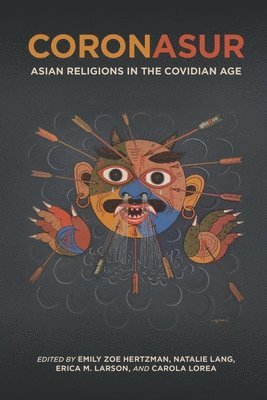
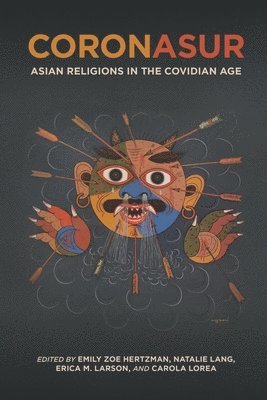
By the summer of 2020, when the coronavirus had fully entered our everyday vocabulary and our lives, religious communities and places of worship around the world were already undergoing profound changes. In Asian and Asian diaspora communities, diverse cultural tropes, beliefs, and artifacts were mobilized to make sense of Covid, including a repertoire of gods and demons like Coronasur, the virus depicted with the horns and fangs of a traditional Hindu demon. Various kinds of knowledge were invoked: theologies, indigenous medicines, and biomedical narratives, as well as ethical values and nationalist sentiments. CoronAsur: Asian Religions in the Covidian Age follows the documentation and analysis of the abrupt societal shifts triggered by the pandemic to understand current and future pandemic times, while revealing further avenues for research on religion that have opened up in the Covidian age. Developed in tandem with the research blog CoronAsur: Religion and COVID-19, this volume is a "phygital" publication, a work grounded in empirical roots as well as digitally born communication. It comprises thirty-eight essays that examine Asian religious communities—Muslim, Buddhist, Hindu, Daoist, and Christian as well as popular/folk and new religious movements, or NRMs—in terms of the changes brought on by and the ritual responses to the Covid pandemic.Studying religious narratives, practices, and changes in the Covidian age adds to our understanding of not only the specific groups in which they are situated, but also the coronavirus itself, its disputed etiologies and culturally contextualized exegeses. CoronAsur offers a comprehensive and timely discussion of Covidian transformations in religious communities’ engagements with media, spaces, and moral and political economies, documenting how religious practices and discourses have co-produced the meanings of the pandemic.