Scott A. Snyder - Böcker
Visar alla böcker från författaren Scott A. Snyder. Handla med fri frakt och snabb leverans.
11 produkter
11 produkter
897 kr
Skickas inom 7-10 vardagar
Japan and South Korea are Western-style democracies with open-market economies committed to the rule of law. They are also U.S. allies. Yet despite their shared interests, shared values, and geographic proximity, divergent national identities have driven a wedge between them. Drawing on decades of expertise, Brad Glosserman and Scott A. Snyder investigate the roots of this split and its ongoing threat to the region and the world. Glosserman and Snyder isolate competing notions of national identity as the main obstacle to a productive partnership between Japan and South Korea. Through public opinion data, interviews, and years of observation, they show how fundamentally incompatible, rapidly changing conceptions of national identity in Japan and South Korea-and not struggles over power or structural issues-have complicated territorial claims and international policy. Despite changes in the governments of both countries and concerted efforts by leading political figures to encourage U.S.-ROK-Japan security cooperation, the Japan-South Korea relationship continues to be hobbled by history and its deep imprint on ideas of national identity.This book recommends bold, policy-oriented prescriptions for overcoming problems in Japan-South Korea relations and facilitating trilateral cooperation among these three Northeast Asian allies, recognizing the power of the public on issues of foreign policy, international relations, and the prospects for peace in Asia.
234 kr
Skickas inom 7-10 vardagar
Japan and South Korea are Western-style democracies with open-market economies committed to the rule of law. They are also U.S. allies. Yet despite their shared interests, shared values, and geographic proximity, divergent national identities have driven a wedge between them. Drawing on decades of expertise, Brad Glosserman and Scott A. Snyder investigate the roots of this split and its ongoing threat to the region and the world. Glosserman and Snyder isolate competing notions of national identity as the main obstacle to a productive partnership between Japan and South Korea. Through public opinion data, interviews, and years of observation, they show how fundamentally incompatible, rapidly changing conceptions of national identity in Japan and South Korea-and not struggles over power or structural issues-have complicated territorial claims and international policy. Despite changes in the governments of both countries and concerted efforts by leading political figures to encourage U.S.-ROK-Japan security cooperation, the Japan-South Korea relationship continues to be hobbled by history and its deep imprint on ideas of national identity.This book recommends bold, policy-oriented prescriptions for overcoming problems in Japan-South Korea relations and facilitating trilateral cooperation among these three Northeast Asian allies, recognizing the power of the public on issues of foreign policy, international relations, and the prospects for peace in Asia.
South Korea at the Crossroads
Autonomy and Alliance in an Era of Rival Powers
Inbunden, Engelska, 2018
2 191 kr
Skickas inom 3-6 vardagar
Against the backdrop of China's mounting influence and North Korea's growing nuclear capability and expanding missile arsenal, South Korea faces a set of strategic choices that will shape its economic prospects and national security. In South Korea at the Crossroads, Scott A. Snyder examines the trajectory of fifty years of South Korean foreign policy and offers predictions-and a prescription-for the future. Pairing a historical perspective with a shrewd view of today's political landscape, Snyder contends that South Korea's best strategy remains investing in a robust alliance with the United States. Snyder begins with South Korea's effort in the 1960s to offset the risk of abandonment by the United States during the Vietnam War and the subsequent crisis in the alliance during the 1970s.A series of shifts in South Korean foreign relations followed, from the "Nordpolitik" engagement with the Soviet Union and China at the end of the Cold War; to Kim Dae Jung's "Sunshine Policy," designed to bring North Korea into the international community; to "trustpolitik," which sought to foster diplomacy with North Korea and Japan; to changes in South Korea's relationship with the United States. Despite its rise as a leader in international financial, development, and climate-change forums, South Korea will likely still require the commitment of the United States to guarantee its security. Although China is a tempting option, Snyder argues that only the United States is both credible and capable in this role. As South Korea remains vulnerable relative to other regional powers in northeast Asia despite its rising profile as a middle power, it must ultimately balance the contradiction of desirable autonomy and necessary alliance.
290 kr
Skickas inom 7-10 vardagar
Against the backdrop of China’s mounting influence and North Korea’s growing nuclear capability and expanding missile arsenal, South Korea faces a set of strategic choices that will shape its economic prospects and national security. In South Korea at the Crossroads, Scott A. Snyder examines the trajectory of fifty years of South Korean foreign policy and offers predictions—and a prescription—for the future. Pairing a historical perspective with a shrewd understanding of today’s political landscape, Snyder contends that South Korea’s best strategy remains investing in a robust alliance with the United States.Snyder begins with South Korea’s effort in the 1960s to offset the risk of abandonment by the United States during the Vietnam War and the subsequent crisis in the alliance during the 1970s. A series of shifts in South Korean foreign relations followed: the “Nordpolitik” engagement with the Soviet Union and China at the end of the Cold War; Kim Dae Jung’s “Sunshine Policy,” designed to bring North Korea into the international community; “trustpolitik,” which sought to foster diplomacy with North Korea and Japan; and changes in South Korea’s relationship with the United States. Despite its rise as a leader in international financial, development, and climate-change forums, South Korea will likely still require the commitment of the United States to guarantee its security. Although China is a tempting option, Snyder argues that only the United States is both credible and capable in this role. South Korea remains vulnerable relative to other regional powers in northeast Asia despite its rising profile as a middle power, and it must balance the contradiction of desirable autonomy and necessary alliance.
1 107 kr
Skickas inom 7-10 vardagar
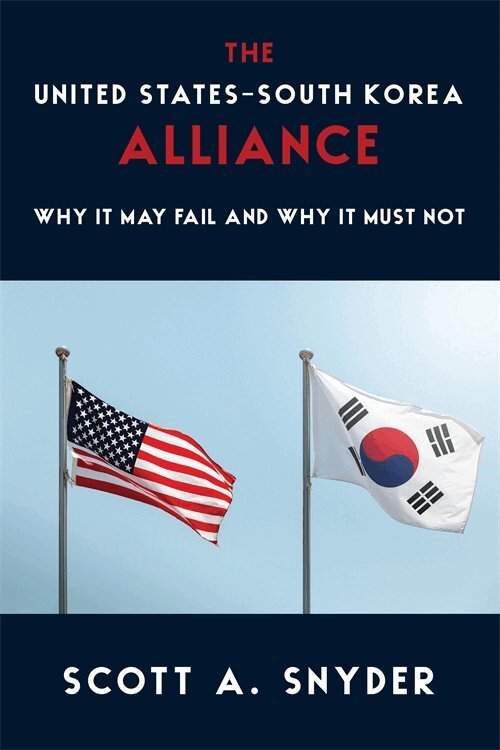
The alliance between the United States and South Korea has endured through seven decades of shifting regional and geopolitical security contexts. Yet it now faces challenges from within. Domestic political turmoil, including deepening political polarization and rising nationalism in both countries, has cast doubt on the alliance’s viability—with critical implications for the balance of power in East Asia.Scott A. Snyder provides an authoritative overview of the internal and external pressures on the U.S.–South Korea alliance and explores its future prospects. He argues that nationalist leaders’ accession to power could put past successes at risk and endanger the national security objectives of both countries. In the United States, “America first” nationalism favors self-interest over cooperation and portrays allies as burdens or even free riders. “Korea first” sentiments, in both progressive and conservative forms, present the U.S. military presence in South Korea as an obstacle to Korean reconciliation or a shackle on South Korea’s freedom of action. Snyder also examines North Korea’s attempts to influence South Korean domestic politics and how China’s growing strength has affected the dynamics of the alliance. He considers scenarios in which the U.S.–South Korea relationship weakens or crumbles, emphasizing the consequences for the region and the world. Drawing on this analysis, Snyder offers timely recommendations for stakeholders in both countries on how to preserve and strengthen the alliance.
282 kr
Skickas inom 7-10 vardagar
The alliance between the United States and South Korea has endured through seven decades of shifting regional and geopolitical security contexts. Yet it now faces challenges from within. Domestic political turmoil, including deepening political polarization and rising nationalism in both countries, has cast doubt on the alliance’s viability—with critical implications for the balance of power in East Asia.Scott A. Snyder provides an authoritative overview of the internal and external pressures on the U.S.–South Korea alliance and explores its future prospects. He argues that nationalist leaders’ accession to power could put past successes at risk and endanger the national security objectives of both countries. In the United States, “America first” nationalism favors self-interest over cooperation and portrays allies as burdens or even free riders. “Korea first” sentiments, in both progressive and conservative forms, present the U.S. military presence in South Korea as an obstacle to Korean reconciliation or a shackle on South Korea’s freedom of action. Snyder also examines North Korea’s attempts to influence South Korean domestic politics and how China’s growing strength has affected the dynamics of the alliance. He considers scenarios in which the U.S.–South Korea relationship weakens or crumbles, emphasizing the consequences for the region and the world. Drawing on this analysis, Snyder offers timely recommendations for stakeholders in both countries on how to preserve and strengthen the alliance.
809 kr
Skickas inom 10-15 vardagar
Following disastrous floods in 1995, North Korea appealed to the international community for assistance. An unprecedented number of nongovernmental organizations (NGOs) responded, bringing humanitarian assistance and reflief. With their arrival came hopes for a more open, engaged North Korea. The authors of Paved with Good Intentions explore the varying experiences of U.S., South Korean, and European NGOs—and some of the obstacles that have placed those hopes on hold. Intended to assist policy makers, the NGO community, and others interested in engaging North Korea, Paved With Good Intentions is the first book to take an inside look at the NGO experience in North Korea.Through this study of humanitarian relief activities in North Korea, the authors shed light on what is arguably the world's most inaccessible and closed nation. Experts in their field, the authors have spent considerable time in North Korea and are in a position to analyze the experiences of NGOs there. The book begins with a look at the humantitarian response to the disastrous 1995 floods in North Korea. It was the first practical opportunity to learn about North Korea and its internal structure, organization, and intentions. A unique compilation of the results of numerous in-depth interviews and workshop discussions, the study examines and compares the responses and differing experiences of U.S., European, and South Korean NGOs in North Korea.
124 kr
Skickas inom 5-8 vardagar
Goliath's Revenge
How Established Companies Turn the Tables on Digital Disruptors
Inbunden, Engelska, 2019
213 kr
Skickas inom 7-10 vardagar
Harness your company’s incumbent advantages to win the digital disruption gameGoliath’s Revenge is the practical guide for how executives and aspiring leaders of established companies can run the Silicon Valley playbook for themselves and capitalize on digital disruption. Technologies like artificial intelligence, robotics, internet of things, blockchain, and immersive experiences are changing the basis of competition in every industry. New competitors are emerging while traditional ones are falling behind.Periods of intense change provide remarkable opportunities. Goliath’s Revenge delivers an insider’s view of how industry leaders like General Motors, NASA, The Weather Channel, Hitachi, Mastercard, Proctor & Gamble, Penn Medicine, Discovery, and Cisco are accelerating innovation, building new skills, and disrupting themselves to come out stronger in this post-digital age. Learn how to leverage your company’s scale, reach, data, and expertise to launch breakthrough offerings that fend off attackers and secure your position as a future industry leader.Using real success cases and recommendations, this invaluable resource shows how to realign your business model, reset your talent development priorities, and retake market share lost to digital-ready competitors. Drawing from extensive experience in digital transformation, leadership development, and strategic planning, the authors show how established companies can switch from defense to offense to thrive in this new digital environment. Learn the six new rules that separate winners from losers in the age of digital disruptionPrioritize your innovation investments to rebuild your competitive moatEmploy smart cannibalization to defend your core businessDeliver step-change customer outcomes to grow into adjacent marketsReframe your purpose and make talent the centerpiece of your digital innovation strategyGoliath’s Revenge is a must-read for business leaders and innovators in small, mid-sized, and large organizations trying to win the digital disruption game. This book helps you reset both your company strategy and professional development priorities for long-term success.
1 245 kr
Skickas inom 10-15 vardagar
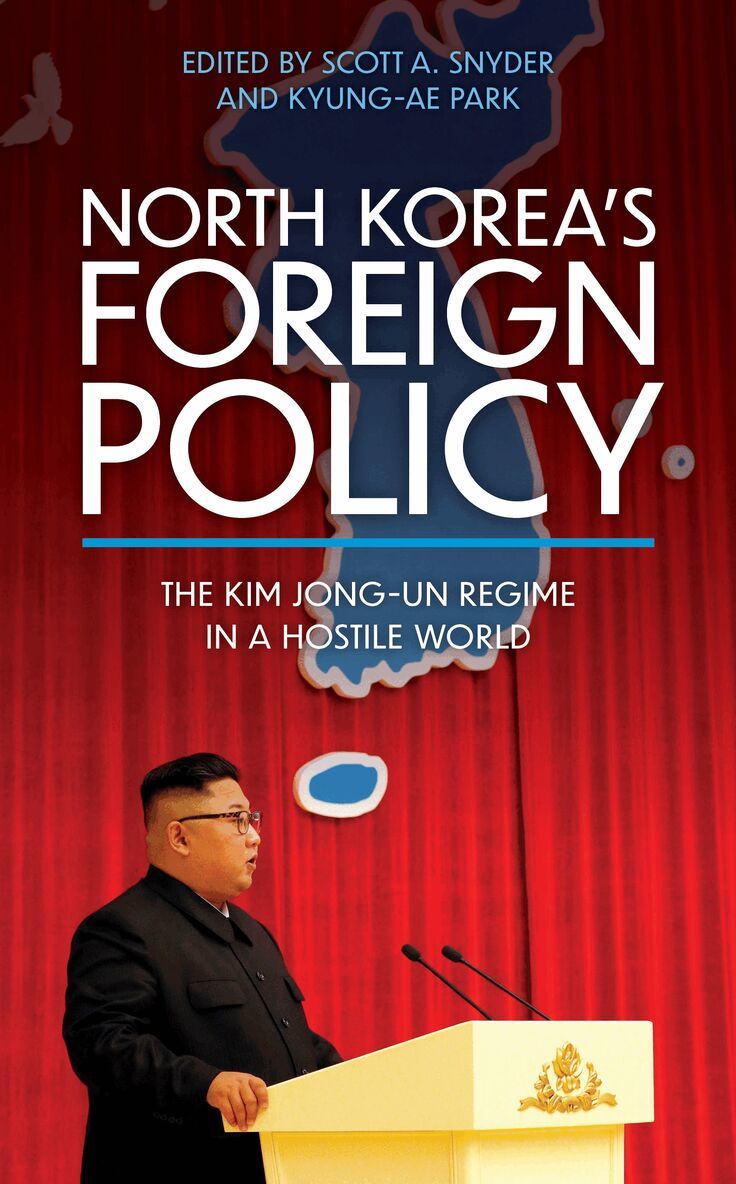
Since Kim Jong-un’s assumption of power in December 2011, North Korea has undergone expanded nuclear development, political isolation, and economic stagnation. Kim’s early prioritization of the byungjin policy, simultaneous economic and military or nuclear development, highlighted his goal of transforming North Korea’s domestic economic circumstances and strengthening its position in the world as a nuclear state. The central dilemma shaping Kim Jong-un’s foreign policy throughout his first decade in power revolves around ensuring North Korea’s prosperity and security while sustaining the political isolation and control necessary for regime survival. In order to evaluate North Korea’s foreign policy under Kim, this volume will examine the impact of domestic factors that have influenced the formation and implementation of Kim’s foreign policy, Kim’s distinctive use of summitry and effectiveness of such meetings as an instrument by which to attain foreign policy goals, and the impact of international responses to North Korea’s pursuit of nuclear capabilities on North Korea’s foreign policy.
447 kr
Skickas inom 10-15 vardagar
Since Kim Jong-un’s assumption of power in December 2011, North Korea has undergone expanded nuclear development, political isolation, and economic stagnation. Kim’s early prioritization of the byungjin policy, simultaneous economic and military or nuclear development, highlighted his goal of transforming North Korea’s domestic economic circumstances and strengthening its position in the world as a nuclear state. The central dilemma shaping Kim Jong-un’s foreign policy throughout his first decade in power revolves around ensuring North Korea’s prosperity and security while sustaining the political isolation and control necessary for regime survival. In order to evaluate North Korea’s foreign policy under Kim, this volume will examine the impact of domestic factors that have influenced the formation and implementation of Kim’s foreign policy, Kim’s distinctive use of summitry and effectiveness of such meetings as an instrument by which to attain foreign policy goals, and the impact of international responses to North Korea’s pursuit of nuclear capabilities on North Korea’s foreign policy.