Scott Coltrane – författare
Visar alla böcker från författaren Scott Coltrane. Handla med fri frakt och snabb leverans.
4 produkter
4 produkter
E-bok
Engelska, 1997159 kr
Läs direkt efter köp
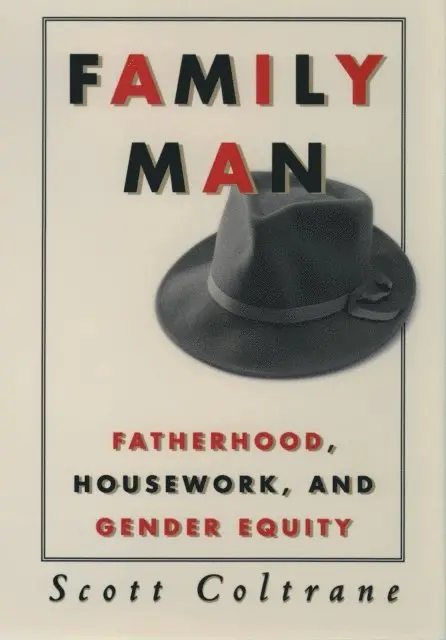
The typical American family has changed dramatically since the days of "Ozzie and Harriet" and "Father Knows Best." Double-income families are now the rule, and fathers are much more involved in raising the children and cleaning house. Reactions to these changes have been diverse, ranging from grave misgivings to a sense of liberation and new possibility. Groups as diverse as Promise Keepers, the Million Man March, and Robert Bly''s mythopoetic men''s movement tell us that fathers are important. From the fundamentalist right to the feminist left, opinions about the changing nature of the family--and the consequent rethinking of gender roles--have been vehement, if not always very well-founded. In Family Man, sociologist Scott Coltrane brings a wealth of compelling evidence to this debate over the American family. Drawing on his own extensive research and many fascinating interviews, Coltrane explodes many of the common myths about shared parenting, provides first-hand accounts of men''s and women''s feelings in two-job families, and reveals some innovative solutions that couples have developed to balance job and family commitments. Readers will find an insightful discussion of precisely how and why family life has changed, what forms it may take in the future, and what new kinds of fathers may be on the horizon. The author firmly places these questions within a broad contextual framework. He provides, for instance, an illuminating history of the family that shows that, far from being a fixed structure, the family has always adapted to changing economic, social, and ideological pressures. And by examining how families operate in a variety of non-industrial societies, he demonstrates that our own notions of gender-specific work and parenting roles are culturally rather than biologically determined, and thus inherently flexible. And indeed these roles are changing. While contemporary American women still perform the bulk of domestic tasks, Family Man gives us decisive evidence that men are becoming increasingly involved in both housework and childrearing. Coltrane argues convincingly that this trend will continue. Given the current economic situation--with two-job households now the norm--and the gradual ideological shift away from restrictive gender roles, more and more couples will find it both necessary and desirable to share the workload. More important, Coltrane suggests that as fathers participate more fully in raising their children and performing traditionally female household tasks, men will themselves be transformed by the experience in profoundly positive ways and American society as a whole will move closer to true gender equity. Family Man succeeds brilliantly in bringing clarity, perspective, and above all hope to a discussion that is too often shrill, chaotic, and beset with the rhetoric of nostalgia. It shows us not only exactly where the family is today, but where it has been and what it may become.
E-bok
PDF, Engelska, 1996178 kr
Läs direkt efter köp
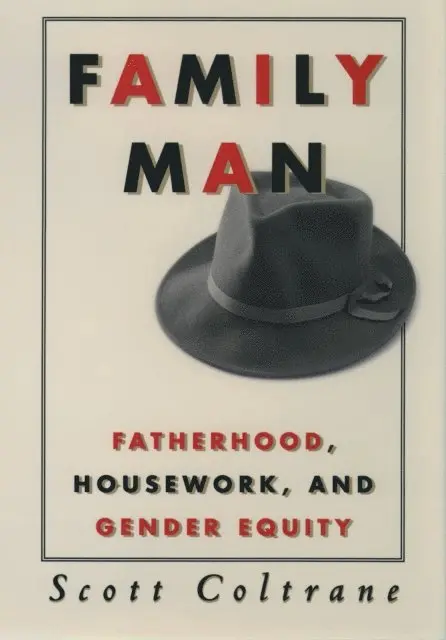
The typical American family has changed dramatically since the days of "Ozzie and Harriet" and "Father Knows Best." Double-income families are now the rule, and fathers are much more involved in raising the children and cleaning house. Reactions to these changes have been diverse, ranging from grave misgivings to a sense of liberation and new possibility. Groups as diverse as Promise Keepers, the Million Man March, and Robert Bly''s mythopoetic men''s movement tell us that fathers are important. From the fundamentalist right to the feminist left, opinions about the changing nature of the family--and the consequent rethinking of gender roles--have been vehement, if not always very well-founded. In Family Man, sociologist Scott Coltrane brings a wealth of compelling evidence to this debate over the American family. Drawing on his own extensive research and many fascinating interviews, Coltrane explodes many of the common myths about shared parenting, provides first-hand accounts of men''s and women''s feelings in two-job families, and reveals some innovative solutions that couples have developed to balance job and family commitments. Readers will find an insightful discussion of precisely how and why family life has changed, what forms it may take in the future, and what new kinds of fathers may be on the horizon. The author firmly places these questions within a broad contextual framework. He provides, for instance, an illuminating history of the family that shows that, far from being a fixed structure, the family has always adapted to changing economic, social, and ideological pressures. And by examining how families operate in a variety of non-industrial societies, he demonstrates that our own notions of gender-specific work and parenting roles are culturally rather than biologically determined, and thus inherently flexible. And indeed these roles are changing. While contemporary American women still perform the bulk of domestic tasks, Family Man gives us decisive evidence that men are becoming increasingly involved in both housework and childrearing. Coltrane argues convincingly that this trend will continue. Given the current economic situation--with two-job households now the norm--and the gradual ideological shift away from restrictive gender roles, more and more couples will find it both necessary and desirable to share the workload. More important, Coltrane suggests that as fathers participate more fully in raising their children and performing traditionally female household tasks, men will themselves be transformed by the experience in profoundly positive ways and American society as a whole will move closer to true gender equity. Family Man succeeds brilliantly in bringing clarity, perspective, and above all hope to a discussion that is too often shrill, chaotic, and beset with the rhetoric of nostalgia. It shows us not only exactly where the family is today, but where it has been and what it may become.
Inbunden, Engelska, 2008
1 398 kr
Skickas inom 10-15 vardagar
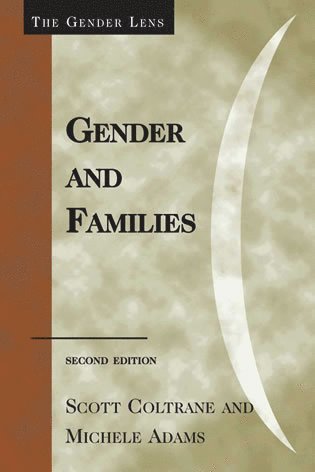
When we talk about family values, like whether children need two parents, we are also talking about gender values, because a "yes" answer to this question might imply that only women with husbands should have children. In the same way, when we talk about gender issues, such as whether men should be paid higher wages than women, we are also talking about family issues, because a "yes" answer suggests that husbands should be the family breadwinner. In this updated second edition of Gender and Families, Coltrane and Adams continue to demystify the complexities and connections between gender and family in contemporary culture, with discussions of race, ethnicity, and social class.
Häftad, Engelska, 2008
772 kr
Skickas inom 10-15 vardagar
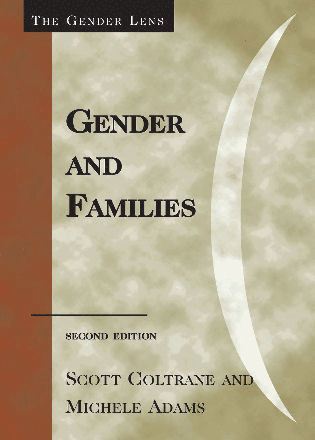
When we talk about family values, like whether children need two parents, we are also talking about gender values, because a "yes" answer to this question might imply that only women with husbands should have children. In the same way, when we talk about gender issues, such as whether men should be paid higher wages than women, we are also talking about family issues, because a "yes" answer suggests that husbands should be the family breadwinner. In this updated second edition of Gender and Families, Coltrane and Adams continue to demystify the complexities and connections between gender and family in contemporary culture, with discussions of race, ethnicity, and social class.