Scott Durham - Böcker
Visar alla böcker från författaren Scott Durham. Handla med fri frakt och snabb leverans.
5 produkter
5 produkter
180 kr
Skickas inom 3-6 vardagar
1 470 kr
Skickas inom 7-10 vardagar
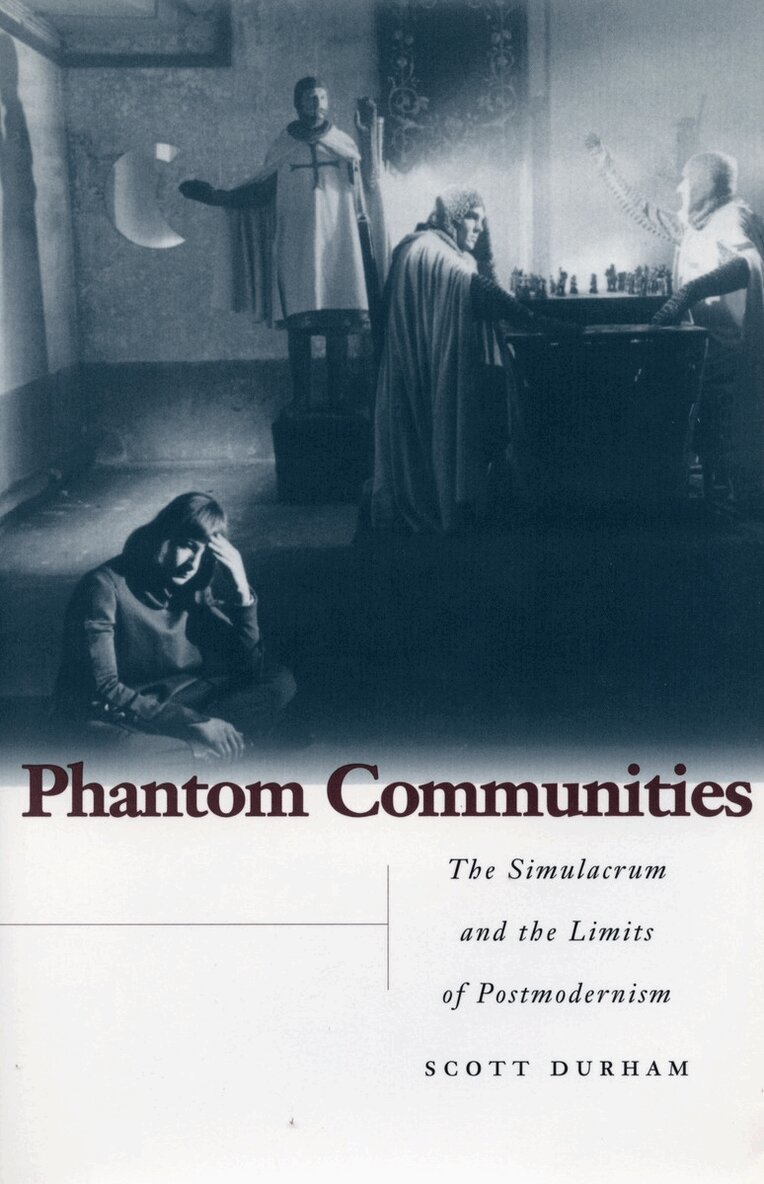
Phantom Communities reconsiders the status of the simulacrum—sometimes defined as a copy of a copy, but more rigorously defined as a copy that subverts the legitimacy and authority of its model—in light of recent debates in literature, art, philosophy, and cultural studies.The author pursues two interwoven levels of analysis. On one level, he explores the poetics of the simulacrum, considered as a form that internalizes repetition, through close readings of a number of exemplary literary texts, paintings, and films from both the Anglo-American and French traditions, including works by Jean Genet, Pierre Klossowski, René Magritte, Andy Warhol, J. G. Ballard, Balthus, and Raúl Ruiz. Through his readings of these works, the author follows the transformations of the simulacrum, showing how its vicissitudes provide an optic for remapping the postmodern canon.On another level, the author offers an account of the role played by the simulacrum as a theoretical concept that assumes varying analytical and ideological valences in the writings of such theorists as Jean Baudrillard, Fredric Jameson, Michel Foucault, and Gilles Deleuze. In so doing, Phantom Communities intervenes in ongoing interdisciplinary debates concerning the historical and ideological limits of postmodernism, as well as the utopian possibilities of art, literature, and philosophy in a postmodern context.Moving between these debates and the interpretation of individual works, the author shows how they converge on the fundamental aesthetic and ideological problem raised by the postmodern culture of the simulacrum: imagining the virtual communities that, at the margins of postmodern culture, are at once figured and eclipsed by its proliferating images.
358 kr
Skickas inom 7-10 vardagar
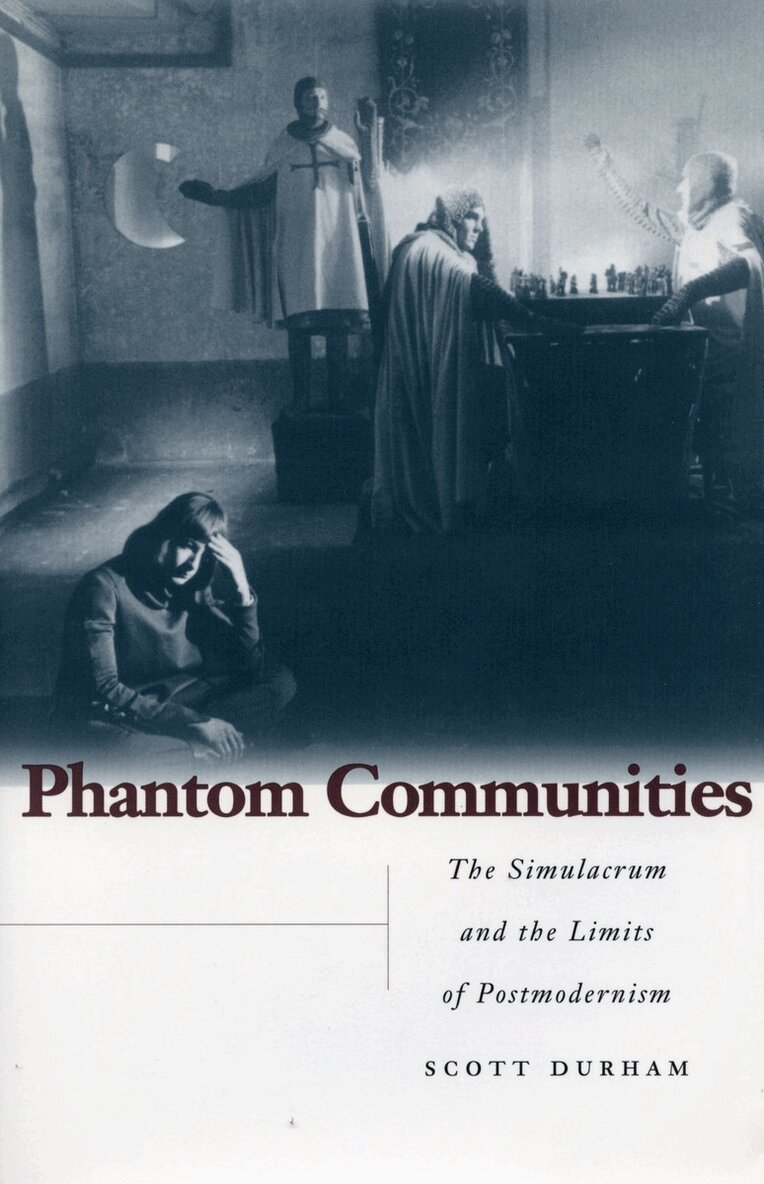
Phantom Communities reconsiders the status of the simulacrum—sometimes defined as a copy of a copy, but more rigorously defined as a copy that subverts the legitimacy and authority of its model—in light of recent debates in literature, art, philosophy, and cultural studies.The author pursues two interwoven levels of analysis. On one level, he explores the poetics of the simulacrum, considered as a form that internalizes repetition, through close readings of a number of exemplary literary texts, paintings, and films from both the Anglo-American and French traditions, including works by Jean Genet, Pierre Klossowski, René Magritte, Andy Warhol, J. G. Ballard, Balthus, and Raúl Ruiz. Through his readings of these works, the author follows the transformations of the simulacrum, showing how its vicissitudes provide an optic for remapping the postmodern canon.On another level, the author offers an account of the role played by the simulacrum as a theoretical concept that assumes varying analytical and ideological valences in the writings of such theorists as Jean Baudrillard, Fredric Jameson, Michel Foucault, and Gilles Deleuze. In so doing, Phantom Communities intervenes in ongoing interdisciplinary debates concerning the historical and ideological limits of postmodernism, as well as the utopian possibilities of art, literature, and philosophy in a postmodern context.Moving between these debates and the interpretation of individual works, the author shows how they converge on the fundamental aesthetic and ideological problem raised by the postmodern culture of the simulacrum: imagining the virtual communities that, at the margins of postmodern culture, are at once figured and eclipsed by its proliferating images.
424 kr
Skickas inom 10-15 vardagar
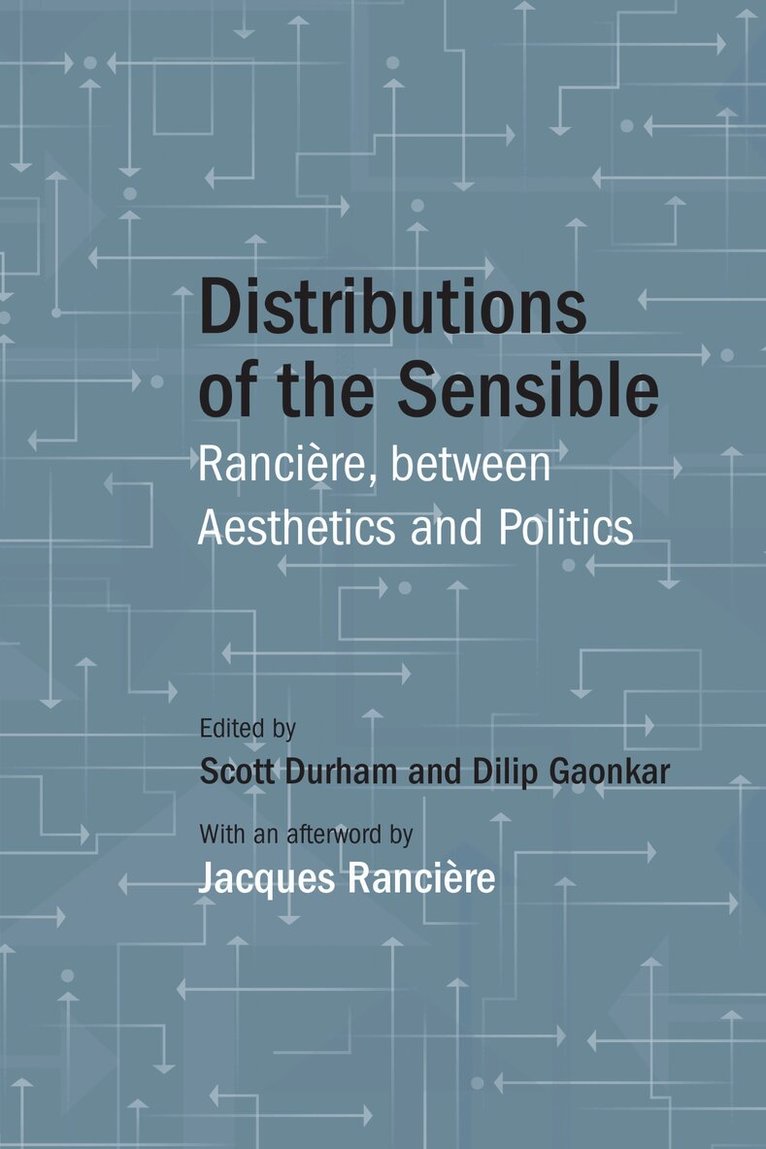
Jacques Rancière’s work is increasingly central to several debates across the humanities. Distributions of the Sensible confronts a question at the heart of his thought: How should we conceive the relationship between the “politics of aesthetics” and the “aesthetics of politics”? Specifically, the book explores the implications of Rancière’s rethinking of the relationship of aesthetic to political democracy from a wide range of critical perspectives.Distributions of the Sensible contains original essays by leading scholars on topics such as Rancière’s relation to political theory, critical theory, philosophical aesthetics, and film. The book concludes with a new essay by Rancière himself that reconsiders the practice of theory between aesthetics and politics.
1 297 kr
Skickas inom 10-15 vardagar
Jacques Rancière’s work is increasingly central to several debates across the humanities. Distributions of the Sensible confronts a question at the heart of his thought: How should we conceive the relationship between the “politics of aesthetics” and the “aesthetics of politics”? Specifically, the book explores the implications of Rancière’s rethinking of the relationship of aesthetic to political democracy from a wide range of critical perspectives.Distributions of the Sensible contains original essays by leading scholars on topics such as Rancière’s relation to political theory, critical theory, philosophical aesthetics, and film. The book concludes with a new essay by Rancière himself that reconsiders the practice of theory between aesthetics and politics.