Scott G. McNall - Böcker
Visar alla böcker från författaren Scott G. McNall. Handla med fri frakt och snabb leverans.
9 produkter
9 produkter
1 019 kr
Skickas inom 7-10 vardagar
In the late 1800s an unprecedented coalition of American farmers rose to challenge the course of national politics. Aspiring to a society in which justice and equality were the norm, the farmers galvanized thousands of voters, causing two dominant political parties to reshape their agendas. Yet by 1900, the movement was virtually dead. Scott G. McNall analyzes why America's largest mass-democratic movement failed. He focuses his inquiry on Kansas, the center of the agrarian rebellion that led to the creation of the Farmer's Alliance and, later, to the founding of the People's party. Integrating new historical accounts with original analyses of census data, Alliance membership records, and speech transcripts, McNall restores these Kansas voices, revealing their struggle against an entrenched class system, indifferent political parties, and economic hardship. McNall rejects the traditional view that blames the failure of the Alliance on a turn to mass-based electoral politics, but rather sees the move into national politics by the Farmer's Alliance as part of a rational strategy to better wage their fight for economic justice. The Kansas populists failed, he argues, because of their inability to embrace a broad, working-class base, to provide an effective alternative vision, and ultimately to create a distinct class organization. Debates about how classes come into being, or how democracy is to be realized, cannot be settled in the abstract. McNall's recreation of this heroic struggle is a model in the analysis of class formation. At the same time, The Road to Rebellion is dynamic social history, which holds vital lessons for structuring and realizing alternative political agendas today.
2 100 kr
Skickas inom 10-15 vardagar
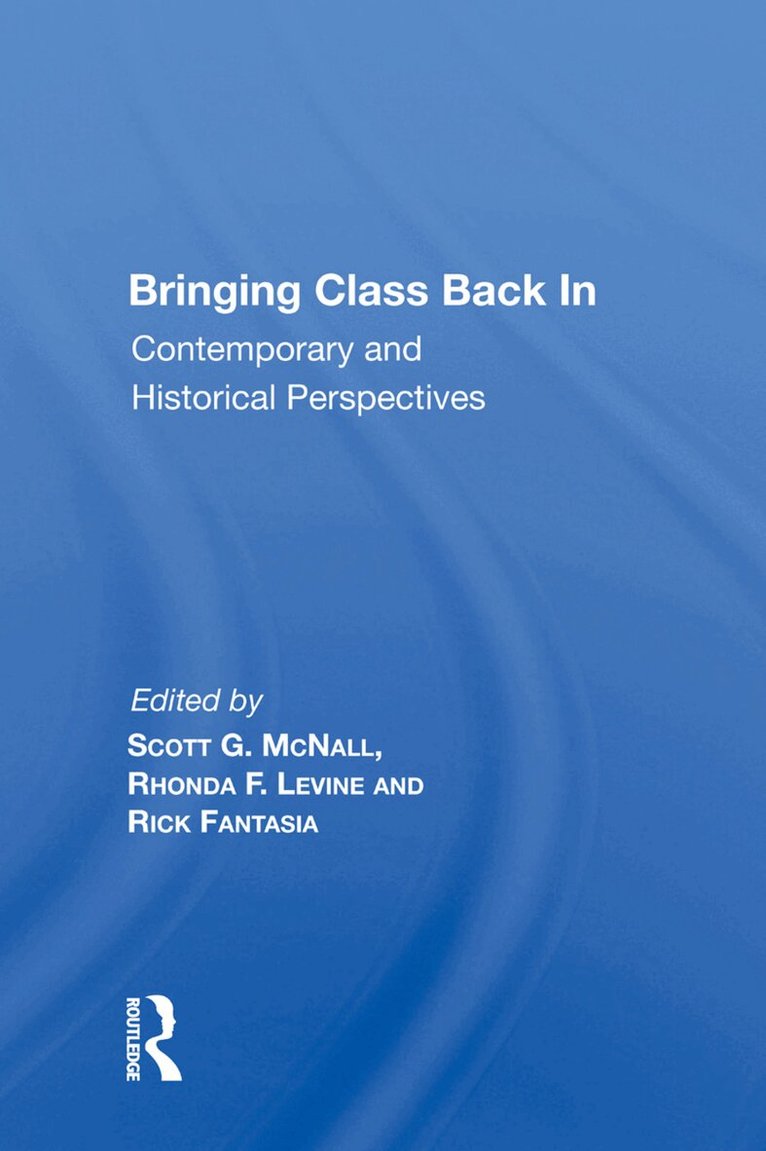
In recent years, a flurry of "poststructuralist," "post-Marxist," and "statecentered" approaches have emerged in historical and sociological scholarship. Far from ignoring these developments, the study of class has shaped and been shaped by them. As the selections in this volume indicate, class analysis changes and develops, while sustaining itself as a powerful, refined working tool in helping scholars understand the complexities of social and historical processes. This volume provides a cross-section of the rich body of social theory and empirical research being produced by scholars employing class analysis. It demonstrates the variety, vibrancy, and continuing value of class analysis in historical and sociological scholarship. The work of promising young scholars is combined with contributions from well-established figures to produce a volume that addresses continuing debates over the relationship between structure and agency, the centrality of class relations, and the dynamics of class formation, class culture, and class consciousness.
614 kr
Skickas inom 10-15 vardagar
This book brings together scholars who are engaged in class analysis that addresses continuing debates over the relationship between class structure and human agency, the centrality of class relations, the dynamics of class formation, class culture, ideology, and consciousness.
533 kr
Skickas inom 10-15 vardagar
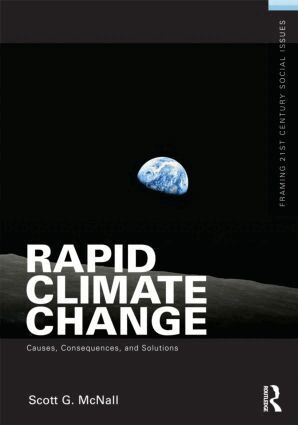
The book reviews the science of climate change and explains why it is one of the most difficult problems humanity has ever tackled. Climate change is a "wicked" problem bound up with problems of population growth, environmental degradation, and world problems of growing social and economic inequality. The book explores the politicization of the topic, the polarization of opinion, and the reasons why, for some, science has become just another ideology to be contested. How do humans assess risk? Why are they are so bad at focusing on the future? How can we solve the problem of climate change? These are the questions this work answers.The goal of this new, unique Series is to offer readable, teachable "thinking frames" on today’s social problems and social issues by leading scholars, all in short 60 page or shorter formats, and available for view on http://routledge.customgateway.com/routledge-social-issues.html For instructors teaching a wide range of courses in the social sciences, the Routledge Social Issues Collection now offers the best of both worlds: originally written short texts that provide "overviews" to important social issues as well as teachable excerpts from larger works previously published by Routledge and other presses.
2 635 kr
Skickas inom 10-15 vardagar
The book reviews the science of climate change and explains why it is one of the most difficult problems humanity has ever tackled. Climate change is a "wicked" problem bound up with problems of population growth, environmental degradation, and world problems of growing social and economic inequality. The book explores the politicization of the topic, the polarization of opinion, and the reasons why, for some, science has become just another ideology to be contested. How do humans assess risk? Why are they are so bad at focusing on the future? How can we solve the problem of climate change? These are the questions this work answers.The goal of this new, unique Series is to offer readable, teachable "thinking frames" on today’s social problems and social issues by leading scholars, all in short 60 page or shorter formats, and available for view on http://routledge.customgateway.com/routledge-social-issues.html For instructors teaching a wide range of courses in the social sciences, the Routledge Social Issues Collection now offers the best of both worlds: originally written short texts that provide "overviews" to important social issues as well as teachable excerpts from larger works previously published by Routledge and other presses.
2 096 kr
Skickas inom 10-15 vardagar
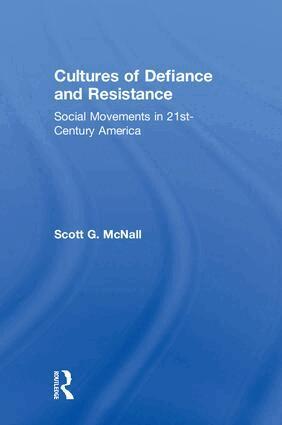
How does one achieve a sense of freedom and meaning in a confusing, over-bureaucratized, and unequal world? Scott McNall offers the compelling case that we do so by taking a stand to protect our identities and values, and by taking further steps to create a sense of community with like-minded people. Modern social movements have sprung up on the right and left, to provide this sense of community, to seek explanations for why things are the way they are, and to discover what might be done in response. At this critical juncture in American society when divisions over race, class, gender, and government influence persist, movements allow their members to feel they are not trapped by their conditions. Cultures of Defiance and Resistance is an eye-opening account of the 'Antis' - those who stand in opposition to received wisdom and power, who resist the science of climate change, who reject vaccinations, who want to ban GMOs, and those who have resisted what they see as political or cultural oppression, such as Black Lives Matter, Occupy Wall Street, and the Tea Party. McNall masterfully explores the goals, narratives, and rhetoric used by groups on the left, right, and center to understand and cope with 21st century America in a time of mass discord, uncertainty, and hostility. In doing so, he reframes social movements for a new era in one of the first cross-comparative books reflecting the entire political spectrum.
560 kr
Skickas inom 10-15 vardagar
How does one achieve a sense of freedom and meaning in a confusing, over-bureaucratized, and unequal world? Scott McNall offers the compelling case that we do so by taking a stand to protect our identities and values, and by taking further steps to create a sense of community with like-minded people. Modern social movements have sprung up on the right and left, to provide this sense of community, to seek explanations for why things are the way they are, and to discover what might be done in response. At this critical juncture in American society when divisions over race, class, gender, and government influence persist, movements allow their members to feel they are not trapped by their conditions. Cultures of Defiance and Resistance is an eye-opening account of the 'Antis' - those who stand in opposition to received wisdom and power, who resist the science of climate change, who reject vaccinations, who want to ban GMOs, and those who have resisted what they see as political or cultural oppression, such as Black Lives Matter, Occupy Wall Street, and the Tea Party. McNall masterfully explores the goals, narratives, and rhetoric used by groups on the left, right, and center to understand and cope with 21st century America in a time of mass discord, uncertainty, and hostility. In doing so, he reframes social movements for a new era in one of the first cross-comparative books reflecting the entire political spectrum.
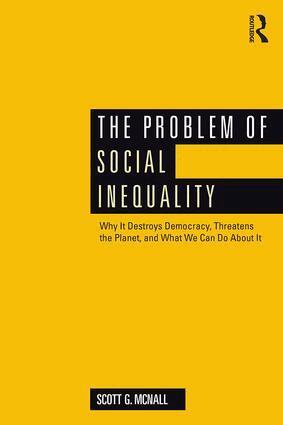
Problem of Social Inequality
Why It Destroys Democracy, Threatens the Planet, and What We Can Do About It
Häftad, Engelska, 2015
627 kr
Skickas inom 10-15 vardagar
Within and among nations, rising levels of social inequality threaten our collective future. Currently, upwards of 80% of people’s life chances are determined by factors over which they have absolutely no control. Social inequality threatens the democratic project because it destroys the trust on which governments depend, and it gives rise to corrupt political and economic institutions. How can we get out of the traps we have created for ourselves? We need to reboot capitalism. Drawing on diverse examples from a range of countries, McNall explains the social, economic, and ecological traps we have set for ourselves and develops a set of rules of resilience that are necessary conditions for the creation and maintenance of democratic societies, and a set of rules essential for creating a sustainable future.
Problem of Social Inequality
Why It Destroys Democracy, Threatens the Planet, and What We Can Do About It
Inbunden, Engelska, 2015
2 366 kr
Skickas inom 10-15 vardagar
Within and among nations, rising levels of social inequality threaten our collective future. Currently, upwards of 80% of people’s life chances are determined by factors over which they have absolutely no control. Social inequality threatens the democratic project because it destroys the trust on which governments depend, and it gives rise to corrupt political and economic institutions. How can we get out of the traps we have created for ourselves? We need to reboot capitalism. Drawing on diverse examples from a range of countries, McNall explains the social, economic, and ecological traps we have set for ourselves and develops a set of rules of resilience that are necessary conditions for the creation and maintenance of democratic societies, and a set of rules essential for creating a sustainable future.