Scott Higgins - Böcker
Visar alla böcker från författaren Scott Higgins. Handla med fri frakt och snabb leverans.
7 produkter
7 produkter
322 kr
Skickas inom 10-15 vardagar
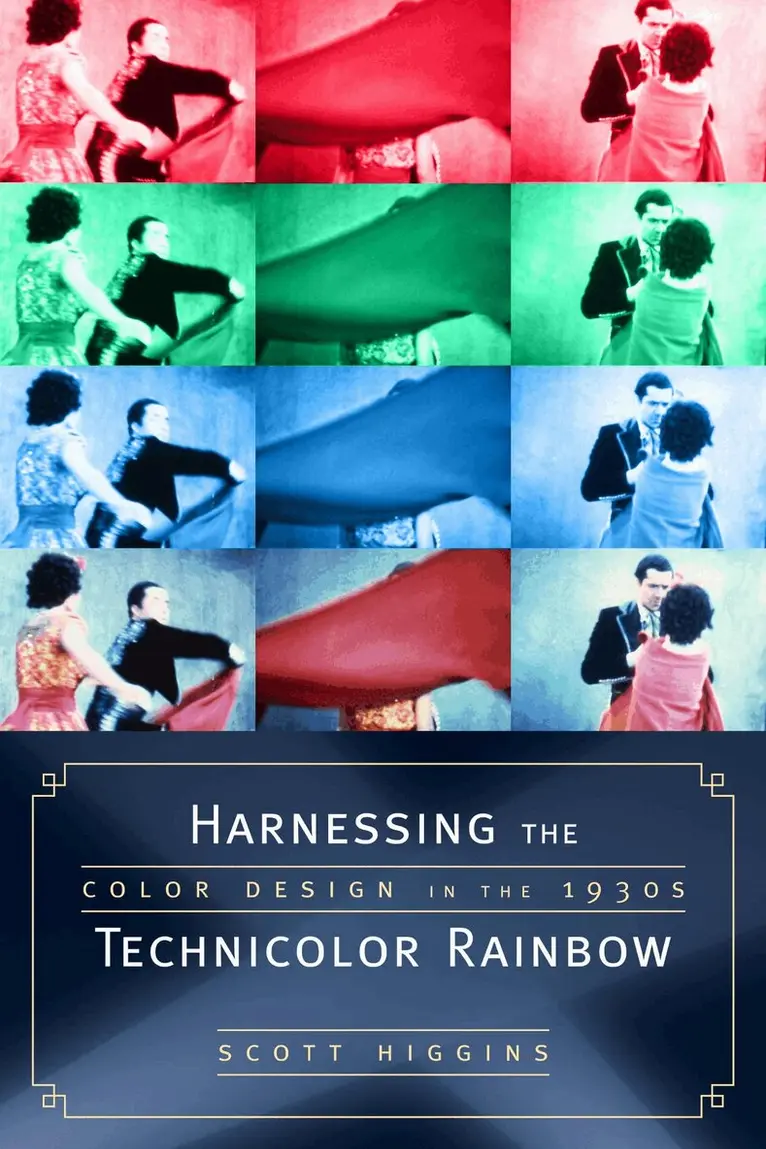
Like Dorothy waking up over the rainbow in the Land of Oz, Hollywood discovered a vivid new world of color in the 1930s. The introduction of three-color Technicolor technology in 1932 gave filmmakers a powerful tool with which to guide viewers' attention, punctuate turning points, and express emotional subtext. Although many producers and filmmakers initially resisted the use of color, Technicolor designers, led by the legendary Natalie Kalmus, developed an aesthetic that complemented the classical Hollywood filmmaking style while still offering innovative novelty. By the end of the 1930s, color in film was thoroughly harnessed to narrative, and it became elegantly expressive without threatening the coherence of the film's imaginary world. Harnessing the Technicolor Rainbow is the first scholarly history of Technicolor aesthetics and technology, as well as a thoroughgoing analysis of how color works in film. Scott Higgins draws on extensive primary research and close analysis of well-known movies, including Becky Sharp, A Star Is Born, Adventures of Robin Hood, and Gone with the Wind, to show how the Technicolor films of the 1930s forged enduring conventions for handling color in popular cinema. He argues that filmmakers and designers rapidly worked through a series of stylistic modes based on the demonstration, restraint, and integration of color-and shows how the color conventions developed in the 1930s have continued to influence filmmaking to the present day. Higgins also formulates a new vocabulary and a method of analysis for capturing the often-elusive functions and effects of color that, in turn, open new avenues for the study of film form and lay a foundation for new work on color in cinema.
2 238 kr
Skickas inom 10-15 vardagar
Rudolf Arnheim (1904-2007) was a pioneering figure in film studies, best known for his landmark book on silent cinema Film as Art. He ultimately became more famous as a scholar in the fields of art and art history, largely abandoning his theoretical work on cinema. However, his later aesthetic theories on form, perception and emotion should play an important role in contemporary film and media studies. In this enlightening new volume in the AFI Film Readers series, an international group of leading scholars revisits Arnheim’s legacy for film and media studies. In fourteen essays, the contributors bring Arnheim’s later work on the visual arts to bear on film and media, while also reassessing the implications of his film theory to help refine our grasp of Film as Art and related texts. The contributors discuss a broad range topics including Arnheim’s film writings in relation to modernism, his antipathy to sound as well as color in film, the formation of his early ideas on film against the social and political backdrop of the day, the wider uses of his methodology, and the implications of his work for digital media. This is essential reading for any film and media student or scholar seeking to understand the meaning and contemporary impact of Arnheim’s foundational work in film theory and aesthetics.
616 kr
Skickas inom 10-15 vardagar
Rudolf Arnheim (1904-2007) was a pioneering figure in film studies, best known for his landmark book on silent cinema Film as Art. He ultimately became more famous as a scholar in the fields of art and art history, largely abandoning his theoretical work on cinema. However, his later aesthetic theories on form, perception and emotion should play an important role in contemporary film and media studies. In this enlightening new volume in the AFI Film Readers series, an international group of leading scholars revisits Arnheim’s legacy for film and media studies. In fourteen essays, the contributors bring Arnheim’s later work on the visual arts to bear on film and media, while also reassessing the implications of his film theory to help refine our grasp of Film as Art and related texts. The contributors discuss a broad range topics including Arnheim’s film writings in relation to modernism, his antipathy to sound as well as color in film, the formation of his early ideas on film against the social and political backdrop of the day, the wider uses of his methodology, and the implications of his work for digital media. This is essential reading for any film and media student or scholar seeking to understand the meaning and contemporary impact of Arnheim’s foundational work in film theory and aesthetics.
322 kr
Tillfälligt slut
184 kr
Skickas inom 5-8 vardagar
308 kr
Skickas inom 5-8 vardagar
344 kr
Skickas inom 5-8 vardagar