Scott M. Lynch - Böcker
Visar alla böcker från författaren Scott M. Lynch. Handla med fri frakt och snabb leverans.
4 produkter
4 produkter
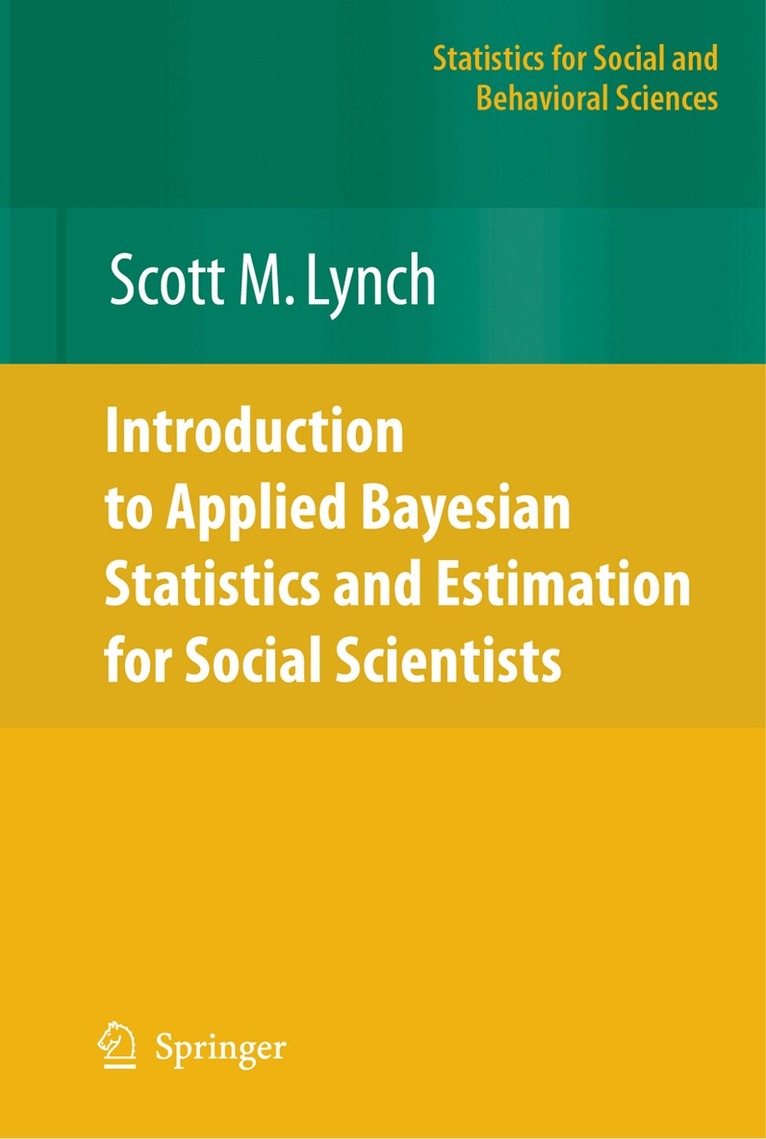
Introduction to Applied Bayesian Statistics and Estimation for Social Scientists
Inbunden, Engelska, 2007
1 786 kr
Skickas inom 10-15 vardagar
"Introduction to Applied Bayesian Statistics and Estimation for Social Scientists" covers the complete process of Bayesian statistical analysis in great detail from the development of a model through the process of making statistical inference. The key feature of this book is that it covers models that are most commonly used in social science research - including the linear regression model, generalized linear models, hierarchical models, and multivariate regression models - and it thoroughly develops each real-data example in painstaking detail.The first part of the book provides a detailed introduction to mathematical statistics and the Bayesian approach to statistics, as well as a thorough explanation of the rationale for using simulation methods to construct summaries of posterior distributions. Markov chain Monte Carlo (MCMC) methods - including the Gibbs sampler and the Metropolis-Hastings algorithm - are then introduced as general methods for simulating samples from distributions. Extensive discussion of programming MCMC algorithms, monitoring their performance, and improving them is provided before turning to the larger examples involving real social science models and data.
Introduction to Applied Bayesian Statistics and Estimation for Social Scientists
Häftad, Engelska, 2010
1 281 kr
Skickas inom 10-15 vardagar
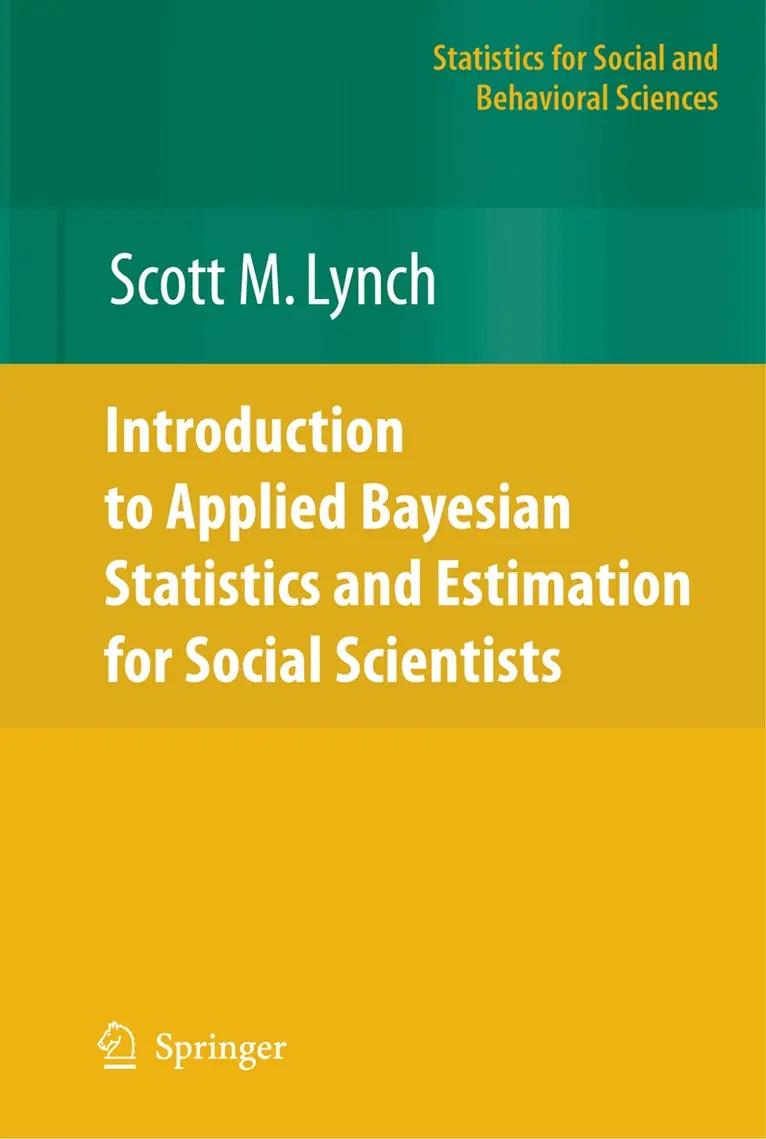
"Introduction to Applied Bayesian Statistics and Estimation for Social Scientists" covers the complete process of Bayesian statistical analysis in great detail from the development of a model through the process of making statistical inference. The key feature of this book is that it covers models that are most commonly used in social science research - including the linear regression model, generalized linear models, hierarchical models, and multivariate regression models - and it thoroughly develops each real-data example in painstaking detail.The first part of the book provides a detailed introduction to mathematical statistics and the Bayesian approach to statistics, as well as a thorough explanation of the rationale for using simulation methods to construct summaries of posterior distributions. Markov chain Monte Carlo (MCMC) methods - including the Gibbs sampler and the Metropolis-Hastings algorithm - are then introduced as general methods for simulating samples from distributions. Extensive discussion of programming MCMC algorithms, monitoring their performance, and improving them is provided before turning to the larger examples involving real social science models and data.
1 175 kr
Skickas inom 10-15 vardagar
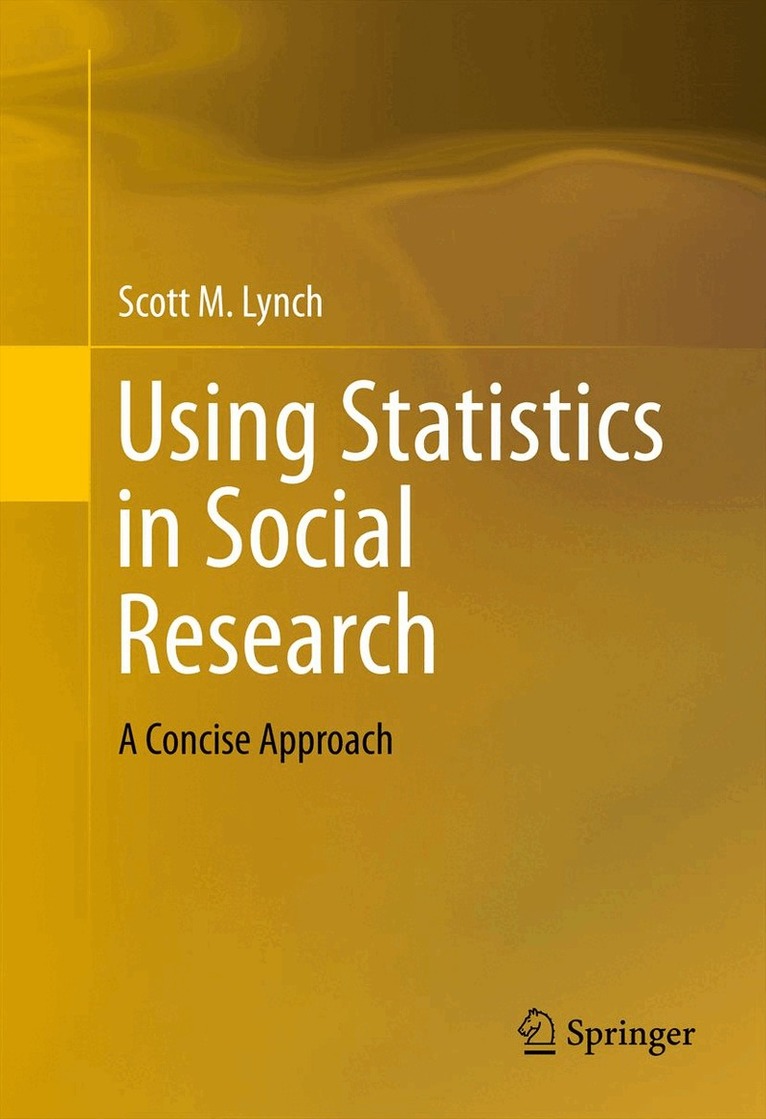
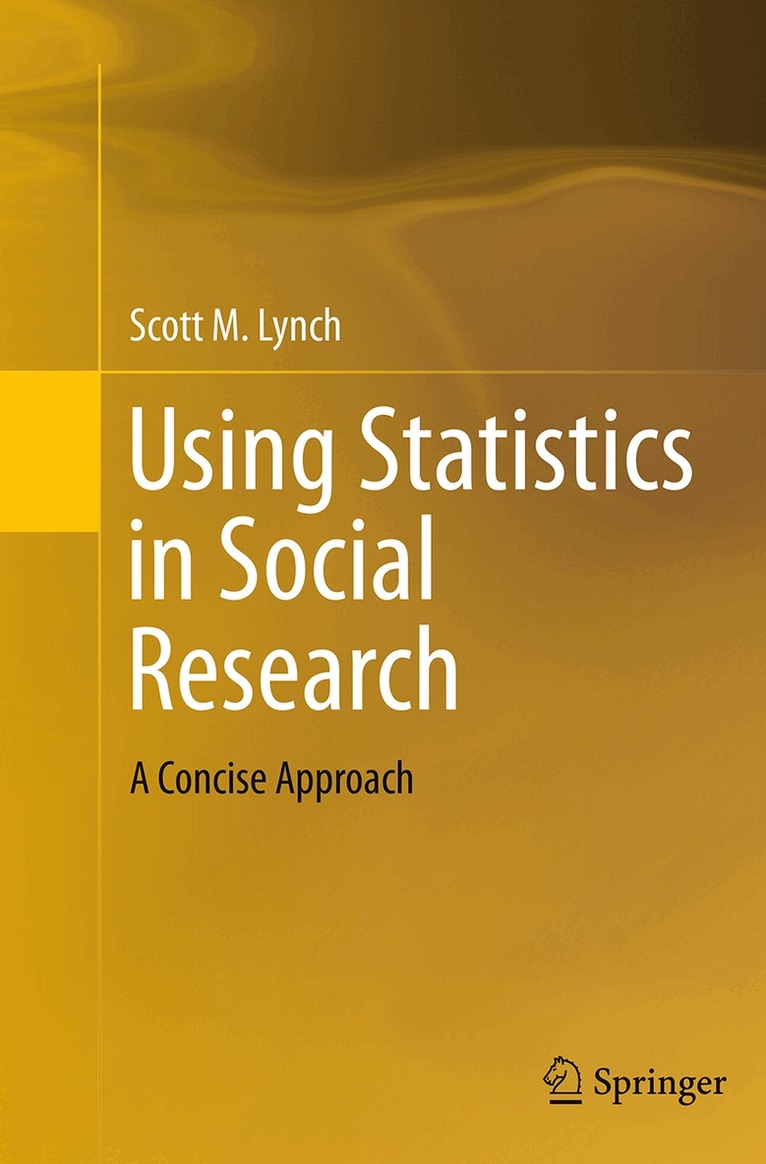
This book covers applied statistics for the social sciences with upper-level undergraduate students in mind. The chapters are based on lecture notes from an introductory statistics course the author has taught for a number of years. The book integrates statistics into the research process, with early chapters covering basic philosophical issues underpinning the process of scientific research. These include the concepts of deductive reasoning and the falsifiability of hypotheses, the development of a research question and hypotheses, and the process of data collection and measurement. Probability theory is then covered extensively with a focus on its role in laying the foundation for statistical reasoning and inference. After illustrating the Central Limit Theorem, later chapters address the key, basic statistical methods used in social science research, including various z and t tests and confidence intervals, nonparametric chi square tests, one-way analysis of variance, correlation, simple regression, and multiple regression, with a discussion of the key issues involved in thinking about causal processes. Concepts and topics are illustrated using both real and simulated data. The penultimate chapter presents rules and suggestions for the successful presentation of statistics in tabular and graphic formats, and the final chapter offers suggestions for subsequent reading and study.
856 kr
Skickas inom 10-15 vardagar
This book covers applied statistics for the social sciences with upper-level undergraduate students in mind. The chapters are based on lecture notes from an introductory statistics course the author has taught for a number of years. The book integrates statistics into the research process, with early chapters covering basic philosophical issues underpinning the process of scientific research. These include the concepts of deductive reasoning and the falsifiability of hypotheses, the development of a research question and hypotheses, and the process of data collection and measurement. Probability theory is then covered extensively with a focus on its role in laying the foundation for statistical reasoning and inference. After illustrating the Central Limit Theorem, later chapters address the key, basic statistical methods used in social science research, including various z and t tests and confidence intervals, nonparametric chi square tests, one-way analysis of variance, correlation, simple regression, and multiple regression, with a discussion of the key issues involved in thinking about causal processes. Concepts and topics are illustrated using both real and simulated data. The penultimate chapter presents rules and suggestions for the successful presentation of statistics in tabular and graphic formats, and the final chapter offers suggestions for subsequent reading and study.