Scott M. Manetsch – författare
Visar alla böcker från författaren Scott M. Manetsch. Handla med fri frakt och snabb leverans.
7 produkter
7 produkter
Häftad, Engelska, 2015
540 kr
Skickas inom 5-8 vardagar
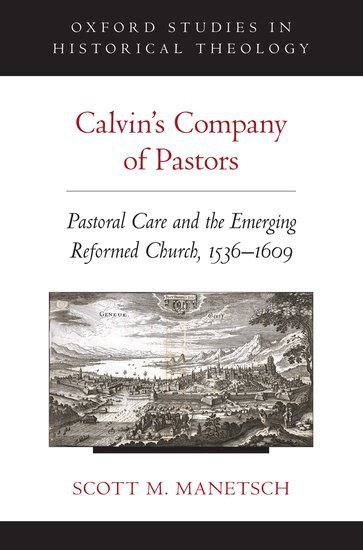
In Calvin's Company of Pastors, Scott Manetsch examines the pastoral theology and practical ministry activities of Geneva's reformed ministers from the time of Calvin's arrival in Geneva until the beginning of the seventeenth century. During these seven decades, more than 130 men were enrolled in Geneva's Venerable Company of Pastors (as it was called), including notable reformed leaders such as Pierre Viret, Theodore Beza, Simon Goulart, Lambert Daneau, and Jean Diodati. Aside from these better-known epigones, Geneva's pastors from this period remain hidden from view, cloaked in Calvin's long shadow, even though they played a strategic role in preserving and reshaping Calvin's pastoral legacy.Making extensive use of archival materials, published sermons, catechisms, prayer books, personal correspondence, and theological writings, Manetsch offers an engaging and vivid portrait of pastoral life in sixteenth- and early seventeenth-century Geneva, exploring the manner in which Geneva's ministers conceived of their pastoral office and performed their daily responsibilities of preaching, public worship, moral discipline, catechesis, administering the sacraments, and pastoral care. Manetsch demonstrates that Calvin and his colleagues were much more than ivory tower theologians or "quasi-agents of the state," concerned primarily with dispensing theological information to their congregations or enforcing magisterial authority. Rather, they saw themselves as spiritual shepherds of Christ's Church, and this self-understanding shaped to a significant degree their daily work as pastors and preachers.
E-bok
Engelska, 2012659 kr
Läs direkt efter köp
In Calvin''s Company of Pastors, Scott Manetsch examines the pastoral theology and practical ministry activities of Geneva''s reformed ministers from the time of Calvin''s arrival in Geneva until the beginning of the seventeenth century. During these seven decades, more than 130 men were enrolled in Geneva''s Venerable Company of Pastors (as it was called), including notable reformed leaders such as Pierre Viret, Theodore Beza, Simon Goulart, Lambert Daneau, and Jean Diodati. Aside from these better-known epigones, Geneva''s pastors from this period remain hidden from view, cloaked in Calvin''s long shadow, even though they played a strategic role in preserving and reshaping Calvin''s pastoral legacy.Making extensive use of archival materials, published sermons, catechisms, prayer books, personal correspondence, and theological writings, Manetsch offers an engaging and vivid portrait of pastoral life in sixteenth- and early seventeenth-century Geneva, exploring the manner in which Geneva''s ministers conceived of their pastoral office and performed their daily responsibilities of preaching, public worship, moral discipline, catechesis, administering the sacraments, and pastoral care. Manetsch demonstrates that Calvin and his colleagues were much more than ivory tower theologians or "quasi-agents of the state," concerned primarily with dispensing theological information to their congregations or enforcing magisterial authority. Rather, they saw themselves as spiritual shepherds of Christ''s Church, and this self-understanding shaped to a significant degree their daily work as pastors and preachers.
E-bok
PDF, Engelska, 2012659 kr
Läs direkt efter köp
In Calvin''s Company of Pastors, Scott Manetsch examines the pastoral theology and practical ministry activities of Geneva''s reformed ministers from the time of Calvin''s arrival in Geneva until the beginning of the seventeenth century. During these seven decades, more than 130 men were enrolled in Geneva''s Venerable Company of Pastors (as it was called), including notable reformed leaders such as Pierre Viret, Theodore Beza, Simon Goulart, Lambert Daneau, and Jean Diodati. Aside from these better-known epigones, Geneva''s pastors from this period remain hidden from view, cloaked in Calvin''s long shadow, even though they played a strategic role in preserving and reshaping Calvin''s pastoral legacy.Making extensive use of archival materials, published sermons, catechisms, prayer books, personal correspondence, and theological writings, Manetsch offers an engaging and vivid portrait of pastoral life in sixteenth- and early seventeenth-century Geneva, exploring the manner in which Geneva''s ministers conceived of their pastoral office and performed their daily responsibilities of preaching, public worship, moral discipline, catechesis, administering the sacraments, and pastoral care. Manetsch demonstrates that Calvin and his colleagues were much more than ivory tower theologians or "quasi-agents of the state," concerned primarily with dispensing theological information to their congregations or enforcing magisterial authority. Rather, they saw themselves as spiritual shepherds of Christ''s Church, and this self-understanding shaped to a significant degree their daily work as pastors and preachers.
Inbunden, Engelska, 2022
670 kr
Skickas inom 5-8 vardagar
Inbunden, Engelska, 2017
670 kr
Skickas inom 5-8 vardagar
Häftad, Engelska, 2019
367 kr
Skickas inom 3-6 vardagar
E-bok
PDF, Engelska, 20201 212 kr
Läs direkt efter köp
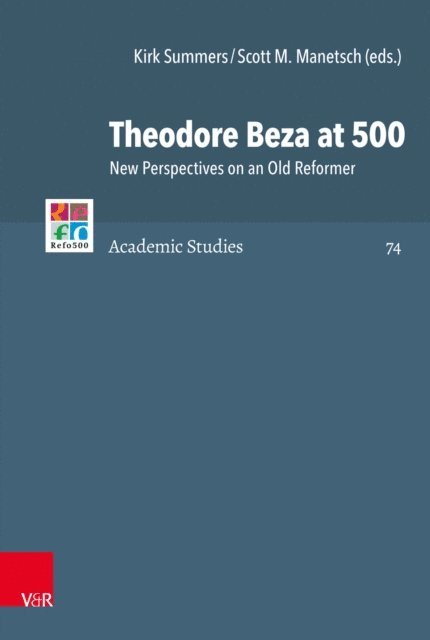
Theodore Beza (1519–1605) was a talented humanist, Protestant theologian, political agitator, and prominent minister of the reformed church in Geneva during the second-half of the 16th century. During his long career, Beza exercised strategic leadership in his efforts to preserve reformed Christianity in Geneva and his native France, as well as to defend the theological legacy of John Calvin throughout Europe. Beza''s diverse literary corpus of more than seventy works demonstrates that he was well-versed in classical literature, skilled in biblical exegesis, and adroit in theological controversy.More than an ivory-tower theologian, Beza maintained contact with the leading political and religious figures of his day, including Henry IV of France and Elizabeth I of England, as well as John Calvin, Heinrich Bullinger, and Philipp Melanchthon. He also participated in some of the most important colloquies and controversies of his generation, such as the Colloquy of Poissy (1561), the National Synod of La Rochelle (1571), and the Colloquy of Montbéliard (1586). This roll call of eminent people and important events indicates the central role that Beza played in the explosive political and religious controversies that roiled Western Europe during this troubled century.This edited volume explores neglected aspects of the history, theology, and literary contribution of Beza. The thirteen contributors to this volume are an accomplished group of scholars who specialize in the religious and social history of early modern Protestantism. Theodore Beza at 500 celebrates the 500th anniversary of the reformer''s birth by providing an original, insightful, and multifaceted study of one of the most important leaders of reformed Protestantism after John Calvin.