964 kr
Skickas inom 10-15 vardagar
964 kr
Skickas inom 10-15 vardagar
1 208 kr
Skickas inom 5-8 vardagar
422 kr
Skickas inom 5-8 vardagar
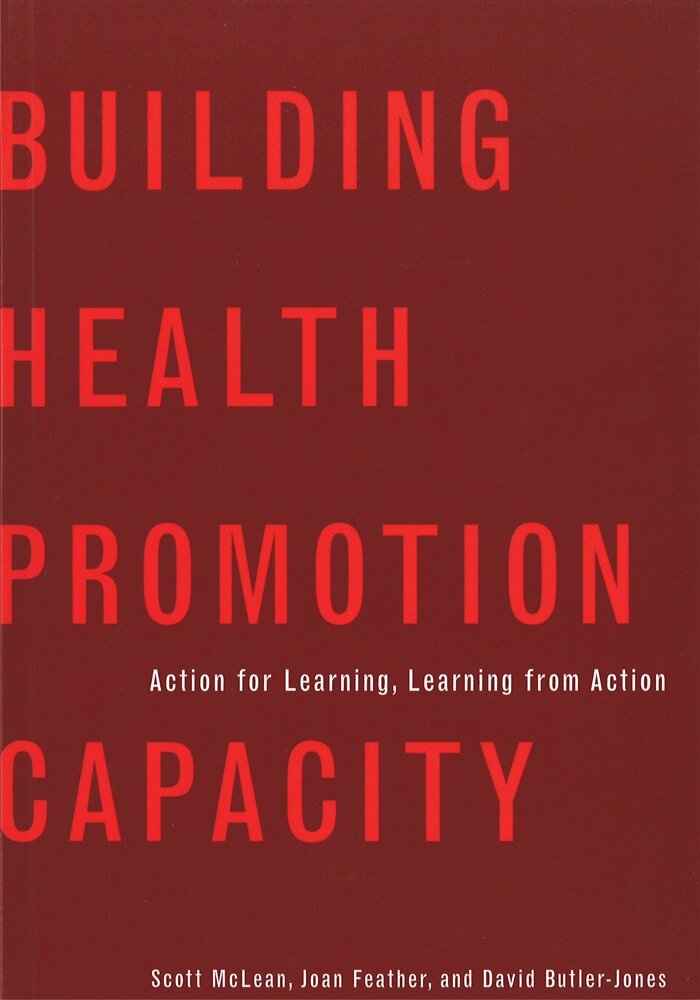
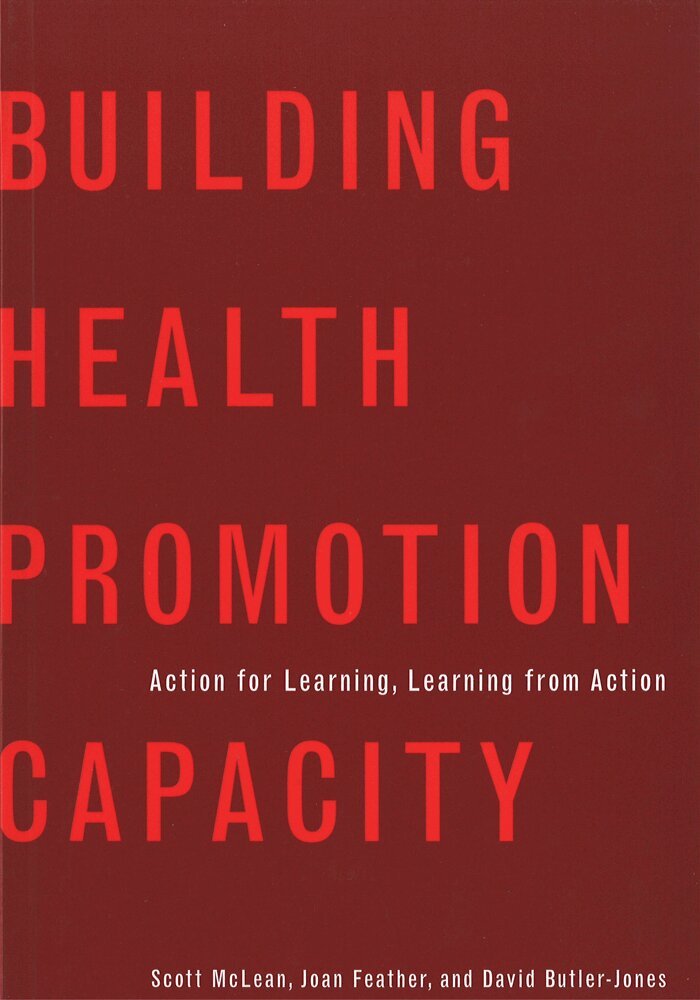
Building Health Promotion Capacity explores the professional practice of health promotion and, in particular, how individuals and organizations can become more effective in undertaking and supporting such practice.
The book is based on the experiences of the Building Health Promotion Capacity Project (1998-2003), a continuing education and applied research venture affiliated with the Saskatchewan Heart Health Program.
The project studied the process of capacity development in relation to practitioners and regional health districts in Saskatchewan. For health promotion practitioners across Canada and beyond, this book provides a coherent framework for effective professional practice. Leaders in health sector organizations will develop a firmer grasp of how to support health promotion practice and how to recruit and retain individual practitioners with a high level of capacity. Policy makers will improve their knowledge of environments that support the health promotion capacity of individuals and organizations. Scholars will learn about the nature of health promotion capacity and about a methodology for its study.
621 kr
Skickas inom 10-15 vardagar
2 464 kr
Skickas inom 10-15 vardagar
88 kr
Skickas
88 kr
Skickas
743 kr
Läs direkt efter köp
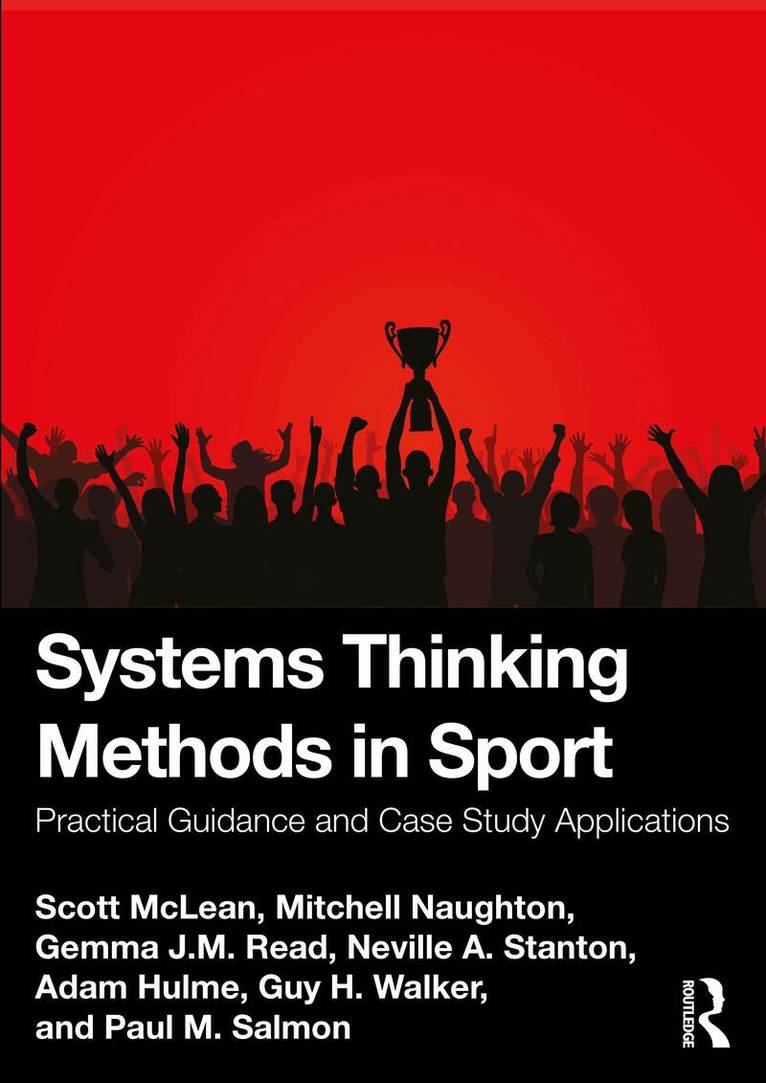
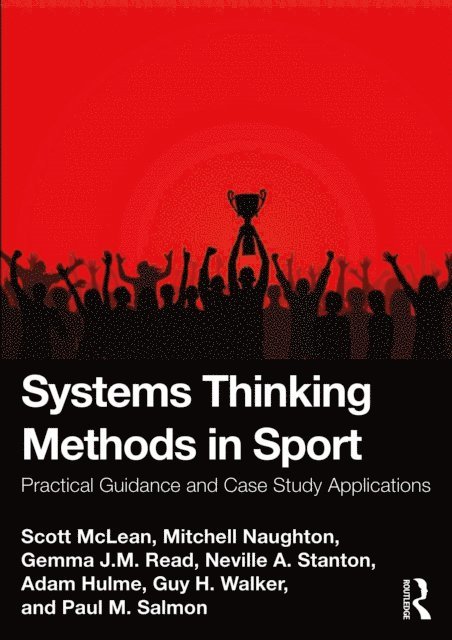
Sport is increasingly being described as a complex system. This inherent complexity cannot be understood by examining components in isolation; rather, the system as a whole should represent the unit of analysis. Systems thinking is the answer to understanding this complexity and is gaining traction in sport. Systems thinking provides a philosophy and a set of associated methods which can be used to understand and optimise the behaviour of complex systems, such as those inherent within sport.
This book presents, for the first time, a practical guide to applying contemporary systems thinking methods in sport as well as case study applications demonstrating how their outputs can be translated in practice. The methods described in this book can be used for better understanding the systemic influences in a broad range of sport contexts, including performance, injury, team functioning, decision‑making, adverse incidents, sports organisation design and redesign, technology implementation, and proactive risk assessments.
Systems Thinking Methods in Sport provides a practical step‑by‑step guide for sports practitioners and stakeholders, as well as university students and academics in applying state‑of‑the‑art systems thinking methods to sport.
750 kr
Läs direkt efter köp
Sport is increasingly being described as a complex system. This inherent complexity cannot be understood by examining components in isolation; rather, the system as a whole should represent the unit of analysis. Systems thinking is the answer to understanding this complexity and is gaining traction in sport. Systems thinking provides a philosophy and a set of associated methods which can be used to understand and optimise the behaviour of complex systems, such as those inherent within sport.
This book presents, for the first time, a practical guide to applying contemporary systems thinking methods in sport as well as case study applications demonstrating how their outputs can be translated in practice. The methods described in this book can be used for better understanding the systemic influences in a broad range of sport contexts, including performance, injury, team functioning, decision‑making, adverse incidents, sports organisation design and redesign, technology implementation, and proactive risk assessments.
Systems Thinking Methods in Sport provides a practical step‑by‑step guide for sports practitioners and stakeholders, as well as university students and academics in applying state‑of‑the‑art systems thinking methods to sport.
2 862 kr
Skickas inom 10-15 vardagar
545 kr
Skickas inom 5-8 vardagar
1 169 kr
Läs direkt efter köp
Sport is an integral part of society, playing a key role in human health and well-being, and cultural, political and economic development. As sport is becoming more complex, competitive, diverse, and increasingly reliant on technology, HFE theories, methods, and principles are progressively being applied to help understand and optimize sports systems.
Human Factors and Ergonomics in Sport: Applications and Future Directions showcases the latest in sports HFE research and practice. Including contributions from both HFE and sports science researchers, it provides a collection of state-of-the-art studies, reviews and commentaries covering a diverse set of sports and sporting issues.
"This book is an excellent resource for all academics and students in general. It provides updated theoretical foundations and applications that conceive a world where everything is connected and embedded in technology that allows us to capture, process and visualise actions and interactions, also at transdisciplinary levels."
Professor Jaime Sampaio, Head of the Research Center in Sports Sciences, Health and Human Development (CIDESD), University of Trás-os-Montes e Alto Douro, Portugal
"With the changing nature of work comes an ever-greater focus on leisure. Sport is a major dimension of this crucial form of human activity. Now comes Salmon and his colleagues who have assembled a panoply of world leaders who each provide their own individual perspectives on this intriguing world. Their emphasis on the human factors and ergonomics of these activities brings us new and exciting insights. A great read for the specialist and generalist alike."
Professor Peter Hancock, Pegasus Professor, Provost Distinguished Research Professor and Trustee Chair, University of Central Florida, USA.
"Finally, the complexity of sports and health is being considered in full. This book challenges contemporary thinking toward the prevention of injuries in sports, and provides tangible solutions to help our field into a new decade."
Professor Evert Verhagen, Amsterdam Collaboration on Health and Safety in Sports & Department of Public and Occupational Health, VU University Medical Center
1 169 kr
Läs direkt efter köp
Sport is an integral part of society, playing a key role in human health and well-being, and cultural, political and economic development. As sport is becoming more complex, competitive, diverse, and increasingly reliant on technology, HFE theories, methods, and principles are progressively being applied to help understand and optimize sports systems.
Human Factors and Ergonomics in Sport: Applications and Future Directions showcases the latest in sports HFE research and practice. Including contributions from both HFE and sports science researchers, it provides a collection of state-of-the-art studies, reviews and commentaries covering a diverse set of sports and sporting issues.
"This book is an excellent resource for all academics and students in general. It provides updated theoretical foundations and applications that conceive a world where everything is connected and embedded in technology that allows us to capture, process and visualise actions and interactions, also at transdisciplinary levels."
Professor Jaime Sampaio, Head of the Research Center in Sports Sciences, Health and Human Development (CIDESD), University of Trás-os-Montes e Alto Douro, Portugal
"With the changing nature of work comes an ever-greater focus on leisure. Sport is a major dimension of this crucial form of human activity. Now comes Salmon and his colleagues who have assembled a panoply of world leaders who each provide their own individual perspectives on this intriguing world. Their emphasis on the human factors and ergonomics of these activities brings us new and exciting insights. A great read for the specialist and generalist alike."
Professor Peter Hancock, Pegasus Professor, Provost Distinguished Research Professor and Trustee Chair, University of Central Florida, USA.
"Finally, the complexity of sports and health is being considered in full. This book challenges contemporary thinking toward the prevention of injuries in sports, and provides tangible solutions to help our field into a new decade."
Professor Evert Verhagen, Amsterdam Collaboration on Health and Safety in Sports & Department of Public and Occupational Health, VU University Medical Center
88 kr
Skickas
1 136 kr
Skickas inom 10-15 vardagar
964 kr
Skickas inom 10-15 vardagar
1 208 kr
Skickas inom 5-8 vardagar
422 kr
Skickas inom 5-8 vardagar
Building Health Promotion Capacity explores the professional practice of health promotion and, in particular, how individuals and organizations can become more effective in undertaking and supporting such practice.
The book is based on the experiences of the Building Health Promotion Capacity Project (1998-2003), a continuing education and applied research venture affiliated with the Saskatchewan Heart Health Program.
The project studied the process of capacity development in relation to practitioners and regional health districts in Saskatchewan. For health promotion practitioners across Canada and beyond, this book provides a coherent framework for effective professional practice. Leaders in health sector organizations will develop a firmer grasp of how to support health promotion practice and how to recruit and retain individual practitioners with a high level of capacity. Policy makers will improve their knowledge of environments that support the health promotion capacity of individuals and organizations. Scholars will learn about the nature of health promotion capacity and about a methodology for its study.
621 kr
Skickas inom 10-15 vardagar
2 464 kr
Skickas inom 10-15 vardagar
88 kr
Skickas
88 kr
Skickas
743 kr
Läs direkt efter köp
Sport is increasingly being described as a complex system. This inherent complexity cannot be understood by examining components in isolation; rather, the system as a whole should represent the unit of analysis. Systems thinking is the answer to understanding this complexity and is gaining traction in sport. Systems thinking provides a philosophy and a set of associated methods which can be used to understand and optimise the behaviour of complex systems, such as those inherent within sport.
This book presents, for the first time, a practical guide to applying contemporary systems thinking methods in sport as well as case study applications demonstrating how their outputs can be translated in practice. The methods described in this book can be used for better understanding the systemic influences in a broad range of sport contexts, including performance, injury, team functioning, decision‑making, adverse incidents, sports organisation design and redesign, technology implementation, and proactive risk assessments.
Systems Thinking Methods in Sport provides a practical step‑by‑step guide for sports practitioners and stakeholders, as well as university students and academics in applying state‑of‑the‑art systems thinking methods to sport.
750 kr
Läs direkt efter köp
Sport is increasingly being described as a complex system. This inherent complexity cannot be understood by examining components in isolation; rather, the system as a whole should represent the unit of analysis. Systems thinking is the answer to understanding this complexity and is gaining traction in sport. Systems thinking provides a philosophy and a set of associated methods which can be used to understand and optimise the behaviour of complex systems, such as those inherent within sport.
This book presents, for the first time, a practical guide to applying contemporary systems thinking methods in sport as well as case study applications demonstrating how their outputs can be translated in practice. The methods described in this book can be used for better understanding the systemic influences in a broad range of sport contexts, including performance, injury, team functioning, decision‑making, adverse incidents, sports organisation design and redesign, technology implementation, and proactive risk assessments.
Systems Thinking Methods in Sport provides a practical step‑by‑step guide for sports practitioners and stakeholders, as well as university students and academics in applying state‑of‑the‑art systems thinking methods to sport.
2 862 kr
Skickas inom 10-15 vardagar
545 kr
Skickas inom 5-8 vardagar
1 169 kr
Läs direkt efter köp
Sport is an integral part of society, playing a key role in human health and well-being, and cultural, political and economic development. As sport is becoming more complex, competitive, diverse, and increasingly reliant on technology, HFE theories, methods, and principles are progressively being applied to help understand and optimize sports systems.
Human Factors and Ergonomics in Sport: Applications and Future Directions showcases the latest in sports HFE research and practice. Including contributions from both HFE and sports science researchers, it provides a collection of state-of-the-art studies, reviews and commentaries covering a diverse set of sports and sporting issues.
"This book is an excellent resource for all academics and students in general. It provides updated theoretical foundations and applications that conceive a world where everything is connected and embedded in technology that allows us to capture, process and visualise actions and interactions, also at transdisciplinary levels."
Professor Jaime Sampaio, Head of the Research Center in Sports Sciences, Health and Human Development (CIDESD), University of Trás-os-Montes e Alto Douro, Portugal
"With the changing nature of work comes an ever-greater focus on leisure. Sport is a major dimension of this crucial form of human activity. Now comes Salmon and his colleagues who have assembled a panoply of world leaders who each provide their own individual perspectives on this intriguing world. Their emphasis on the human factors and ergonomics of these activities brings us new and exciting insights. A great read for the specialist and generalist alike."
Professor Peter Hancock, Pegasus Professor, Provost Distinguished Research Professor and Trustee Chair, University of Central Florida, USA.
"Finally, the complexity of sports and health is being considered in full. This book challenges contemporary thinking toward the prevention of injuries in sports, and provides tangible solutions to help our field into a new decade."
Professor Evert Verhagen, Amsterdam Collaboration on Health and Safety in Sports & Department of Public and Occupational Health, VU University Medical Center
1 169 kr
Läs direkt efter köp
Sport is an integral part of society, playing a key role in human health and well-being, and cultural, political and economic development. As sport is becoming more complex, competitive, diverse, and increasingly reliant on technology, HFE theories, methods, and principles are progressively being applied to help understand and optimize sports systems.
Human Factors and Ergonomics in Sport: Applications and Future Directions showcases the latest in sports HFE research and practice. Including contributions from both HFE and sports science researchers, it provides a collection of state-of-the-art studies, reviews and commentaries covering a diverse set of sports and sporting issues.
"This book is an excellent resource for all academics and students in general. It provides updated theoretical foundations and applications that conceive a world where everything is connected and embedded in technology that allows us to capture, process and visualise actions and interactions, also at transdisciplinary levels."
Professor Jaime Sampaio, Head of the Research Center in Sports Sciences, Health and Human Development (CIDESD), University of Trás-os-Montes e Alto Douro, Portugal
"With the changing nature of work comes an ever-greater focus on leisure. Sport is a major dimension of this crucial form of human activity. Now comes Salmon and his colleagues who have assembled a panoply of world leaders who each provide their own individual perspectives on this intriguing world. Their emphasis on the human factors and ergonomics of these activities brings us new and exciting insights. A great read for the specialist and generalist alike."
Professor Peter Hancock, Pegasus Professor, Provost Distinguished Research Professor and Trustee Chair, University of Central Florida, USA.
"Finally, the complexity of sports and health is being considered in full. This book challenges contemporary thinking toward the prevention of injuries in sports, and provides tangible solutions to help our field into a new decade."
Professor Evert Verhagen, Amsterdam Collaboration on Health and Safety in Sports & Department of Public and Occupational Health, VU University Medical Center
88 kr
Skickas
1 136 kr
Skickas inom 10-15 vardagar