Sean Ekins - Böcker
Visar alla böcker från författaren Sean Ekins. Handla med fri frakt och snabb leverans.
12 produkter
12 produkter
Del 7 - Wiley Series on Technologies for the Pharmaceutical Industry
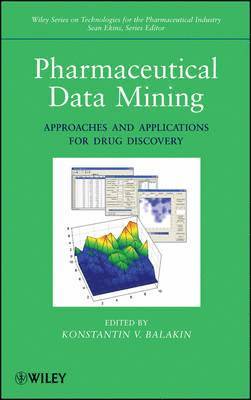
Pharmaceutical Data Mining
Approaches and Applications for Drug Discovery
Inbunden, Engelska, 2010
1 961 kr
Skickas inom 11-20 vardagar
Leading experts illustrate how sophisticated computational data mining techniques can impact contemporary drug discovery and development In the era of post-genomic drug development, extracting and applying knowledge from chemical, biological, and clinical data is one of the greatest challenges facing the pharmaceutical industry. Pharmaceutical Data Mining brings together contributions from leading academic and industrial scientists, who address both the implementation of new data mining technologies and application issues in the industry. This accessible, comprehensive collection discusses important theoretical and practical aspects of pharmaceutical data mining, focusing on diverse approaches for drug discovery—including chemogenomics, toxicogenomics, and individual drug response prediction. The five main sections of this volume cover: A general overview of the discipline, from its foundations to contemporary industrial applicationsChemoinformatics-based applicationsBioinformatics-based applicationsData mining methods in clinical developmentData mining algorithms, technologies, and software tools, with emphasis on advanced algorithms and software that are currently used in the industry or represent promising approachesIn one concentrated reference, Pharmaceutical Data Mining reveals the role and possibilities of these sophisticated techniques in contemporary drug discovery and development. It is ideal for graduate-level courses covering pharmaceutical science, computational chemistry, and bioinformatics. In addition, it provides insight to pharmaceutical scientists, principal investigators, principal scientists, research directors, and all scientists working in the field of drug discovery and development and associated industries.
Del 4 - Wiley Series on Technologies for the Pharmaceutical Industry
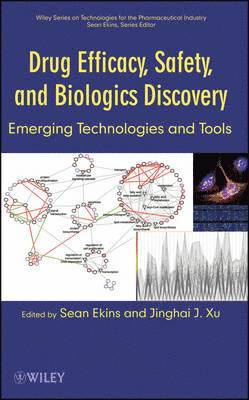
Drug Efficacy, Safety, and Biologics Discovery
Emerging Technologies and Tools
Inbunden, Engelska, 2009
1 821 kr
Skickas inom 11-20 vardagar
Drug Efficacy, Safety, and Biologics Discovery: Emerging Technologies and Tools covers key emerging technologies in pharmaceutical R & D and how they have substantially impacted (or are currently impacting) drug discovery. The cross-disciplinary collaborations implicit in integrating these technologies with drug discovery operations will fuel the engine for future innovations. This book cuts across the multiple areas of drug discovery, each chapter authored by pioneers in that field, making for a broad appeal to the chemical and biological scientists and technologists involved in drug discovery and development.
Del 6 - Wiley Series on Technologies for the Pharmaceutical Industry
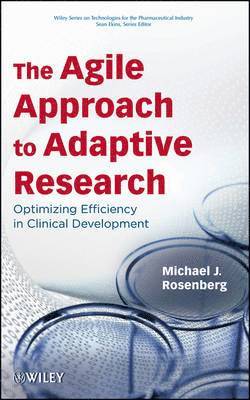
Agile Approach to Adaptive Research
Optimizing Efficiency in Clinical Development
Inbunden, Engelska, 2010
1 100 kr
Skickas inom 7-10 vardagar
Apply adaptive research to improve results in drug development The pharmaceutical industry today faces a deepening crisis: inefficiency in its core business, the development of new drugs. The Agile Approach to Adaptive Research offers a solution. It outlines how adaptive research, using already-available tools and techniques, can enable the industry to streamline clinical trials and reach decision points faster and more efficiently.With a wealth of real-world cases and examples, author Michael Rosenberg gives readers a practical overview of drug development, the problems inherent in current practices, and the advantages of adaptive research technology and methods. He explains the concepts, principles, and specific techniques of adaptive research, and demonstrates why it is an essential evolutionary step toward improving drug research and development.Chapters explore such subjects as: The adaptive concept Design and operational adaptations Sample-size reestimation Agile clinical development Safety and dose finding Statistics in adaptive research, including frequentist and Bayesian approaches Data management technologies The future of clinical development By combining centuries-old intellectual foundations, recent technological advances, and modern management techniques, adaptive research preserves the integrity and validity of clinical research but dramatically improves efficiency.
Del 5 - Wiley Series on Technologies for the Pharmaceutical Industry
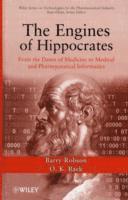
Engines of Hippocrates
From the Dawn of Medicine to Medical and Pharmaceutical Informatics
Inbunden, Engelska, 2009
1 216 kr
Tillfälligt slut
A unique, integrative look at information-based medicine The convergence of medical science, biology, pharmacology, biomedical engineering, healthcare, and information technology is revolutionizing medical and scientific practice, and has broader social implications still being understood. The Engines of Hippocrates provides a unique, integrative, and holistic look at the new paradigm of information-based medicine, covering a broad range of topics for a wide readership.The authors take a comprehensive approach, examining the prehistory, history, and future of medicine and medical technology and its relation to information; how history led to such present-day discoveries as the structure of DNA, the human genome, and the discipline of bioinformatics; and what the future results of these discoveries may hold. Their far-ranging views are their own and not necessarily those of the IBM Corporation or other employers.The Engines of Hippocrates helps readers understand: Forces shaping the pharmaceutical and biomedical industries today, including personalized medicine, genomics, data mining, and bionanotechnologyThe relationship between pharmaceutical science today and other disciplines such as philosophy of health, history, economics, mathematics, and computer science The integrated role alternative and non-Western medicines could play in a new, information-based medicine Practical, ethical, organizational, technological, and social problems of information-based medicine, along with a novel data-centric computing model and a self-adaptive software engineering model, and corresponding information technology architectures, including perspectives on sharing remote data efficiently and securely for the common good An unmatched, cross-disciplinary perspective on the big picture of today and tomorrow's medicine, The Engines of Hippocrates provides a reference to interested readers both inside and outside the pharmaceutical and medical communities, as well as a peerless classroom supplement to students in a wide variety of disciplines.
Del 10 - Wiley Series on Technologies for the Pharmaceutical Industry
Collaborative Computational Technologies for Biomedical Research
Inbunden, Engelska, 2011
1 899 kr
Skickas inom 5-8 vardagar
Methods, Processes, and Tools for Collaboration"The time has come to fundamentally rethink how we handle the building of knowledge in biomedical sciences today. This book describes how the computational sciences have transformed into being a key knowledge broker, able to integrate and operate across divergent data types."Bryn Williams-Jones, Associate Research Fellow, PfizerThe pharmaceutical industry utilizes an extended network of partner organizations in order to discover and develop new drugs, however there is currently little guidance for managing information and resources across collaborations.Featuring contributions from the leading experts in a range of industries, Collaborative Computational Technologies for Biomedical Research provides information that will help organizations make critical decisions about managing partnerships, including: Serving as a user manual for collaborations Tackling real problems from both human collaborative and data and informatics perspectives Providing case histories of biomedical collaborations and technology-specific chapters that balance technological depth with accessibility for the non-specialist reader A must-read for anyone working in the pharmaceuticals industry or academia, this book marks a major step towards widespread collaboration facilitated by computational technologies.
Del 2 - Wiley Series in Drug Discovery and Development
Computer Applications in Pharmaceutical Research and Development
Inbunden, Engelska, 2006
2 421 kr
Skickas inom 11-20 vardagar
A unique, holistic approach covering all functions and phases of pharmaceutical research and development While there are a number of texts dedicated to individual aspects of pharmaceutical research and development, this unique contributed work takes a holistic and integrative approach to the use of computers in all phases of drug discovery, development, and marketing. It explains how applications are used at various stages, including bioinformatics, data mining, predicting human response to drugs, and high-throughput screening. By providing a comprehensive view, the book offers readers a unique framework and systems perspective from which they can devise strategies to thoroughly exploit the use of computers in their organizations during all phases of the discovery and development process. Chapters are organized into the following sections:* Computers in pharmaceutical research and development: a general overview* Understanding diseases: mining complex systems for knowledge* Scientific information handling and enhancing productivity* Computers in drug discovery* Computers in preclinical development* Computers in development decision making, economics, and market analysis* Computers in clinical development* Future applications and future development Each chapter is written by one or more leading experts in the field and carefully edited to ensure a consistent structure and approach throughout the book. Figures are used extensively to illustrate complex concepts and multifaceted processes. References are provided in each chapter to enable readers to continue investigating a particular topic in depth. Finally, tables of software resources are provided in many of the chapters. This is essential reading for IT professionals and scientists in the pharmaceutical industry as well as researchers involved in informatics and ADMET, drug discovery, and technology development. The book's cross-functional, all-phases approach provides a unique opportunity for a holistic analysis and assessment of computer applications in pharmaceutics.
1 804 kr
Skickas inom 10-15 vardagar
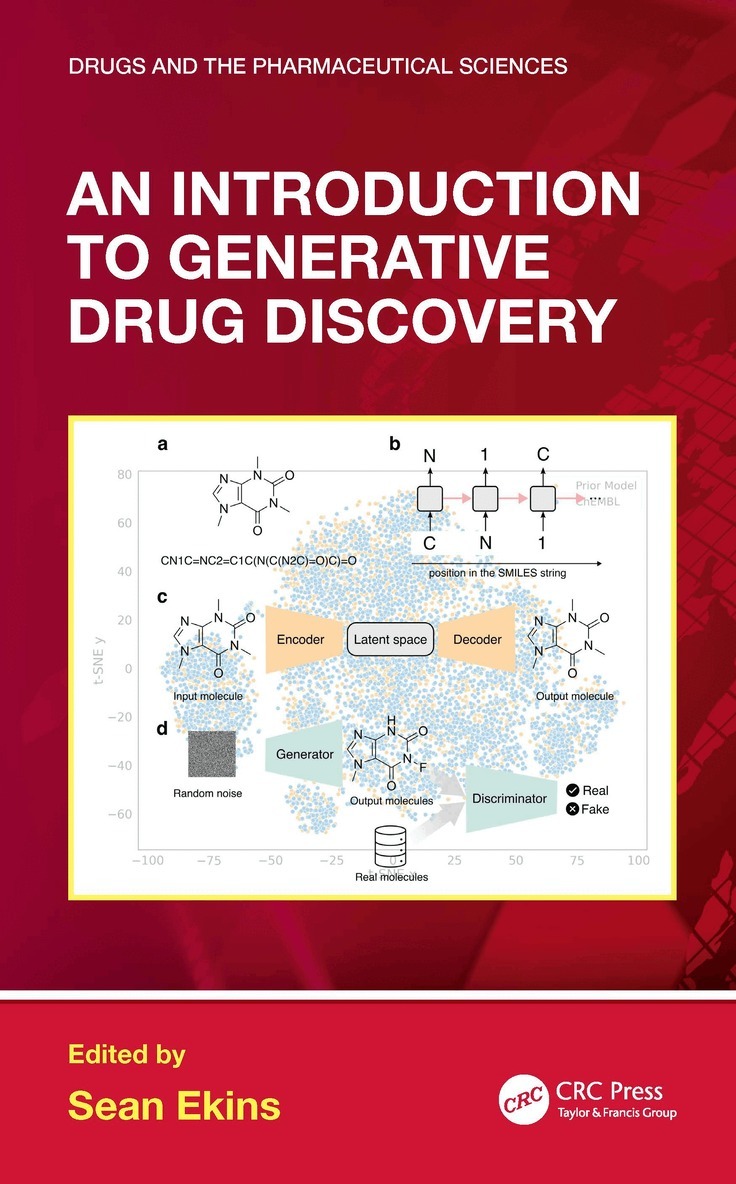
This book describes the state‑of‑the‑art methods and applications for de novo design of drug candidates using generative chemistry models as well as the ethical aspects of this technology. It will provide a foundation for those new to the field as well as those that may already have some experience of its utility. With contributions from scientists in both academia and industry ‘Introduction to Generative Drug Discovery’ may represent one of the earliest if not the first book to focus on this topic.This book focuses on the latest advances in computational de novo drug discovery methods, also known as generative drug discoveryThis book will describe different state of the art applications of generative molecule design.The book describes ethical aspects of generative drug discovery technology.The mix of academic and industrial authors provides an array of applications of generative drug discovery.A future perspective of where these generative technologies may take us in drug discovery is described included self-driving labs.
800 kr
Kommande
This book describes the state‑of‑the‑art methods and applications for de novo design of drug candidates using generative chemistry models as well as the ethical aspects of this technology. It will provide a foundation for those new to the field as well as those that may already have some experience of its utility. With contributions from scientists in both academia and industry ‘Introduction to Generative Drug Discovery’ may represent one of the earliest if not the first book to focus on this topic.This book focuses on the latest advances in computational de novo drug discovery methods, also known as generative drug discoveryThis book will describe different state of the art applications of generative molecule design.The book describes ethical aspects of generative drug discovery technology.The mix of academic and industrial authors provides an array of applications of generative drug discovery.A future perspective of where these generative technologies may take us in drug discovery is described included self-driving labs.
2 072 kr
Skickas inom 11-20 vardagar
A key resource for toxicologists across a broad spectrum of fields, this book offers a comprehensive analysis of molecular modelling approaches and strategies applied to risk assessment for pharmaceutical and environmental chemicals. Provides a perspective of what is currently achievable with computational toxicology and a view to future developmentsHelps readers overcome questions of data sources, curation, treatment, and how to model / interpret critical endpoints that support 21st century hazard assessmentAssembles cutting-edge concepts and leading authors into a unique and powerful single-source referenceIncludes in-depth looks at QSAR models, physicochemical drug properties, structure-based drug targeting, chemical mixture assessments, and environmental modelingFeatures coverage about consumer product safety assessment and chemical defense along with chapters on open source toxicology and big data
1 423 kr
Skickas inom 10-15 vardagar
As an academic or a small business owner, you will need to write grants at some point in your career. Writing them though is not enough, what you also need to know is how to win grants. Much has been written about writing grants, the mysterious special ability called ‘grantsmanship’, so it occurred to me that there is a need to come at this differently and spill the beans. The difficulty in getting a grant, in particular an NIH grant like an R01 in the USA is often described, it is competitive and gets tougher every year. Your proposal therefore must stand out, it must connect with the reviewers. This is true for all types of grants, give the reviewer what they want always. But also, you need to connect to the program officer, the committee that ultimately makes funding decisions and you must take care of a myriad of other details outside of the main event which is describing the “science”. This means you cannot rely on just out-writing the competition, it is more than that as you have to out-think, out-strategize and out-schmooze them. If you have been continually funded for decades that is terrific, but if you want to keep being funded there is no guarantee what got you there will keep you there. What was a hot technology 4-5 years ago is not the new thing anymore, you will need to do something different, but what? You therefore need to not only think about writing great grants, you need to put it into practice and win them. Having written and won grants from the NIH and DOD over the past 17 years (and longer by the time you read this) I possess a valuable perspective.Each grant and study section will be different. Whether a big or small grant it does not seem to make a difference the reviewers will critique your efforts, they may not like it, they may reject your ideas or they may love it. You have some small degree of control until the proposal leaves your hands or more correctly you click ‘submit’. You will need to differentiate your grant from the hundreds of others in many ways, but you cannot change who you are, your history so how you describe yourself and team will also have an impact. You could spend hundreds of hours on your proposal or just a day and the outcome might still be the same. This small book is a summary of my own personal experiences and will provide some advice that will help you learn how to do a better job of winning grants.This book is written by a scientist who writes the grants and develops commercial products;Provides a unique perspective on what you need to write better grants;Teaches you how to continually win grants;This book provides examples from the authors own grant applications;The reader will be inspired to start a company to win small business grants.
653 kr
Skickas inom 5-8 vardagar
1 096 kr
Skickas inom 10-15 vardagar
As an academic or a small business owner, you will need to write grants at some point in your career. Writing them though is not enough, what you also need to know is how to win grants. Much has been written about writing grants, the mysterious special ability called ‘grantsmanship’, so it occurred to me that there is a need to come at this differently and spill the beans. The difficulty in getting a grant, in particular an NIH grant like an R01 in the USA is often described, it is competitive and gets tougher every year. Your proposal therefore must stand out, it must connect with the reviewers. This is true for all types of grants, give the reviewer what they want always. But also, you need to connect to the program officer, the committee that ultimately makes funding decisions and you must take care of a myriad of other details outside of the main event which is describing the “science”. This means you cannot rely on just out-writing the competition, it is more than that as you have to out-think, out-strategize and out-schmooze them. If you have been continually funded for decades that is terrific, but if you want to keep being funded there is no guarantee what got you there will keep you there. What was a hot technology 4-5 years ago is not the new thing anymore, you will need to do something different, but what? You therefore need to not only think about writing great grants, you need to put it into practice and win them. Having written and won grants from the NIH and DOD over the past 17 years (and longer by the time you read this) I possess a valuable perspective.Each grant and study section will be different. Whether a big or small grant it does not seem to make a difference the reviewers will critique your efforts, they may not like it, they may reject your ideas or they may love it. You have some small degree of control until the proposal leaves your hands or more correctly you click ‘submit’. You will need to differentiate your grant from the hundreds of others in many ways, but you cannot change who you are, your history so how you describe yourself and team will also have an impact. You could spend hundreds of hours on your proposal or just a day and the outcome might still be the same. This small book is a summary of my own personal experiences and will provide some advice that will help you learn how to do a better job of winning grants.This book is written by a scientist who writes the grants and develops commercial products;Provides a unique perspective on what you need to write better grants;Teaches you how to continually win grants;This book provides examples from the authors own grant applications;The reader will be inspired to start a company to win small business grants.