Sean Field – författare
Visar alla böcker från författaren Sean Field. Handla med fri frakt och snabb leverans.
4 produkter
4 produkter
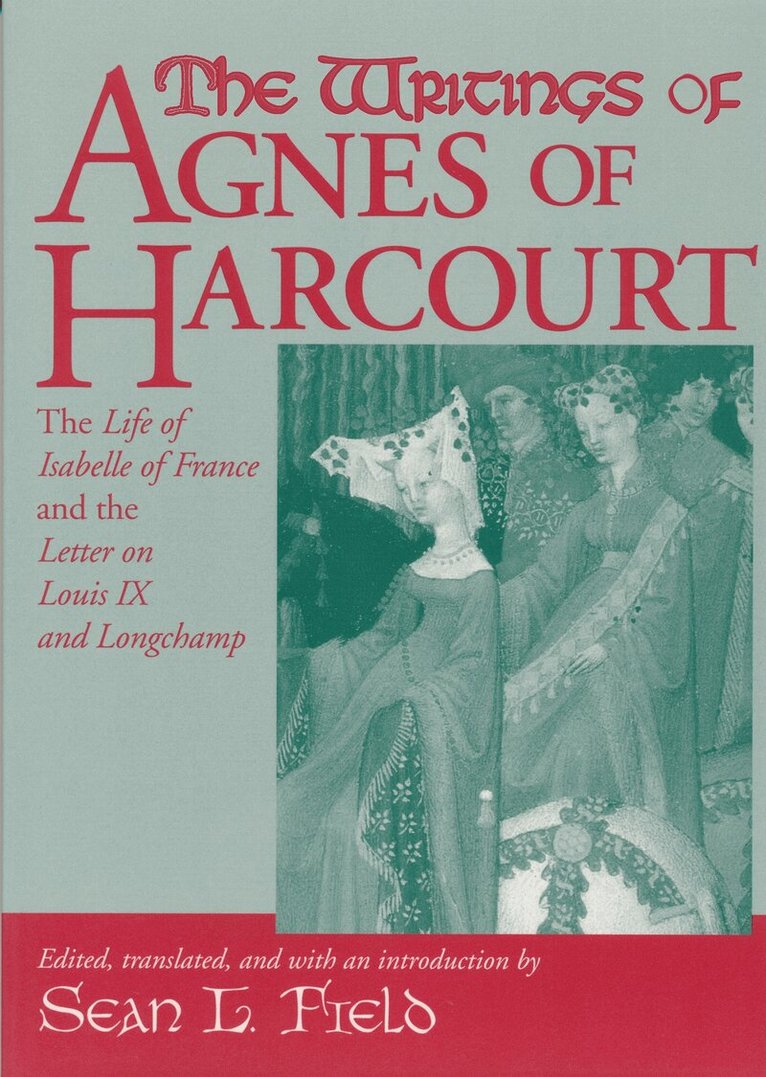
Writings of Agnes of Harcourt
The Life of Isabelle of France and the Letter on Louis IX and Longchamp
Inbunden, Engelska, 2003
1 143 kr
Skickas inom 10-15 vardagar
Agnes of Harcourt is an important though little known thirteenth-century author. Born into a leading Norman noble family, she became an abbess at the new royal Franciscan abbey of Longchamp, founded just outside of Paris by Isabelle of France, sister of Louis IX. In the 1280s Agnes wrote a substantial biography of Isabelle of France, as well as a brief letter detailing Louis IX's involvement with the abbey. These texts were based on Agnes's first-hand observations and contained many lively stories about their royal subjects.Agnes's writings provide a fascinating window on religious life at the court of St. Louis and on the lives of some of the most interesting and powerful men and women of the day. More significantly, they preserve one of the very few female perspectives we have for this period, and, in The Life of Isabelle, offer what is probably the first biography of one woman by another in French.Based on new research into the surviving archives of Longchamp, The Writing of Agnes of Harcourt presents the first English translation of her texts, and the first substantial introduction to her life and work. This critical edition includes both the old French and English versions of the text.
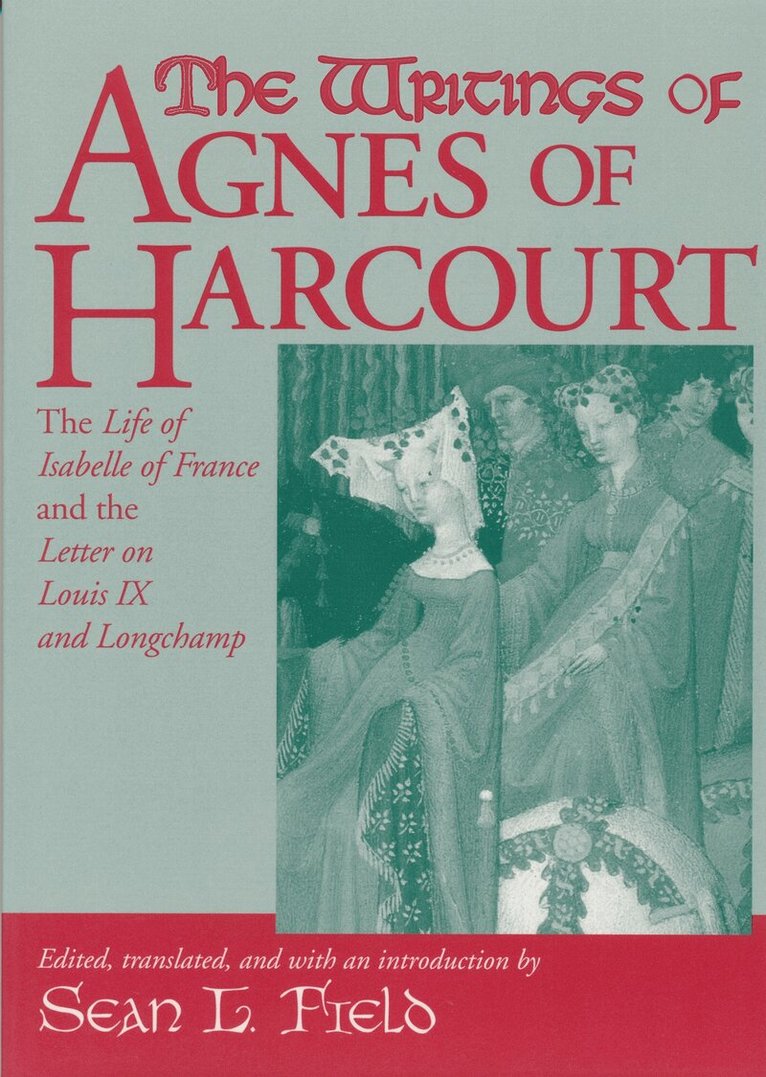
Writings of Agnes of Harcourt
The Life of Isabelle of France and the Letter on Louis IX and Longchamp
Häftad, Engelska, 2003
334 kr
Skickas inom 10-15 vardagar
Agnes of Harcourt is an important though little known thirteenth-century author. Born into a leading Norman noble family, she became an abbess at the new royal Franciscan abbey of Longchamp, founded just outside of Paris by Isabelle of France, sister of Louis IX. In the 1280s Agnes wrote a substantial biography of Isabelle of France, as well as a brief letter detailing Louis IX's involvement with the abbey. These texts were based on Agnes's first-hand observations and contained many lively stories about their royal subjects.Agnes's writings provide a fascinating window on religious life at the court of St. Louis and on the lives of some of the most interesting and powerful men and women of the day. More significantly, they preserve one of the very few female perspectives we have for this period, and, in The Life of Isabelle, offer what is probably the first biography of one woman by another in French.Based on new research into the surviving archives of Longchamp, The Writing of Agnes of Harcourt presents the first English translation of her texts, and the first substantial introduction to her life and work. This critical edition includes both the old French and English versions of the text.
956 kr
Skickas inom 10-15 vardagar
Surprising insights into the worldviews of oil and gas financiersIt is no secret that the fossil fuel industry, whose products power modern America both physically and financially, inflicts immense destruction to our environment. The past, present, and future of US energy have been determined not just by engineers, but by financiers, an under-studied group of energy investors.Drawing on four years of ethnographic work in Houston, Texas, the financial center of the oil industry, Carbon Capital explores how oil financiers decide what a good investment is, and how they incorporate ethics into their decision making. While many who are concerned about climate change see those involved in the gas and oil industries as immoral profit chasers who do not care about the environment, the author finds that this is not the case. His interviews and observations demonstrate that the people who finance the energy industries are actually deeply concerned with ethics. They grapple with questions about climate change and what it means to do the right thing, but the choices they make are ultimately guided by a combination of how they perceive the historical context in which they operate, their faith, which is largely religious Christian; their financial interests; plus the capitalist system in which they are running, all of which come together to shape their moral understandings about what a good energy future looks like. While the worldview of oil financiers may not align with our own, the author argues that given their importance in shaping environmental approaches, it is crucial that we understand what drives their ethical sensibilities.
309 kr
Skickas
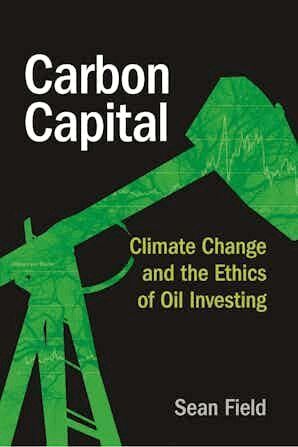
Surprising insights into the worldviews of oil and gas financiersIt is no secret that the fossil fuel industry, whose products power modern America both physically and financially, inflicts immense destruction to our environment. The past, present, and future of US energy have been determined not just by engineers, but by financiers, an under-studied group of energy investors.Drawing on four years of ethnographic work in Houston, Texas, the financial center of the oil industry, Carbon Capital explores how oil financiers decide what a good investment is, and how they incorporate ethics into their decision making. While many who are concerned about climate change see those involved in the gas and oil industries as immoral profit chasers who do not care about the environment, the author finds that this is not the case. His interviews and observations demonstrate that the people who finance the energy industries are actually deeply concerned with ethics. They grapple with questions about climate change and what it means to do the right thing, but the choices they make are ultimately guided by a combination of how they perceive the historical context in which they operate, their faith, which is largely religious Christian; their financial interests; plus the capitalist system in which they are running, all of which come together to shape their moral understandings about what a good energy future looks like. While the worldview of oil financiers may not align with our own, the author argues that given their importance in shaping environmental approaches, it is crucial that we understand what drives their ethical sensibilities.