
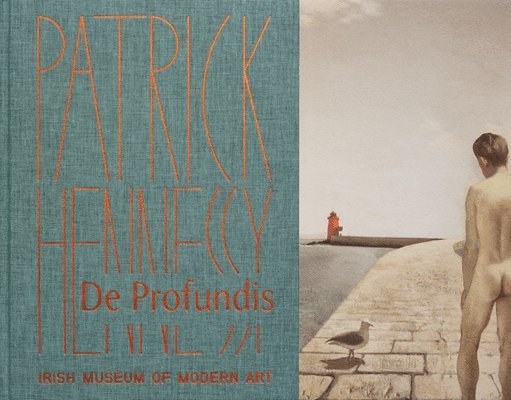
"A strange and exotic presence in Irish art," "standing alone" and "very un-Irish" were some of the epithets used to describe Patrick Hennessy (1915–80), one of Ireland’s most successful realist painters in the postwar period. Hennessy was educated at Dundee College of Art and in 1937 won a scholarship to Paris where he worked for a time under Fernand Léger. He fused the Surrealist subjectivity he learned there with realism to create works unlike anything being made at the time, including portraits, landscapes, equine studies and still-lifes that found a steady market in Ireland, the UK and the USA. But he painted male nudes and portraits of handsome men that puzzled critics who branded him "something of an outsider." At a time when people were persecuted for their sexual orientation, he made works containing narratives of homosexual life that align him with the queer-art movement that emerged in the 1970s. This publication sheds light on this critically neglected artist and reflects on what his work might mean to an audience today.
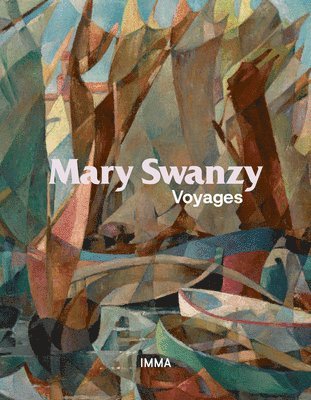
Mary Swanzy (1882–1978) was a pioneering figure in Irish art. She was educated in Paris where she exhibited at the Paris Salons as her work rapidly evolved through different styles: postimpressionism, fauvism, cubism, futurism, symbolism and surrealism—each transformed by her in a highly personal way. Following the devastation of World War I she went to Czechoslovakia as an aid worker; in 1923 she literally crossed the world on an epic voyage to Hawaii and Samoa, producing a body of work that is unique in an Irish context. Throughout the ‘20s and ‘30s she exhibited in the USA, Hawaii, UK, Belgium and Ireland, and regularly in Paris at both the Salon des Indépendants and the Beaux-Arts. This publication is the first complete monograph on the artist and aims to introduce the audience to Swanzy’s extraordinary achievements and reinstate her reputation as a modernist Irish master.
"A strange and exotic presence in Irish art," "standing alone" and "very un-Irish" were some of the epithets used to describe Patrick Hennessy (1915–80), one of Ireland’s most successful realist painters in the postwar period. Hennessy was educated at Dundee College of Art and in 1937 won a scholarship to Paris where he worked for a time under Fernand Léger. He fused the Surrealist subjectivity he learned there with realism to create works unlike anything being made at the time, including portraits, landscapes, equine studies and still-lifes that found a steady market in Ireland, the UK and the USA. But he painted male nudes and portraits of handsome men that puzzled critics who branded him "something of an outsider." At a time when people were persecuted for their sexual orientation, he made works containing narratives of homosexual life that align him with the queer-art movement that emerged in the 1970s. This publication sheds light on this critically neglected artist and reflects on what his work might mean to an audience today.
Mary Swanzy (1882–1978) was a pioneering figure in Irish art. She was educated in Paris where she exhibited at the Paris Salons as her work rapidly evolved through different styles: postimpressionism, fauvism, cubism, futurism, symbolism and surrealism—each transformed by her in a highly personal way. Following the devastation of World War I she went to Czechoslovakia as an aid worker; in 1923 she literally crossed the world on an epic voyage to Hawaii and Samoa, producing a body of work that is unique in an Irish context. Throughout the ‘20s and ‘30s she exhibited in the USA, Hawaii, UK, Belgium and Ireland, and regularly in Paris at both the Salon des Indépendants and the Beaux-Arts. This publication is the first complete monograph on the artist and aims to introduce the audience to Swanzy’s extraordinary achievements and reinstate her reputation as a modernist Irish master.