Sean N. Kalic - Böcker
Visar alla böcker från författaren Sean N. Kalic. Handla med fri frakt och snabb leverans.
8 produkter
8 produkter
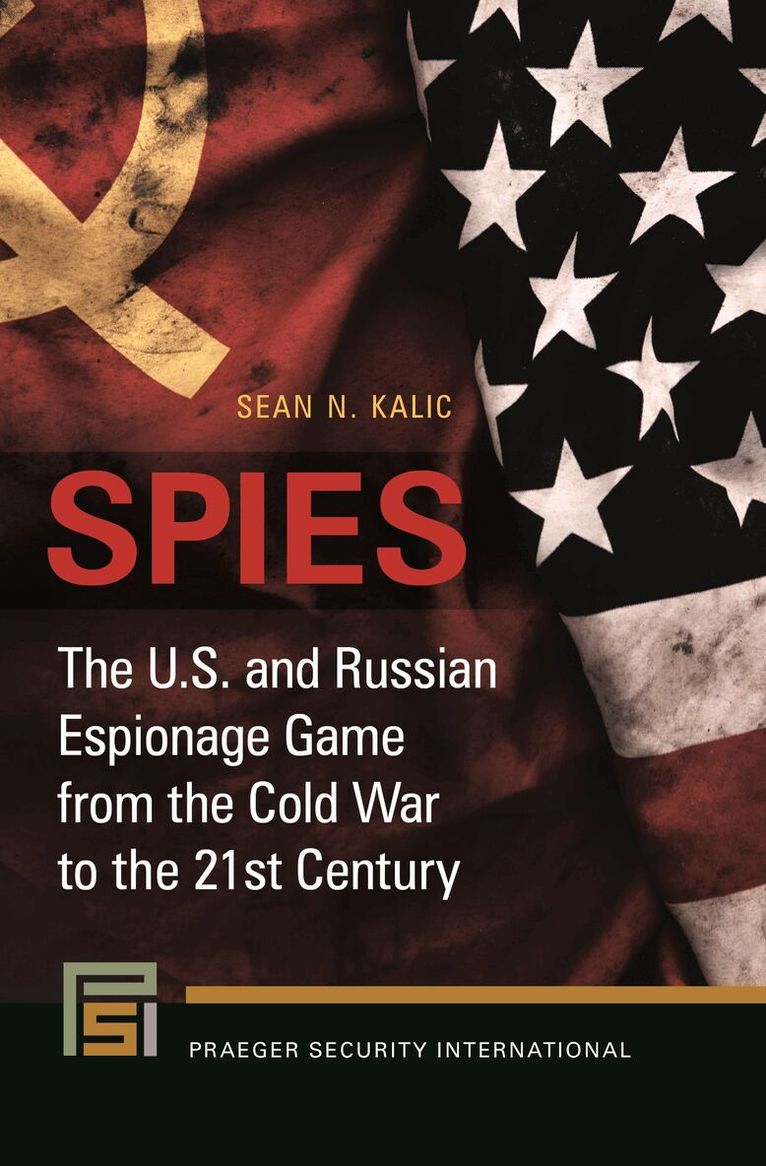
Spies
The U.S. and Russian Espionage Game from the Cold War to the 21st Century
Inbunden, Engelska, 2019
970 kr
Skickas inom 10-15 vardagar
Provides a comprehensive understanding of the evolution of the espionage game in the post-World War II era.For more than four decades after World War II, the quest for intelligence drove the Soviet Union and the United States to develop a high-stakes "game" of spying on one another throughout the Cold War. Each nation needed to be aware of and prepared to counter the capabilities of their primary nemesis. Therefore, as the Cold War period developed and technology advanced, the mutual goal to maintain up-to-date intelligence mandated that the process by which the "game" was played encompass an ever-wider range of intelligence gathering means. Covering far more than the United States and Soviet Union's use of human spies, this book examines the advanced technological means by which the two nations' intelligence agencies worked to ensure that they had an accurate understanding of the enemy.The easily accessible narrative covers the Cold War period from 1945 to 1989 as well as the post-Cold War era, enabling readers to gain an understanding of how the spies and elaborate espionage operations fit within the greater context of the national security concerns of the United States and the Soviet Union. Well-known Cold War historian Sean N. Kalic explains the ideological tenets that fueled the distrust and "the need to know" between the two adversarial countries, supplies a complete history of the technological means used to collect intelligence throughout the Cold War and into the more recent post-Cold War years, and documents how a mutual desire to have the upper hand resulted in both sides employing diverse and creative espionage methods.
1 245 kr
Skickas inom 10-15 vardagar
Combining reference entries and examination of primary documents from the Russian Revolution, this book gives students a better understanding of how and why political forces fought to reshape the Russian empire 100 years ago—and provides keen insights into the Soviet Union that resulted.This invaluable reference guide provides an understanding of the social, political, and economic forces and events in Russia that led to the 1905 Russian Revolution in which leftists radicals disposed of the Czar and his regime. It addresses key developments such as the formation of the provisional government, the Bolshevik Revolution in October 1917, and the Russian Civil War—connected, evolutionary historical events that fundamentally reshaped Russia into the Soviet Union.This book serves students and general readers seeking a single source that provides in-depth coverage of the Russian Revolution and the Russian Civil War. Beyond the reference entries, the book contains primary documents that cover the key events, people, and issues that emerged during Russia's revolutions and Civil War. These documents give readers a more detailed understanding of how the Bolsheviks used calls for greater "democracy" to gain support for their revolution, how the Bolsheviks used terror and control as means to maintain their power once the Bolshevik Revolution took place, and why the Bolsheviks believed such extreme measures were needed. Also included is a chronology of major events from 1890 through 1923 and a bibliography that serves as a starting point for more directed research.
1 425 kr
Skickas inom 10-15 vardagar
From the American Revolution to the War in Afghanistan, the United States has had no shortage of conflicts on both domestic and world stages. All provide insight into the values of the presidents who led the nation through them.This work takes readers through chronological entries of presidents who participated in key wars throughout U.S. history. An overview essay first considers the social, economic, and political factors that affected presidents during war. Entries beginning with the presidency of George Washington and ending with that of George W. Bush comprehensively cover each war therein, as well as the responses of the relevant presidents.Primary documents in each entry depict the perspectives of the presidents and offer opportunities for comparing and contrasting the presidents' engagements in wartime strategies. Ending each entry are chronologies of the various events and conflicts that marked the president's time in office. Moreover, entries build upon each other to help readers toward a broader understanding of the sum impact of the wars that the presidents led. While the book emphasizes the historical record, it also explores ongoing conflicts through the lens of contemporary U.S. presidents to provide readers with a complete picture of the changing nature of war over time.
441 kr
Skickas inom 7-10 vardagar
In the clash of ideologies represented by the Cold War, even the heavens were not immune to militarization. Satellites and space programs became critical elements among the national security objectives of both the United States and the Soviet Union.According toUSPresidents and the Militarization of Space, 1946-1967, three American presidents in succession shared a fundamental objective of preserving space as a weapons-free frontier for the benefit of all humanity. Between 1953 and 1967 Presidents Eisenhower, Kennedy, and Johnson all saw nonaggressive military satellite development, as well as the civilian space program, as means to favorably shape the international community's opinion of the scientific, technological, and military capabilities of the United States. Sean N. Kalic's reinterpretation of the development of US space policy, based on documents declassified in the past decade, demonstrates that a single vision for the appropriate uses of space characterized American strategies across parties and administrations during this period.Significantly, Kalic's findings contradict the popular opinion that the United States sought to weaponize space and calls into question the traditional interpretation of the space race as a simple action/reaction paradigm. Indeed, beyond serving as a symbol and ambassador of US technological capability, its satellite program provided the United States with advanced, nonaggressive military intelligence-gathering platforms that proved critical in assessing the strategic nuclear balance between the United States and the Soviet Union. It also aided the three administrations in countering the Soviet Union's increasing international prestige after its series of space firsts, beginning with the launch of Sputnik in 1957.|In the clash of ideologies represented by the Cold War, even the heavens were not immune to militarization. Satellites and space programs became critical elements among the national security objectives of both the United States and the Soviet Union.According toUSPresidents and the Militarization of Space, 1946-1967, three American presidents in succession shared a fundamental objective of preserving space as a weapons-free frontier for the benefit of all humanity. Between 1953 and 1967 Presidents Eisenhower, Kennedy, and Johnson all saw nonaggressive military satellite development, as well as the civilian space program, as means to favorably shape the international community's opinion of the scientific, technological, and military capabilities of the United States. Sean N. Kalic's reinterpretation of the development of US space policy, based on documents declassified in the past decade, demonstrates that a single vision for the appropriate uses of space characterized American strategies across parties and administrations during this period.Significantly, Kalic's findings contradict the popular opinion that the United States sought to weaponize space and calls into question the traditional interpretation of the space race as a simple action/reaction paradigm. Indeed, beyond serving as a symbol and ambassador of US technological capability, its satellite program provided the United States with advanced, nonaggressive military intelligence-gathering platforms that proved critical in assessing the strategic nuclear balance between the United States and the Soviet Union. It also aided the three administrations in countering the Soviet Union's increasing international prestige after its series of space firsts, beginning with the launch of Sputnik in 1957.
185 kr
Skickas inom 5-8 vardagar
310 kr
Skickas inom 5-8 vardagar
684 kr
Kommande
Spies
The U.S. and Russian Espionage Game from the Cold War to the 21st Century
Häftad, Engelska, 2024
420 kr
Skickas inom 10-15 vardagar
Provides a comprehensive understanding of the evolution of the espionage game in the post-World War II era.For more than four decades after World War II, the quest for intelligence drove the Soviet Union and the United States to develop a high-stakes "game" of spying on one another throughout the Cold War. Each nation needed to be aware of and prepared to counter the capabilities of their primary nemesis. Therefore, as the Cold War period developed and technology advanced, the mutual goal to maintain up-to-date intelligence mandated that the process by which the "game" was played encompass an ever-wider range of intelligence gathering means. Covering far more than the United States and Soviet Union's use of human spies, this book examines the advanced technological means by which the two nations' intelligence agencies worked to ensure that they had an accurate understanding of the enemy.The easily accessible narrative covers the Cold War period from 1945 to 1989 as well as the post-Cold War era, enabling readers to gain an understanding of how the spies and elaborate espionage operations fit within the greater context of the national security concerns of the United States and the Soviet Union. Well-known Cold War historian Sean N. Kalic explains the ideological tenets that fueled the distrust and "the need to know" between the two adversarial countries, supplies a complete history of the technological means used to collect intelligence throughout the Cold War and into the more recent post-Cold War years, and documents how a mutual desire to have the upper hand resulted in both sides employing diverse and creative espionage methods.