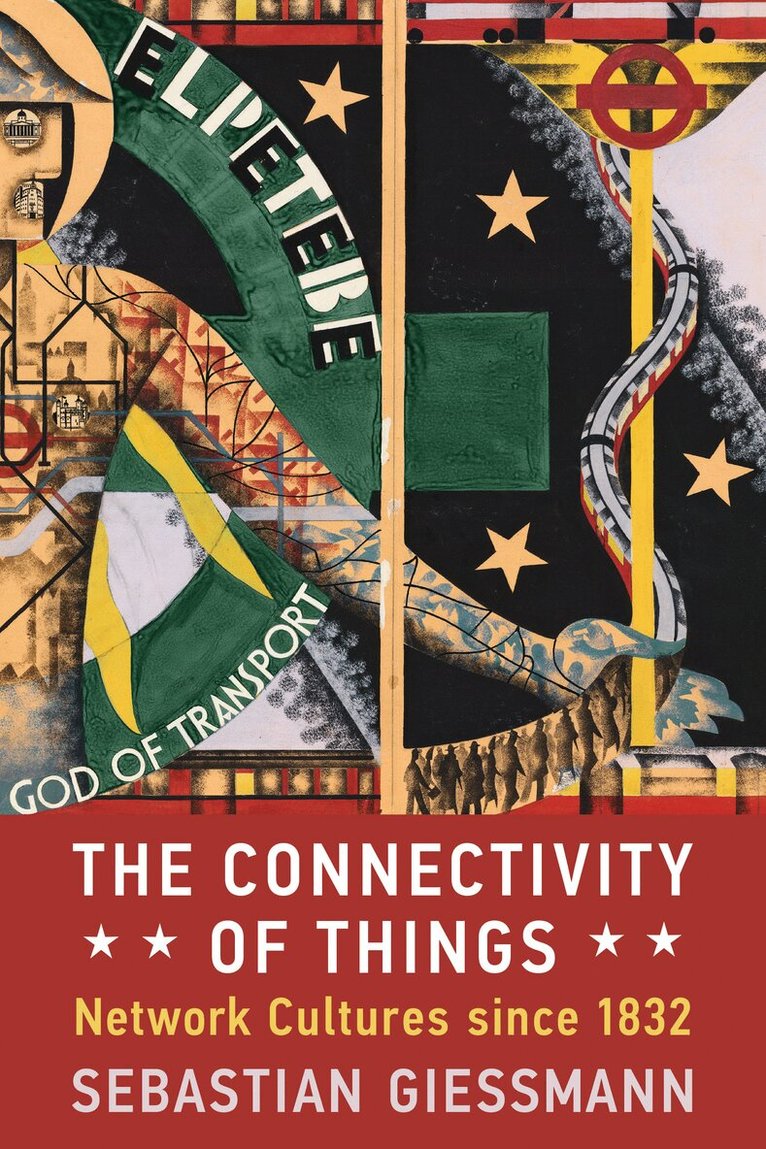
A media history of the material and infrastructural features of networking practices, a German classic translated for the first time into English.Nets hold, connect, and catch. They ensnare, bind, and entangle. Our social networks owe their name to a conceivably strange and ambivalent object. But how did the net get into the network? And how can it reasonably represent the connectedness of people, things, institutions, signs, infrastructures, and even nature? The Connectivity of Things by Sebastian Giessmann, the first media history that addresses the overwhelming diversity of networks, attempts to answer all these questions and more.Reconstructing the decisive moments in which networking turned into a veritable cultural technique, Giessmann takes readers below the street to the Parisian sewers and to the Suez Canal, into the telephone exchanges of Northeast America, and on to the London Underground. His brilliant history explains why social networks were discovered late, how the rapid rise of mathematical network theory was able to take place, how improbable the invention of the internet was, and even what diagrams and conspiracy theories have to do with it all. A primer on networking as a cultural technique, this translated German classic explains everything one ever could wish to know about networks.
Die Autorinnen der „Materialität der Kooperation“ fragen nach materiellen Bedingungen und Medienpraktiken der Kooperation – vor, während und über Situationen hinaus. Kooperation wird als ein wechselseitiges Zusammenwirken verstanden, das mit oder ohne Konsens, mit oder ohne Kopräsenz der beteiligten Akteure in verteilten Situationen vonstattengehen kann. Materielle Bedingung von Kooperation sind Medien als Artefakte, Körper, Texte, Bilder und Infrastrukturen. Sie ermöglichen, bedingen und figurieren wechselseitige Verfertigungen – und entstehen selbst durch Medienpraktiken in kooperativen Situationen.
The volume investigates the socio-material dimension and media practices of cooperation – before, during and beyond situations. Cooperation is understood as reciprocal interplay operating with or without consensus, in co-presence or absence of the involved actors in distributed situations. Artefacts, bodies, texts and infrastructures are the media that make cooperation possible. They enable and configure reciprocal accomplishments – and are themselves created through media practices in cooperative situations.