Sebastian Rasinger – författare
Visar alla böcker från författaren Sebastian Rasinger. Handla med fri frakt och snabb leverans.
5 produkter
5 produkter
Inbunden, Engelska, 2020
2 460 kr
Skickas inom 7-10 vardagar
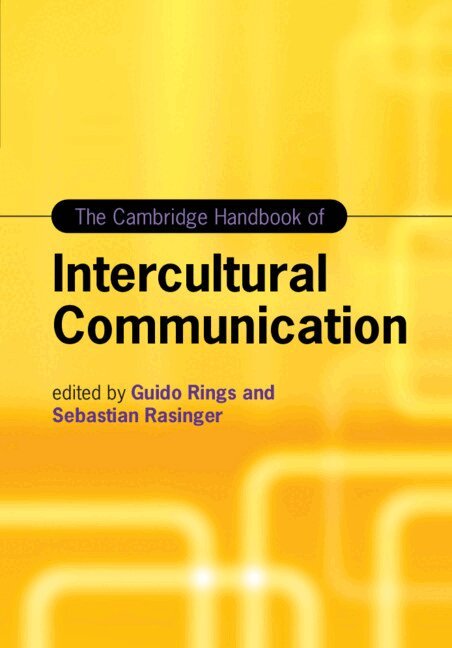
A highly interdisciplinary overview of the wide spectrum of current international research and professional practice in intercultural communication, this is a key reference book for students, lecturers and professionals alike. Key examples of contrastive, interactive, imagological and interlingual approaches are discussed, as well as the impact of cultural, economic and socio-political power hierarchies in cultural encounters, essential for contemporary research in critical intercultural communication and postcolonial studies. The Handbook also explores the spectrum of professional applications of that research, from intercultural teaching and training to the management of culturally mixed groups, facilitating use by professionals in related fields. Theories are introduced systematically using ordinary language explanations and examples, providing an engaging approach to readers new to the field. Students and researchers in a wide variety of disciplines, from cultural studies to linguistics, will appreciate this clear yet in-depth approach to an ever-evolving contemporary field.
Häftad, Engelska, 2022
492 kr
Skickas inom 7-10 vardagar
A highly interdisciplinary overview of the wide spectrum of current international research and professional practice in intercultural communication, this is a key reference book for students, lecturers and professionals alike. Key examples of contrastive, interactive, imagological and interlingual approaches are discussed, as well as the impact of cultural, economic and socio-political power hierarchies in cultural encounters, essential for contemporary research in critical intercultural communication and postcolonial studies. The Handbook also explores the spectrum of professional applications of that research, from intercultural teaching and training to the management of culturally mixed groups, facilitating use by professionals in related fields. Theories are introduced systematically using ordinary language explanations and examples, providing an engaging approach to readers new to the field. Students and researchers in a wide variety of disciplines, from cultural studies to linguistics, will appreciate this clear yet in-depth approach to an ever-evolving contemporary field.
E-bok
Engelska, 2020554 kr
Läs direkt efter köp
A highly interdisciplinary overview of the wide spectrum of current international research and professional practice in intercultural communication, this is a key reference book for students, lecturers and professionals alike. Key examples of contrastive, interactive, imagological and interlingual approaches are discussed, as well as the impact of cultural, economic and socio-political power hierarchies in cultural encounters, essential for contemporary research in critical intercultural communication and postcolonial studies. The Handbook also explores the spectrum of professional applications of that research, from intercultural teaching and training to the management of culturally mixed groups, facilitating use by professionals in related fields. Theories are introduced systematically using ordinary language explanations and examples, providing an engaging approach to readers new to the field. Students and researchers in a wide variety of disciplines, from cultural studies to linguistics, will appreciate this clear yet in-depth approach to an ever-evolving contemporary field.
E-bok
PDF, Engelska, 2020554 kr
Läs direkt efter köp
A highly interdisciplinary overview of the wide spectrum of current international research and professional practice in intercultural communication, this is a key reference book for students, lecturers and professionals alike. Key examples of contrastive, interactive, imagological and interlingual approaches are discussed, as well as the impact of cultural, economic and socio-political power hierarchies in cultural encounters, essential for contemporary research in critical intercultural communication and postcolonial studies. The Handbook also explores the spectrum of professional applications of that research, from intercultural teaching and training to the management of culturally mixed groups, facilitating use by professionals in related fields. Theories are introduced systematically using ordinary language explanations and examples, providing an engaging approach to readers new to the field. Students and researchers in a wide variety of disciplines, from cultural studies to linguistics, will appreciate this clear yet in-depth approach to an ever-evolving contemporary field.
E-bok
PDF, Spanska, 2020135 kr
Läs direkt efter köp
El presente libro nos pone ante un ámbito poco conocido hasta la fecha y que está teniendo un importante desarrollo en la investigación lingüística de los últimos años. Estableciendo lo que son datos cuantitativos y lo que los diferencia de los cualitativos, a lo largo de sus páginas examina qué es lo que el lingüista puede averiguar mediante el análisis de datos, y cómo las técnicas cuantitativas constituyen una ayuda para obtener conclusiones significativas y precisas.En sus distintos capítulos se introduce al lector en: el uso de estadísticas; las variables; la descripción y el análisis de datos; la comprobación de hipótesis y el modo de afrontar los problemas resultantes. Cada uno consta de gráficos e ilustraciones explicativos, resúmenes y ejercicios para facilitar la comprensión por parte del estudiante. Se incluye asimismo un apéndice que con un resumen de fórmulas, funciones de Excel y tablas estadísticas.La presente edición también incluye un apartado sobre el análisis de la varianza (ANOVA) y el análisis multivariante de la varianza (MANOVA), y proporciona una breve introducción al metaanálisis estadístico.Al ofrecer una introducción asequible y de fácil comprensión a la investigación cuantitativa, este libro constituye una útil guía introductoria tanto para estudiantes que se enfrentan por primera vez a los datos cuantitativos, como para posgraduados que abordan proyectos de investigación lingüística.