Sebastian Wuschka – författare
Visar alla böcker från författaren . Handla med fri frakt och snabb leverans.
3 produkter
3 produkter
E-bok
Engelska, 20262 293 kr
Läs direkt efter köp
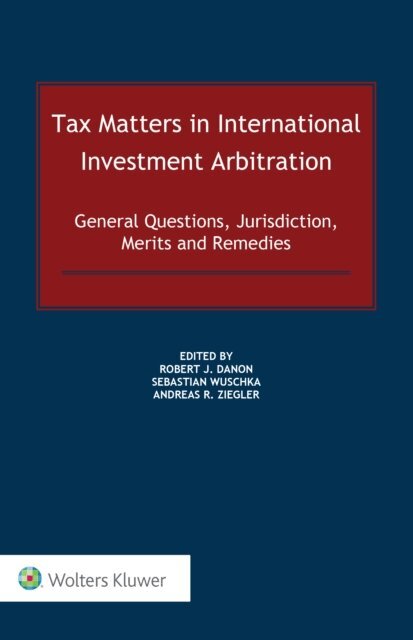
About this book:In recent years, tax-related matters in international investment arbitration have received prominent attention. Following the 2020 award in Cairn Energy v. India, investment treaty cases involving an alleged violation of investors rights in taxation matters continue to be on the uprise. Further, arbitral tribunals are increasingly required to interpret tax carve-outs and to give content to investment treaty protection standards in a tax-related context. In addition, the interaction between these standards and those shaping the international tax system has begun to surface in arbitral awards. At the policy level, the recent evolution has been equally intense. On the one hand, sophisticated tax carve-outs and filter mechanisms (sometimes with cross-references to the principles of the international tax system) continue to be included in international investment agreements. On the other hand, the relation between international investment arbitration and taxation matters has been a recent focus of the work of the UN Committee of Experts on International Cooperation in Tax Matters. What s in this book:This volume, which comprises 18 chapters written by distinguished authors of the international tax and investment law communities, brings together comprehensive in-depth research and practical guidance as well as policy recommendations on all aspects involving taxation matters in investment arbitration. The book also contains two introductory chapters presenting the latest evolution of the international tax system and the investment treaty regime. The chapters of the book explore notably the following issues and topics: A proposed methodology for tax-related disputes in investment treaty arbitration: jurisdictional and merits phases and relationship to the international tax system. Tax carve-outs and notification procedures, policy and arbitral practice related thereto. All substantive investment treaty standards of protection relevant in tax-related disputes. Issues involving remedies (compensation for damages and taxation of arbitral awards). Empirical evolution of the investment treaty regime and the international tax system as well as latest UN tax policy developments concerning investment treaty protection. How this will help you:This book is intended to serve as a comprehensive reference tool to those engaged in investment treaty disputes involving taxation matters. Moreover, the volume also aims at stimulating the discussion at the policy and scholarly level with respect to the coordination between the investment treaty regime and the international tax system.
E-bok
PDF, Engelska, 20262 599 kr
Läs direkt efter köp
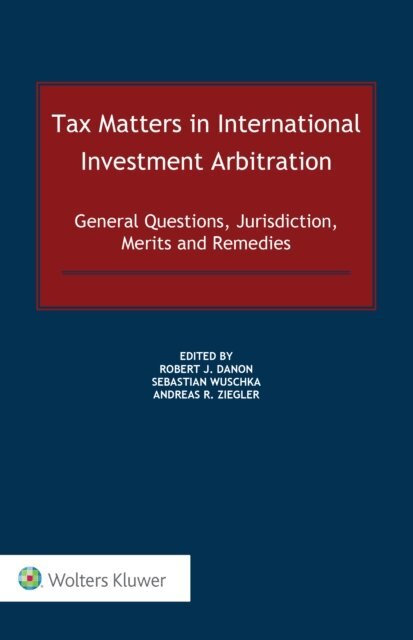
About this book:In recent years, tax-related matters in international investment arbitration have received prominent attention. Following the 2020 award in Cairn Energy v. India, investment treaty cases involving an alleged violation of investors rights in taxation matters continue to be on the uprise. Further, arbitral tribunals are increasingly required to interpret tax carve-outs and to give content to investment treaty protection standards in a tax-related context. In addition, the interaction between these standards and those shaping the international tax system has begun to surface in arbitral awards. At the policy level, the recent evolution has been equally intense. On the one hand, sophisticated tax carve-outs and filter mechanisms (sometimes with cross-references to the principles of the international tax system) continue to be included in international investment agreements. On the other hand, the relation between international investment arbitration and taxation matters has been a recent focus of the work of the UN Committee of Experts on International Cooperation in Tax Matters. What s in this book:This volume, which comprises 18 chapters written by distinguished authors of the international tax and investment law communities, brings together comprehensive in-depth research and practical guidance as well as policy recommendations on all aspects involving taxation matters in investment arbitration. The book also contains two introductory chapters presenting the latest evolution of the international tax system and the investment treaty regime. The chapters of the book explore notably the following issues and topics: A proposed methodology for tax-related disputes in investment treaty arbitration: jurisdictional and merits phases and relationship to the international tax system. Tax carve-outs and notification procedures, policy and arbitral practice related thereto. All substantive investment treaty standards of protection relevant in tax-related disputes. Issues involving remedies (compensation for damages and taxation of arbitral awards). Empirical evolution of the investment treaty regime and the international tax system as well as latest UN tax policy developments concerning investment treaty protection. How this will help you:This book is intended to serve as a comprehensive reference tool to those engaged in investment treaty disputes involving taxation matters. Moreover, the volume also aims at stimulating the discussion at the policy and scholarly level with respect to the coordination between the investment treaty regime and the international tax system.
Del 146 - Jus Internationale et Europaeum
Zeit und Internationales Recht
Fortschritt - Wandel - Kontinuität
Häftad, Tyska, 2019
1 499 kr
Tillfälligt slut
Der vorliegende Band widmet sich dem durch Zeit hervorgerufenen Wandel des internationalen Rechts. Dabei treffen verschiedene Generationen von Völkerrechtlern zusammen, die sich über Veränderungen im internationalen Recht austauschen.Der Forschungsansatz ist querschnittsartig. Die Autoren identifizieren verschiedene Dynamiken des Wandels im Recht und analysieren, welchen zeitlichen Horizont alte und neue Rechtssätze im Völkerrecht besitzen. Ebenfalls werden methodische Fragestellungen untersucht: Verändert sich zum Beispiel die Auslegung von völkerrechtlichen Normen durch zunehmende Institutionalisierung oder durch neue Regelungstechniken? Kritisch beleuchtet werden überdies Legitimationsfragen. Die Figur des Fortschritts, die auf Völkerrechtler einen besonderen Reiz ausübt, wird hinterfragt und einer Rückbesinnung auf souveränitätsschonenden Ausgleich von staatlichen Interessen und Dispositionsfreiheit gegenübergestellt.