Sébastien Charles – författare
Visar alla böcker från författaren Sébastien Charles. Handla med fri frakt och snabb leverans.
10 produkter
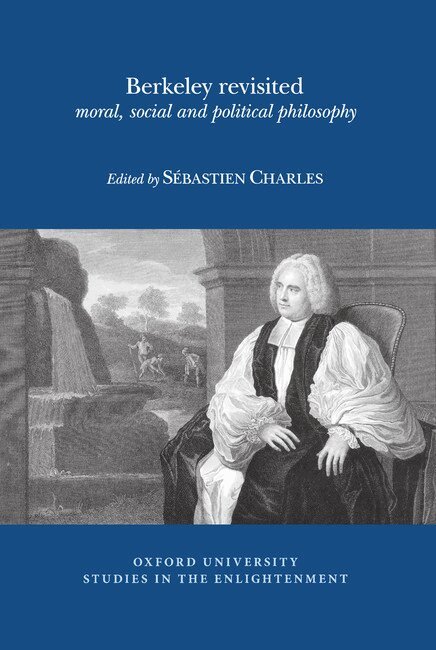
Berkeley Revisited
moral, social and political philosophy
Häftad, 2015
1649 kr
Lägg i varukorg
Since the publication of Paul J. Olscamp’s The Moral philosophy of George Berkeley (1970), research has focused on Berkeley’s theory of immaterialism as the defining element of his thinking. New readings of his work gathered in this volume position immaterialism as a component of a much broader, …
Hypermodern Times
Av Gilles Lipovetsky, Sebastien Charles
Inbunden, 2005
635 kr
Lägg i varukorg
The term ‘postmodernity’ has been used to describe that historical transformation of the late 20th century when the institutional breaks holding back individual emancipation disintegrated, thereby giving rise to the full expression of individual desires and the quest for self-fulfilment. But there …
Hypermodern Times
Av Gilles Lipovetsky, Sebastien Charles
Häftad, 2005
230 kr
Lägg i varukorg
The term ‘postmodernity’ has been used to describe that historical transformation of the late 20th century when the institutional breaks holding back individual emancipation disintegrated, thereby giving rise to the full expression of individual desires and the quest for self-fulfilment. But there …
Berkeley au siècle des Lumières
Immatérialisme et scepticisme au XVIIIe siècle
E-bok, 2003
364 kr
Lägg i varukorg
Si Locke l’emporte sur Descartes dans la pensée des Lumières, plusieurs problèmes surgis au sein du cartésianisme agitent encore le siècle. Ainsi de la question « égoïste » (la question du solipsisme). La présente étude examine comment fut reçu l’immatérialisme berkeleyen, très vite converti par …
Academic Scepticism in the Development of Early Modern Philosophy
Av Plínio Junqueira Smith, Sébastien Charles
Inbunden, 2017
1530 kr
Lägg i varukorg
This book explores how far some leading philosophers, from Montaigne to Hume, used Academic Scepticism to build their own brand of scepticism or took it as its main sceptical target. The book offers a detailed view of the main modern key figures, including Sanches, Charron, La Mothe Le Vayer, …
Academic Scepticism in the Development of Early Modern Philosophy
Av Sebastien Charles, Plinio Junqueira Smith
E-bok, 2016
1427 kr
Lägg i varukorg
This book explores how far some leading philosophers, from Montaigne to Hume, used Academic Scepticism to build their own brand of scepticism or took it as its main sceptical target. The book offers a detailed view of the main modern key figures, including Sanches, Charron, La Mothe Le Vayer, …
Academic Scepticism in the Development of Early Modern Philosophy
Av Plínio Junqueira Smith, Sébastien Charles
Häftad, 2018
1095 kr
Lägg i varukorg
This book explores how far some leading philosophers, from Montaigne to Hume, used Academic Scepticism to build their own brand of scepticism or took it as its main sceptical target. The book offers a detailed view of the main modern key figures, including Sanches, Charron, La Mothe Le Vayer, …
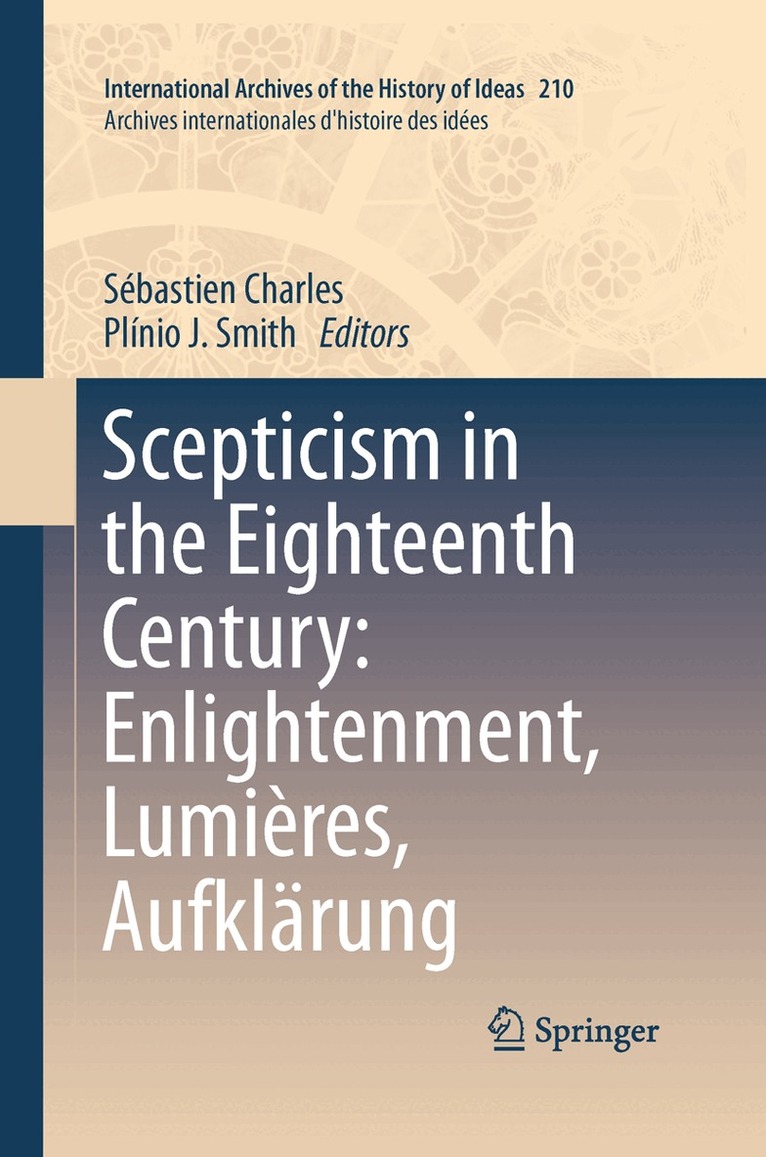
Scepticism in the Eighteenth Century: Enlightenment, Lumières, Aufklärung
Av Sébastien Charles, Plínio J. Smith
Inbunden, 2013
1095 kr
Lägg i varukorg
The Age of Enlightenment has often been portrayed as a dogmatic period on account of the veritable worship of reason and progress that characterized Eighteenth Century thinkers. Even today the philosophes are considered to have been completely dominated in their thinking by an optimism that leads …
Scepticism in the Eighteenth Century: Enlightenment, Lumieres, Aufklarung
Av Plinio J. Smith, Sebastien Charles
E-bok, 2014
1459 kr
Lägg i varukorg
The Age of Enlightenment has often been portrayed as a dogmatic period on account of the veritable worship of reason and progress that characterized Eighteenth Century thinkers. Even today the philosophes are considered to have been completely dominated in their thinking by an optimism that leads …
Scepticism in the Eighteenth Century: Enlightenment, Lumières, Aufklärung
Av Sébastien Charles, Plínio J. Smith
Häftad, 2015
1095 kr
Lägg i varukorg
The Age of Enlightenment has often been portrayed as a dogmatic period on account of the veritable worship of reason and progress that characterized Eighteenth Century thinkers. Even today the philosophes are considered to have been completely dominated in their thinking by an optimism that leads …