
Seiji M. Lippit – författare
528 kr
Läs direkt efter köp
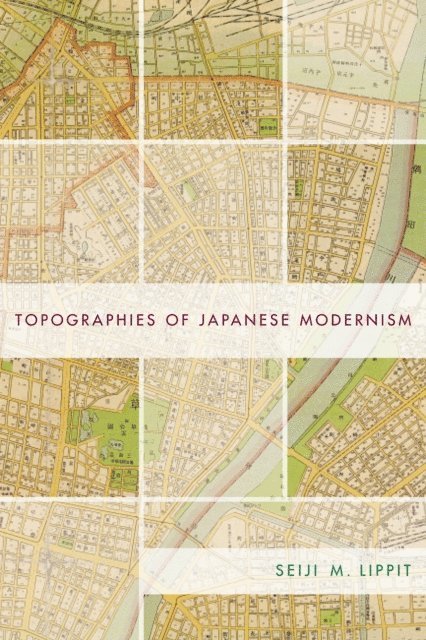
What happens when a critique of modernity—a "revolt against the traditions of the Western world"—is situated within a non-European context, where the concept of the modern has been inevitably tied to the image of the West?Seiji M. Lippit offers the first comprehensive study in English of Japanese modernist fiction of the 1920s and 1930s. Through close readings of four leading figures of this movement— Akutagawa, Yokomitsu, Kawabata, and Hayashi—Lippit aims to establish a theoretical and historical framework for the analysis of Japanese modernism.The 1920s and 1930s witnessed a general sense of crisis surrounding the institution of literature, marked by both the radical politicization of literary practice and the explosion of new forms of cultural production represented by mass culture. Against this backdrop, this study traces the heterogeneous literary topographies of modernist writings. Through an engagement with questions of representation, subjectivity, and ideology, it situates the disintegration of literary form in these texts within the writers'' exploration of the fluid borderlines of Japanese modernity.
422 kr
Läs direkt efter köp
Kojin Karatani wrote the essays in History and Repetition during a time of radical historical change, triggered by the collapse of the Cold War and the death of the Showa emperor in 1989. Reading Karl Marx in an original way, Karatani developed a theory of history based on the repetitive cycle of crises attending the expansion and transformation of capital. His work led to a rigorous analysis of political, economic, and literary forms of representation that recast historical events as a series of repeated forms forged in the transitional moments of global capitalism.History and Repetition cemented Karatani''s reputation as one of Japan''s premier thinkers, capable of traversing the fields of philosophy, political economy, history, and literature in his work. The first complete translation of History and Repetition into English, undertaken with the cooperation of Karatani himself, this volume opens with his innovative reading of The Eighteenth Brumaire of Louis Bonaparte, tracing Marx''s early theoretical formulation of the state. Karatani follows with a study of violent crises as they recur after major transitions of power, developing his theory of historical repetition and introducing a groundbreaking interpretation of fascism (in both Europe and Japan) as the spectral return of the absolutist monarch in the midst of a crisis of representative democracy. For Karatani, fascism represents the most violent materialization of the repetitive mechanism of history. Yet he also seeks out singularities that operate outside the brutal inevitability of historical repetition, whether represented in literature or, more precisely, in the process of literature''s demise. Closely reading the works of Oe Kenzaburo, Mishima Yukio, Nakagami Kenji, and Murakami Haruki, Karatani compares the recurrent and universal with the singular and unrepeatable, while advancing a compelling theory of the decline of modern literature. Merging theoretical arguments with a concrete analysis of cultural and intellectual history, Karatani''s essays encapsulate a brilliant, multidisciplinary perspective on world history.