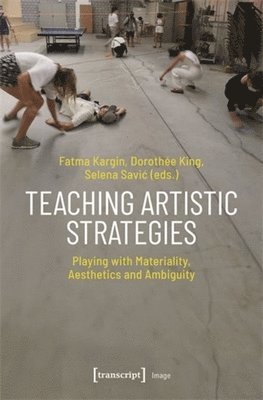
Artistic strategies have a great transformative potential to improving research, teaching, and artistic expression. The contributors to this volume show how to unleash this potential by presenting a variety of epistemological experiments at the intersection of artistic research, pedagogy, and innovative practices in art and design education. The diversity of contributions demonstrates the non-exhaustive space for experimental phenomenological adventures. This collection strengthens new communities of educators and researchers in arts and design, whose practices are built on the concept of care as empathetic knowledge production.
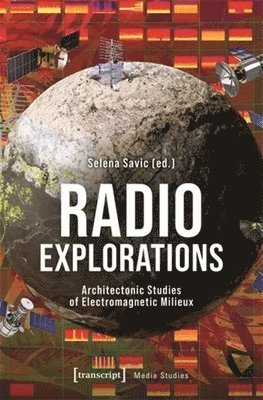
Radio signals keep making material, informational, political, and social connections in this world. Exploring these signals architectonically, the contributors engage with the situatedness of radio signal recordings in nature and with knowledge implied in radio communication. Rooted in experimental design and data feminism, the book presents innovative tools for navigating data by spanning media theory, information studies, and feminist new materialism. This offers an intersectional and post-disciplinary approach to computation, classification, and search that is accessible to artists, technologists, and researchers – facilitating interdisciplinary collaboration and deepening the understanding of information technologies.
Artistic strategies have a great transformative potential to improving research, teaching, and artistic expression. The contributors to this volume show how to unleash this potential by presenting a variety of epistemological experiments at the intersection of artistic research, pedagogy, and innovative practices in art and design education. The diversity of contributions demonstrates the non-exhaustive space for experimental phenomenological adventures. This collection strengthens new communities of educators and researchers in arts and design, whose practices are built on the concept of care as empathetic knowledge production.
Radio signals keep making material, informational, political, and social connections in this world. Exploring these signals architectonically, the contributors engage with the situatedness of radio signal recordings in nature and with knowledge implied in radio communication. Rooted in experimental design and data feminism, the book presents innovative tools for navigating data by spanning media theory, information studies, and feminist new materialism. This offers an intersectional and post-disciplinary approach to computation, classification, and search that is accessible to artists, technologists, and researchers – facilitating interdisciplinary collaboration and deepening the understanding of information technologies.