Sell Roger D. Sell – författare
Visar alla böcker från författaren Sell Roger D. Sell. Handla med fri frakt och snabb leverans.
11 produkter
11 produkter
E-bok
Engelska, 20201 388 kr
Läs direkt efter köp
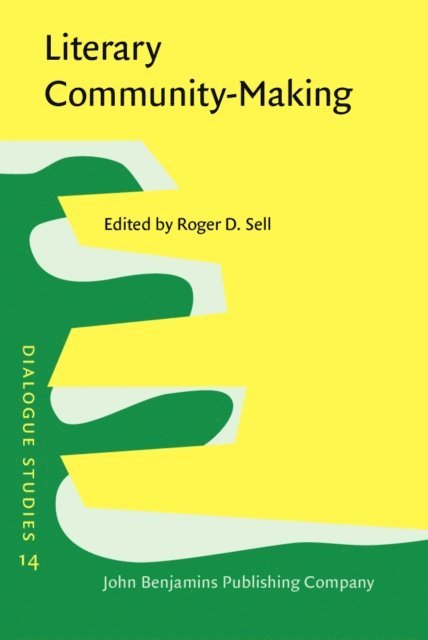
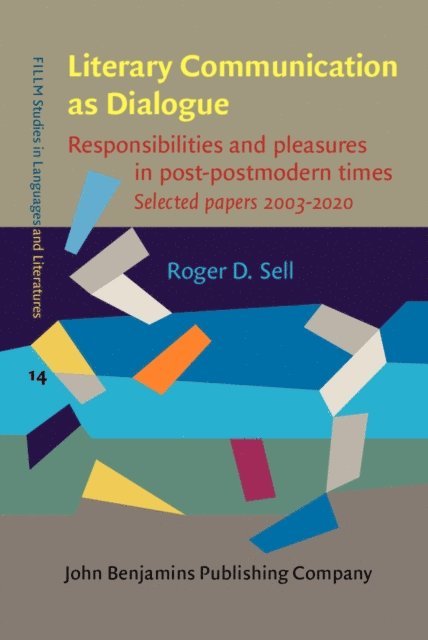
As traced by Roger D. Sell, literary communication is a process of community-making. As long as literary authors and those responding to them respect each other's human autonomy, literature flourishes as an enjoyable, though often challenging mode of interaction that is truly dialogical in spirit. This gives rise to author-respondent communities whose members represent existential commonalities blended together with historical differences. These heterogeneous literary communities have a larger social significance, in that they have long served as counterweights to the hegemonic tendencies of modernity, and more recently to postmodernity's well-intentioned but restrictive politics of identity. In post-postmodern times, their ethos is increasingly one of pleasurable egalitarianism. The despondent anti-hedonism of the twentieth century intelligentsia can now seem rather dated.Some of the papers selected for this volume develop Sell's ideas in mainly theoretical terms. But most of them offer detailed criticism of particular anglophone writers, ranging from Shakespeare, Ben Jonson and other poets and dramatists of the early modern period, through Wordsworth and Coleridge, to Dickens, Pinter, and Rushdie.
E-bok
Engelska, 20191 388 kr
Läs direkt efter köp
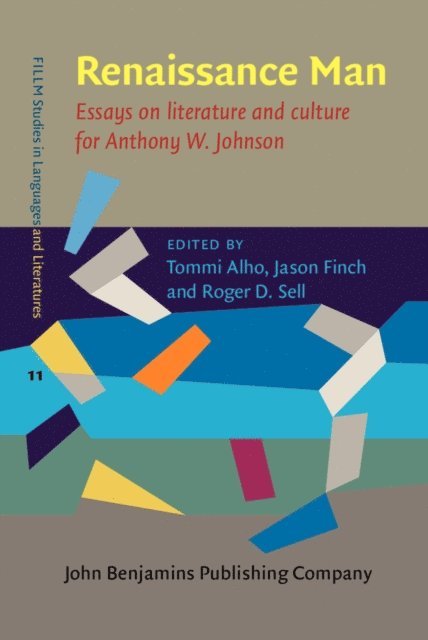
Here friends of Anthony W. Johnson honour him as a re-embodiment of the polymathic artist-scholar figure once observable in Ben Jonson, on whom he has done some of his most distinctive work. Part I of the book reflects his strong grounding in English literature and culture of the seventeenth century, with essays, not only on Ben Jonson, but also on university drama, on grammar school drama, and on humanist literary taste. Part II responds to his pioneering flights of culture-imagological time-travel to other periods, with essays on riddles through the ages, on Matthew Arnold's doubts about Homeric pictorialism, and on anciently comic elements in George Gissing's urban fiction. Part III celebrates his importance, both as scholar and artist, for the present day, with essays extending imagological analysis to the singer Nick Drake, to the avant-garde Danish poet Morten Sokilde, and to Sean S. Baker's film Tangerine, plus a climactic celebration of Johnson's own performances on solo violin and guitar as augmented by self-recording.
E-bok
Engelska, 20191 353 kr
Läs direkt efter köp
In much of his earlier work Roger D. Sell was shaping literary studies, historical perspectives, and pragmatics into a fluent interdisciplinarity. This enabled him to explore the fundamentally human relationships which develop between literary writers and those who respond to them.Literary writers, through their handling of deixis, evaluative and modal expressions, tellability, politeness norms, and genre expectations, activate the same interpersonal function of language as do other language users, and respondents' hermeneutic contextualizations of literary texts are no less standard as a pragmatic procedure. Not that context is completely determinative. In Sell's account, human beings are profoundly influenced by society, but can sometimes enter into co-adaptations with it. Like other people, literary writers and their respondents are "e;social individuals"e;, who themselves benefit from respecting each other's relative autonomy.As well as explaining these theoretical positions, the papers selected here offered critical re-assessments of some major writers, including Chaucer and Dickens. They also suggested new ways of dealing with literary texts in literary and language education at all levels.
E-bok
PDF, Engelska, 20151 304 kr
Läs direkt efter köp
Do the notions of “World Lingua Franca” and “World Literature” now need to be firmly relegated to an imperialist-cum-colonialist past? Or can they be rehabilitated in a practical and equitable way that fully endorses a politics of recognition? For scholars in the field of languages and literatures, this is the central dilemma to be faced in a world that is increasingly globalized. In this book, the possible banes and benefits of globalization are illuminated from many different viewpoints by scholars based in Africa, Asia, Europe, North America, and Oceania. Among their more particular topics of discussion are: language spread, language hegemony, and language conservation; literary canons, literature and identity, and literary anthologies; and the bearing of the new communication technologies on languages and literatures alike. Throughout the book, however, the most frequently explored opposition is between languages or literatures perceived as “major” and others perceived as “minor”, two terms which are sometimes qualitative in connotation, sometimes quantitative, and sometimes both at once, depending on who is using them and with reference to what.
E-bok
PDF, Engelska, 20141 387 kr
Läs direkt efter köp
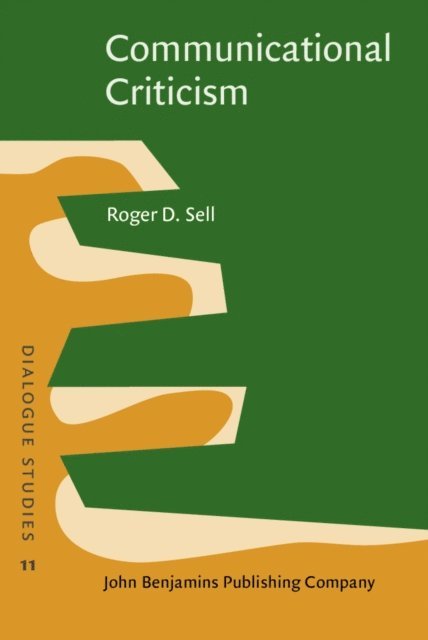
How is it that some texts achieve the status of literature? Partly, at least, because the relationship they allow between their writers and the people who respond to them is fundamentally egalitarian. This is the insight explored by members of the Abo literary communication network, who in this new book develop fresh approaches to literary works of widely varied provenance. The authors examined have written in Ancient Greek, Tang Dynasty Chinese, Middle, Modern and Contemporary English, German, Romanian, Polish, Russian and Hebrew. But each and every one of them is shown as having offered their human fellows something which, despite some striking appearances to the contrary, amounts to a welcoming invitation. This their audiences have then been able to negotiate in a spirit of dialogical interchange.Part I of the book poses the question: How, in offering their invitation, have writers respected their audiences' human autonomy? This is the province of what Abo scholars call "e;communicational criticism"e;. Part II asks how an audience negotiating a literary invitation can be encouraged to respect the human autonomy of the writer who has offered it. In Abo parlance, such encouragement is the task of "e;mediating criticism"e;. These two modes of criticism naturally complement each other, and in their shared concern for communicational ethics ultimately seek to further a post-postmodern world that would be global without being hegemonic.
E-bok
PDF, Engelska, 20131 387 kr
Läs direkt efter köp
Viewing literature as one among other forms of communication, Roger D. Sell and his colleagues evaluate writer-respondent relationships according to the same ethical criterion as applies for dialogue of any other kind. In a nutshell: Are writers and readers respecting each other’s human autonomy? If and when the answer here is “Yes!”, Sell’s team describe the communication that is going on as ‘genuine’. In this latest book, they offer new illustrations of what they mean by this, and ask whether genuineness is compatible with communicational directness and communicational indirectness. Is there a risk, for instance, that a very direct manner of writing could be unacceptably coercive, or that a more indirect manner could be irresponsible, or positively deceitful? The book’s overall conclusion is: “Not necessarily!” A directness which is truthful and stimulates free discussion does respect the integrity of the other person. And the same is true of an indirectness which encourages readers themselves to contribute to the construction and assessment of ideas, stories and experiences – sometimes literary indirectness may allow greater scope for genuineness than does the directness of a non-literary letter. By way of illustrating these points, the book opens up new lines of inquiry into a wide range of literary texts from Britain, Germany, France, Denmark, Poland, Romania, and the United States.
E-bok
PDF, Engelska, 20121 387 kr
Läs direkt efter köp
The writing and reading of so-called literary texts can be seen as processes which are genuinely communicational. They lead, that is to say, to the growth of communities within which individuals acknowledge not only each other's similarities but differences as well. In this new book, Roger D. Sell and his colleagues apply the communicational perspective to the past four centuries of literary activity in English. Paying detailed attention to texts - both canonical and non-canonical - by Amelia Lanyer, Thomas Coryate, John Boys, Pope, Coleridge, Arnold, Kipling, William Plomer, Auden, Walter Macken, Robert Kroetsch, Rudy Wiebe and Lyn Hejinian, the book shows how the communicational issues of addressivity, commonality, dialogicality and ethics have arisen in widely different historical contexts. At a metascholarly level, it suggests that the communicational criticism of literary texts has significant cultural, social and political roles to play in the post-postmodern era of rampant globalization.
E-bok
PDF, Engelska, 20111 439 kr
Läs direkt efter köp
Further developing the line of argument put forward in his Literature as Communication (2000) and Mediating Criticism (2001), Roger D. Sell now suggests that when so-called literary texts stand the test of time and appeal to a large and heterogeneous circle of admirers, this is because they are genuinely dialogical in spirit. Their writers, rather than telling other people what to do or think or feel, invite them to compare notes, and about topics which take on different nuances as seen from different points of view. So while such texts obviously reflect the taste and values of their widely various provenances, they also channel a certain respect for the human other to whom they are addressed. So much so, that they win a reciprocal respect from members of their audience. In Sell's new book, this ethical interplay becomes the focus of a post-postmodern critique, which sees literary dialogicality as a possible catalyst to new, non-hegemonic kinds of globalization. The argument is illustrated with major reassessments of Shakespeare, Pope, Wordsworth, Dickens, Churchill, Orwell, and Pinter, and there are also studies of trauma literature for children, and of ethically oriented criticism itself.
E-bok
PDF, Engelska, 20021 539 kr
Läs direkt efter köp
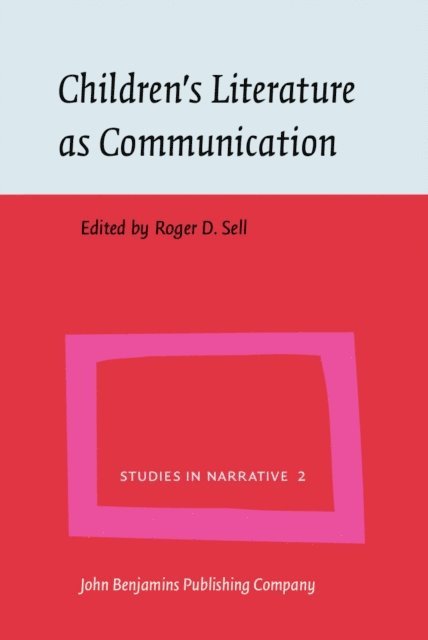
In this book, members of the ChiLPA Project explore the children's literature of several different cultures, ranging from ancient India, nineteenth century Russia, and the Soviet Union, to twentieth century Britain, America, Australia, Sweden, and Finland. The research covers not only the form and content of books for children, but also their potential social functions, especially within education. These two perspectives are brought together within a theory of children's literature as one among other forms of communication, an approach that sees the role of literary scholars, critics and teachers as one of mediation. Part I deals with the way children's writers and picturebook-makers draw on a culture's available resources of orality, literacy, intertextuality, and image. Part II examines their negotiation of major issues such as the child adult distinction, gender, politics, and the Holocaust. Part III discusses children's books as used within language education programmes, with particular attention to young readers' pragmatic processing of differences between the context of writing and their own context of reading.
E-bok
PDF, Engelska, 20011 756 kr
Läs direkt efter köp
In the twentieth century, literature was under threat. Not only was there the challenge of new forms of oral and visual culture. Even literary education and literary criticism could sometimes actually distance novels, poems and plays from their potential audience. This is the trend which Roger D. Sell now seeks to reverse. Arguing that literature can still be a significant and democratic channel of human interactivity, he sees the most helpful role of teachers and critics as one of mediation. Through their own example they can encourage readers to empathize with otherness, to recognize the historical achievement of significant acts of writing, and to respond to literary authors’ own faith in communication itself. By way of illustration, he offers major re-assessments of five canonical figures (Vaughan, Fielding, Dickens, T.S. Eliot, and Frost), and of two fascinating twentieth-century writers who were somewhat misunderstood (the novelist William Gerhardie and the poet Andrew Young).
E-bok
PDF, Engelska, 20001 751 kr
Läs direkt efter köp
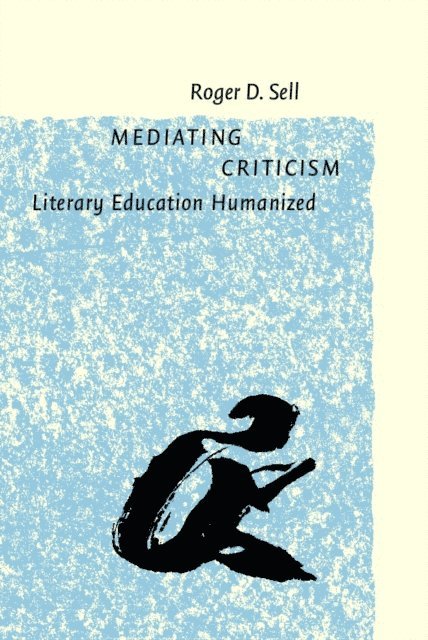
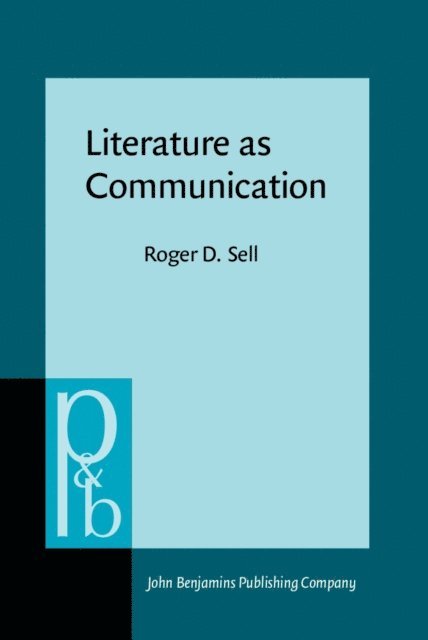
This book offers foundations for a literary criticism which seeks to mediate between writers and readers belonging to different historical periods or social groupings. This makes it, among other things, a timely intervention in the postmodern “culture wars”, though the theory put forward will be of interest not only to students of literature and culture, but also to linguists. Sell describes communication in general as strongly interactive, as very much affected by the disparate situationalities of “sending” and “receiving”, yet as by no means completely determined by them. Seen this way, men and women are both social beings and individuals, capable of empathizing with sociohistorical formations which are alien to them, sometimes even to the extent of changing their own life-world. By treating literary activity as communicational in this same dynamic sense, Sell radically modifies the main paradigms of twentieth-century literary theory, casting much new light on questions of genre, interpretation, affect and ethics.