A Palestinian novel about witnessing a massacre, and worse still, surviving it.Resurrected in Heaven, a bewildered survivor of a massacre flashes back to harrowing events unfolding in an unnamed besieged town, a camp ravished by hunger and swollen with displaced people and starving children, where a hopeful euphoria building at a breadline culminates in a tragedy and bleak dissolution. Centered on the theme of hunger, the essence of bread, and the magic of flour in a place on the brink of mass starvation, Red Flour is essentially a love story that takes place in a breadline. “But can love blossom in a place ravished by hunger?” Languishing under an unending siege and constant bombardment, the camp soon dwindles into a necropolis where bone-thin children wither away in the arms of hapless parents, dying a most agonizing death, before being loaded hurriedly into waiting wagons and buried in haste. And beyond starvation a flour massacre unfolds, leading to the protagonist’s cry: “Even our bread is massacred, murdered before it’s leavened.” This is a compelling story of death and survival, of bread and roses, in a world in which humanity is at a brink.
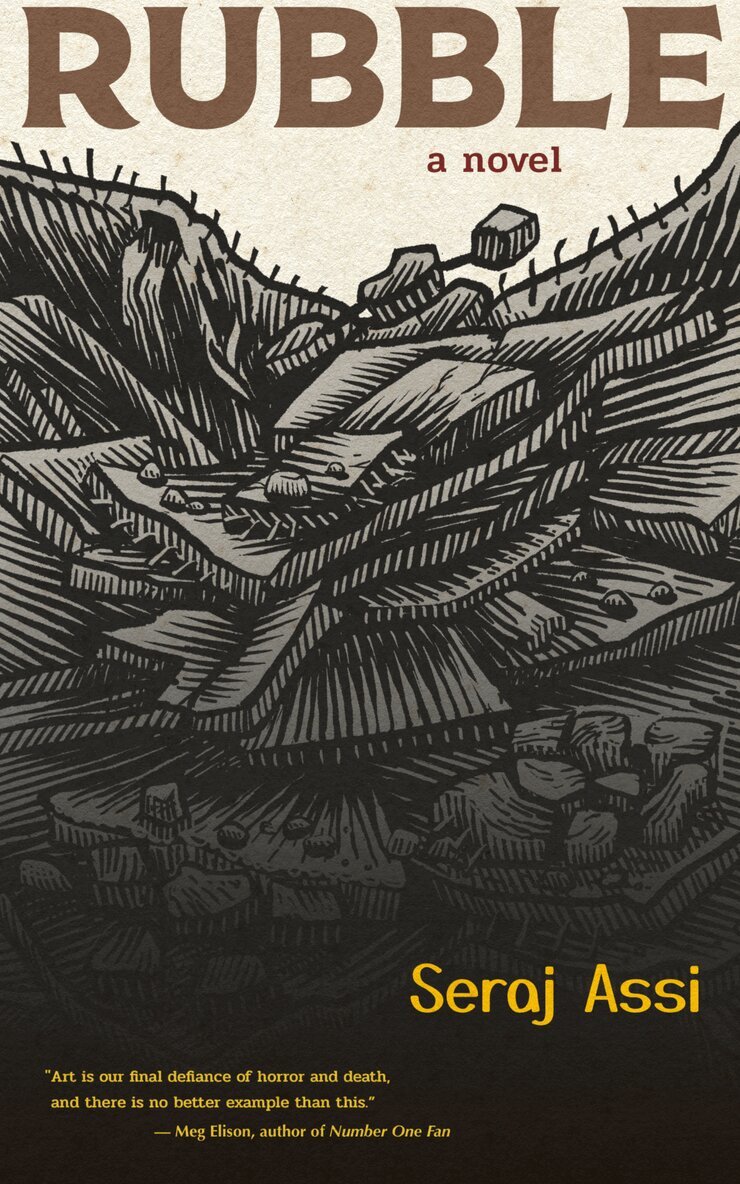
Entombed in darkness with no hope of rescue, he must navigate the thin edge between life and death using only his hearing, sense of smell, and the volatile power of his imagination. Above him a genocide unfolds. Below, in his fragile pocket of air, he begins to witness it in ways no unburied survivor ever could. As hours blur into days, hallucination and reality weave together. Memories seep through the cracks. Fantastical visions rise from the dust. In this liminal state, he gains a strange, heightened clarity, an almost supernatural insight known only to those suspended between worlds, the mortally wounded who hover in the space where time fractures and the mind sharpens to a blade. What begins as desperate escapism becomes a haunting chronicle of a people forced underground by violence, a nation living beneath the weight of another's cruelty. In the darkness, he discovers a grim sanctuary: the rubble is a tomb but also a refuge from the firestorm above. A wartime tale of resilience amid annihilation, Seraj Assi's debut novel plunges readers into the intimate terror of one man's confinement and the collective suffering of his shattered homeland. As he reflects, 'Being under the rubble is a strange thing You're clinging to life not to live, but to defy death. Just because you re breathing hard doesn't mean you're alive. You're a ghost, and your homeland is but a ghostland.' This is the story of a people driven underground not by myth or choice, but by force: 'We are subterranean only because others refuse to allow us our place under the sun.'
A Palestinian novel about witnessing a massacre, and worse still, surviving it.Resurrected in Heaven, a bewildered survivor of a massacre flashes back to harrowing events unfolding in an unnamed besieged town, a camp ravished by hunger and swollen with displaced people and starving children, where a hopeful euphoria building at a breadline culminates in a tragedy and bleak dissolution. Centered on the theme of hunger, the essence of bread, and the magic of flour in a place on the brink of mass starvation, Red Flour is essentially a love story that takes place in a breadline. “But can love blossom in a place ravished by hunger?” Languishing under an unending siege and constant bombardment, the camp soon dwindles into a necropolis where bone-thin children wither away in the arms of hapless parents, dying a most agonizing death, before being loaded hurriedly into waiting wagons and buried in haste. And beyond starvation a flour massacre unfolds, leading to the protagonist’s cry: “Even our bread is massacred, murdered before it’s leavened.” This is a compelling story of death and survival, of bread and roses, in a world in which humanity is at a brink.
Entombed in darkness with no hope of rescue, he must navigate the thin edge between life and death using only his hearing, sense of smell, and the volatile power of his imagination. Above him a genocide unfolds. Below, in his fragile pocket of air, he begins to witness it in ways no unburied survivor ever could. As hours blur into days, hallucination and reality weave together. Memories seep through the cracks. Fantastical visions rise from the dust. In this liminal state, he gains a strange, heightened clarity, an almost supernatural insight known only to those suspended between worlds, the mortally wounded who hover in the space where time fractures and the mind sharpens to a blade. What begins as desperate escapism becomes a haunting chronicle of a people forced underground by violence, a nation living beneath the weight of another's cruelty. In the darkness, he discovers a grim sanctuary: the rubble is a tomb but also a refuge from the firestorm above. A wartime tale of resilience amid annihilation, Seraj Assi's debut novel plunges readers into the intimate terror of one man's confinement and the collective suffering of his shattered homeland. As he reflects, 'Being under the rubble is a strange thing You're clinging to life not to live, but to defy death. Just because you re breathing hard doesn't mean you're alive. You're a ghost, and your homeland is but a ghostland.' This is the story of a people driven underground not by myth or choice, but by force: 'We are subterranean only because others refuse to allow us our place under the sun.'