Serge Latouche - Böcker
Visar alla böcker från författaren Serge Latouche. Handla med fri frakt och snabb leverans.
4 produkter
4 produkter
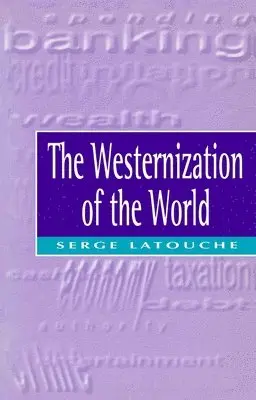
Westernization of the World
Significance, Scope and Limits of the Drive Towards Global Uniformity
Häftad, Engelska, 1996
270 kr
Skickas inom 5-8 vardagar
This provocative new book argues that the rise of the West to world domination has brought widespread social, cultural and material destruction in its wake.
590 kr
Skickas inom 7-10 vardagar
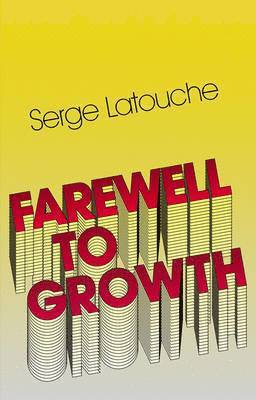
Most of us who live in the North and the West consume far too much – too much meat, too much fat, too much sugar, too much salt. We are more likely to put on too much weight than to go hungry. We live in a society that is heading for a crash. We are aware of what is happening and yet we refuse to take it fully into account. Above all we refuse to address the issue that lies at the heart of our problems – namely, the fact that our societies are based on an economy whose only goal is growth for growth’s sake. Serge Latouche argues that we need to rethink from the very foundations the idea that our societies should be based on growth. He offers a radical alternative – a society of ‘de-growth’. De-growth is not the same thing as negative growth. We should be talking about ‘a-growth’, in the sense in which we speak of ‘a-theism’. And we do indeed have to abandon a faith or religion – that of the economy, progress and development—and reject the irrational and quasi-idolatrous cult of growth for growth’s sake.While many realize that that the never-ending pursuit of growth is incompatible with a finite planet, we have yet to come to terms with the implications of this – the need to produce less and consume less. But if we do not change course, we are heading for an ecological and human disaster. There is still time to imagine, quite calmly, a system based upon a different logic, and to plan for a ‘de-growth society’.
201 kr
Skickas inom 7-10 vardagar
Most of us who live in the North and the West consume far too much – too much meat, too much fat, too much sugar, too much salt. We are more likely to put on too much weight than to go hungry. We live in a society that is heading for a crash. We are aware of what is happening and yet we refuse to take it fully into account. Above all we refuse to address the issue that lies at the heart of our problems – namely, the fact that our societies are based on an economy whose only goal is growth for growth’s sake. Serge Latouche argues that we need to rethink from the very foundations the idea that our societies should be based on growth. He offers a radical alternative – a society of ‘de-growth’. De-growth is not the same thing as negative growth. We should be talking about ‘a-growth’, in the sense in which we speak of ‘a-theism’. And we do indeed have to abandon a faith or religion – that of the economy, progress and development—and reject the irrational and quasi-idolatrous cult of growth for growth’s sake.While many realize that that the never-ending pursuit of growth is incompatible with a finite planet, we have yet to come to terms with the implications of this – the need to produce less and consume less. But if we do not change course, we are heading for an ecological and human disaster. There is still time to imagine, quite calmly, a system based upon a different logic, and to plan for a ‘de-growth society’.
148 kr
Skickas inom 5-8 vardagar
Vad är utveckling? Samhällets syn på utveckling förändras. Under senare år har bistånds- och utvecklingspolitiken alltmer kommit att präglas av marknadslösningar. Samtidigt ifrågasätts den dominerande uppfattningen om vad utveckling syftar till. I skuggan av klimatkrisen menar många att den ständiga jakten på ekonomisk tillväxt är långsiktigt ohållbar. Den postkoloniala kritiken pekar på dominansförhållanden som fortfarande präglar förhållandet mellan den rika och den fattiga världen. I Fronesis nr 38–39 undersöks utvecklingstankens idéhistoriska bakgrund, dagspolitiska bärkraft och utsikter inför framtiden. Vad skapar utveckling? Vad beror skillnader i utvecklingsnivå på? Vilka kommer utvecklingen till del? Och vem bestämmer över dess former? Några av numrets texter belyser bistånds- och utvecklingspolitikens förändringar både i Sverige och i den rika världen överlag. I en text av utvecklingsforskaren Mark Duffield diskuteras hur den rika världens säkerhet inte bara kommit att bli det övergripande målet för handels- och migrationspolitiken, utan även för biståndspolitiken. Ekonomen Omar Dahi menar i sin text att »den arabiska våren« inte bara var en protest mot regionens diktatorer, utan även mot det marknadsinriktade utvecklingsparadigm som globala institutioner pådyvlat länderna. Nationalekonomen Serge Latouche diskuterar begreppet »nedväxt« (på franska décroissance, på engelska degrowth) och menar att vi måste överge ekonomisk tillväxt som självklar och legitim politisk målsättning för att i stället finna andra måttstockar för välfärd och välbefinnande. Innehåll i Fronesis nr 38-39 (244 sidor) Redaktionen: Den ifrågasatta utvecklingen Hans Abrahamsson och Ann-Marie Ekengren: Svensk politik för global utveckling Hans Abrahamsson: Utvecklingsbegreppet inför sin pånyttfödelse Sofie Tornhill: Tid och otid Walter D. Mignolo och Madina Tlostanova: Kolonialitetens logik och postkolonialitetens gränser Manuela Boatca: De många icke-väst Sara Kalm: Liberala utvecklingspraktiker Rita Abrahamsen: Partnerskap och makt i den globala styrningen Mark Duffield: Globalt inbördeskrig Christine Keating, Claire Rasmussen och Pooja Rishi: Egenmaktens rationalitet Roger Hildingsson och Rickard Andersson: En (annan) hållbar utveckling Serge Latouche: Nedväxt Arturo Escobar: Hållbarhet Sam Carlshamre: Utveckling och islamism Omar Dahi: Den arabiska vårens politiska ekonomi