Serge Leclaire – författare
Visar alla böcker från författaren Serge Leclaire. Handla med fri frakt och snabb leverans.
7 produkter
7 produkter
Häftad, Engelska, 1998
245 kr
Skickas inom 5-8 vardagar
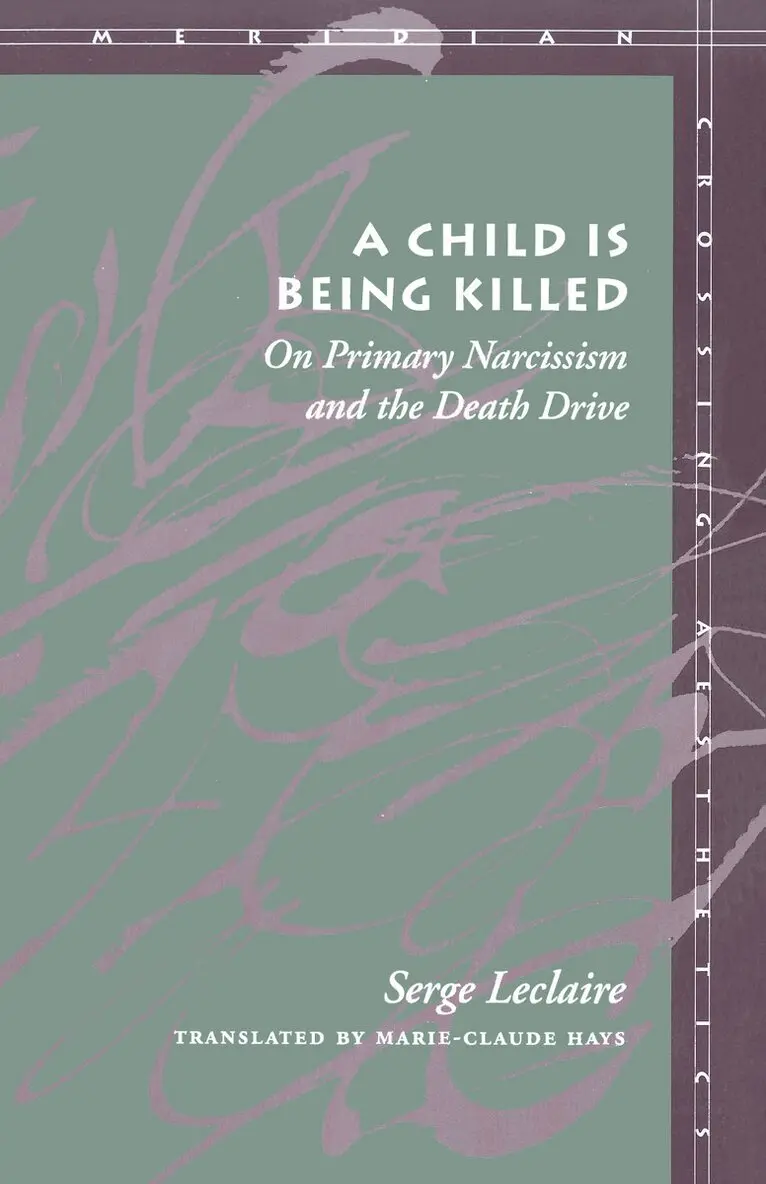
The powerful thesis of this book is that in order to achieve full selfhood we must all repeatedly and endlessly kill the phantasmatic image of ourselves instilled in us by our parents. We must all combat what the author calls "primary narcissism," a projection of the child our parents wanted. This idea—that each of us carries as a burden an unconscious secret of our parents, a hidden desire that we are made to live out but that we must kill in order to "be born"—touches on some of the fundamental issues of psychoanalytic theory. Around it, the author builds an intricate analysis of the relation between primary narcissism and the death drive.Each of the book's five chapters begins with one or more case studies drawn from the author's clinical experience as a psychoanalyst. In these studies he links his central concern—the image of the child created by the unconscious desire of the parents—to other issues, such as the question of love, the concept of the subject, and the death drive. In the penultimate chapter, on transference, the author challenges the commonplace understanding of the analyst's impassivity. What does such impassivity imply, especially in the context of a "transferential love" between a female patient and a male analyst? In replying to this question, the author forcefully reassesses the relation of psychoanalysis to femininity, to the question "What does a woman want?"Serge Leclaire's overarching thesis leads to a provocative rereading of the Oedipal configuration. Leclaire suggests that he is inhabited, pursued, haunted, and debilitated by the child who should have died in order that Oedipus might have been born into life.
Inbunden, Engelska, 1998
1 080 kr
Skickas inom 10-15 vardagar
Scarcely any theoretical discourse has had greater impact on literary and cultural studies than psychoanalysis, and yet hardly any theoretical discourse is more widely misunderstood and abused. In Psychoanalyzing, Serge Leclaire offers a thorough and lucid exposition of the psychoanalysis that has emerged from the French "return to Freud," unfolding and elaborating the often enigmatic pronouncements of Jacques Lacan and patiently working through the central tenets of the "Ecole freudienne." As a concise but nuanced introduction to the subject, Psychoanalyzing will prove indispensable to anyone interested in psychoanalysis, especially those curious about its Lacanian reconceptualization and the linguistic theory of the unconscious and its effects.Leclaire's study is particularly valuable for the way its author links theoretical issues to psychoanalytic practice. The opening chapter—on listening—highlights the necessity, and the impossibility, of the "floating attention" required from the analyst, while preparing the reader for the following chapters, which deal with such topics as unconscious desire, how to speak of the body, and the intrication of the object and the "letter" (i.e. the signifier, the "material support that concrete discourse borrows from language"). The final chapter—on transference—shows how the analytical dialogue differs from other dialogues.Despite the intricacy of its subject matter, the book takes very little for granted. It does not simplify the issues it presents, but does not assume a reader familiar with the concepts of psychoanalysis, let alone a reader acquainted with its French inflection. Each basic concept and term is carefully explained, so that the reader knows the meaning of "transference" or "primal scene" before proceeding to more advanced elements of psychoanalysis. Leclaire's text is not intended merely to be "user friendly"; its purpose is to clarify and advance, rather than to impress or convert.
Häftad, Engelska, 1998
258 kr
Skickas inom 5-8 vardagar
Scarcely any theoretical discourse has had greater impact on literary and cultural studies than psychoanalysis, and yet hardly any theoretical discourse is more widely misunderstood and abused. In Psychoanalyzing, Serge Leclaire offers a thorough and lucid exposition of the psychoanalysis that has emerged from the French "return to Freud," unfolding and elaborating the often enigmatic pronouncements of Jacques Lacan and patiently working through the central tenets of the "Ecole freudienne." As a concise but nuanced introduction to the subject, Psychoanalyzing will prove indispensable to anyone interested in psychoanalysis, especially those curious about its Lacanian reconceptualization and the linguistic theory of the unconscious and its effects.Leclaire's study is particularly valuable for the way its author links theoretical issues to psychoanalytic practice. The opening chapter—on listening—highlights the necessity, and the impossibility, of the "floating attention" required from the analyst, while preparing the reader for the following chapters, which deal with such topics as unconscious desire, how to speak of the body, and the intrication of the object and the "letter" (i.e. the signifier, the "material support that concrete discourse borrows from language"). The final chapter—on transference—shows how the analytical dialogue differs from other dialogues.Despite the intricacy of its subject matter, the book takes very little for granted. It does not simplify the issues it presents, but does not assume a reader familiar with the concepts of psychoanalysis, let alone a reader acquainted with its French inflection. Each basic concept and term is carefully explained, so that the reader knows the meaning of "transference" or "primal scene" before proceeding to more advanced elements of psychoanalysis. Leclaire's text is not intended merely to be "user friendly"; its purpose is to clarify and advance, rather than to impress or convert.
Inbunden, Engelska, 1998
1 012 kr
Skickas inom 5-8 vardagar
The powerful thesis of this book is that in order to achieve full selfhood we must all repeatedly and endlessly kill the phantasmatic image of ourselves instilled in us by our parents. We must all combat what the author calls "primary narcissism," a projection of the child our parents wanted. This idea—that each of us carries as a burden an unconscious secret of our parents, a hidden desire that we are made to live out but that we must kill in order to "be born"—touches on some of the fundamental issues of psychoanalytic theory. Around it, the author builds an intricate analysis of the relation between primary narcissism and the death drive.Each of the book's five chapters begins with one or more case studies drawn from the author's clinical experience as a psychoanalyst. In these studies he links his central concern—the image of the child created by the unconscious desire of the parents—to other issues, such as the question of love, the concept of the subject, and the death drive. In the penultimate chapter, on transference, the author challenges the commonplace understanding of the analyst's impassivity. What does such impassivity imply, especially in the context of a "transferential love" between a female patient and a male analyst? In replying to this question, the author forcefully reassesses the relation of psychoanalysis to femininity, to the question "What does a woman want?"Serge Leclaire's overarching thesis leads to a provocative rereading of the Oedipal configuration. Leclaire suggests that he is inhabited, pursued, haunted, and debilitated by the child who should have died in order that Oedipus might have been born into life.
Häftad, Franska, 2022
490 kr
Skickas inom 3-6 vardagar
81 kr
Läs direkt efter köp
Psicoanalizar sería una empresa fácil al igual que irrisoria si sólo se tratara de enseñar al paciente lo que ya sabe (la existencia de los complejos de Edipo y de castración), pretendiendo, a la vez, descubrir con él que, a tierna edad, deseó el amor de su padre o de su madre y que teme el castigo.La singularidad del deseo que el psicoanálisis busca se inscribe en la universalidad de esas estructuras; pero falta descubrirla para cada persona. Para ello es necesario precisar cómo puede concebirse la fijación de un rasgo: la constelación original no sólo encuentra su referencia en la anécdota del recuerdo olvidado o en las particularidades del relato familiar, sino sobre todo en una cifra, en una fórmula, una letra, modelos de la organización fantasmática. Para ilustrar su teoría, Leclaire toma dos casos: unos de Freud y otro de él mismo; en los que el análisis gira alrededor de una palabra, de una letra o de unas siglas que dan la pauta para la prosecución del análisis. Por lo tanto, psicoanalizar es, antes que nada, oír la palabra y asir el cuerpo de la letra.
Häftad, Spanska, 1980
139 kr
Skickas inom 5-8 vardagar