Serge Paugam - Böcker
Visar alla böcker från författaren Serge Paugam. Handla med fri frakt och snabb leverans.
2 produkter
2 produkter
858 kr
Skickas inom 3-6 vardagar
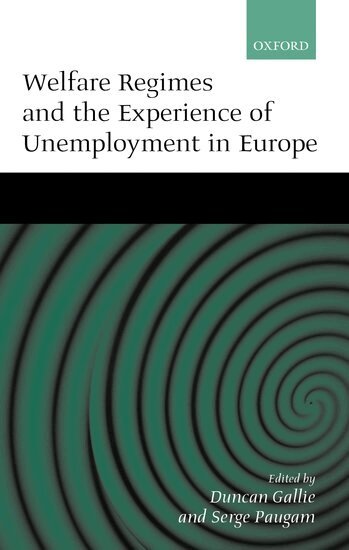
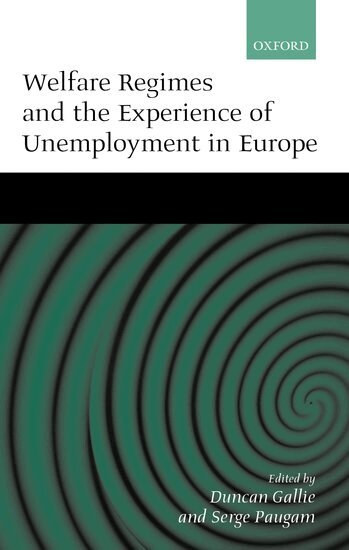
The is the first major study to examine the implications of different welfare regimes for the experience of unemployment in Europe. It addresses three central questions. How far do such regimes protect unemployed people from poverty and financial hardship? Do they reduce or accentuate the tendencies for progressive marginalization from employment that may arise from motivational change, skill loss or the growth of discriminatory barriers? Finally, to what extent do they affect the social integration of unemployed people, in particular with respect to their social networks and psychological well-being? The book is based on a major cross-cultural research programme funded by the European Union. In addition to systematic comparison of national data, it uses a new important data source - the European Community Household Panel - which provides directly comparable information for most of the EU countries.The study shows that institutional and cultural differences have vital implications for the experience of unemployment. While welfare policies affect in an important way the pervasiveness of poverty, it is above all the patterns of family structure and the culture of sociability in a society that affect vulnerability to social isolation. The book concludes by developing a new perspective for understanding the risk of social exclusion.
956 kr
Skickas inom 3-6 vardagar
The book is the first major study to examine the implications of differences in welfare regimes for the experience of unemployment in Europe. It is concerned with three central questions about the way such regimes affect the experience of unemployment. The first is how far they protect the quality of life of unemployed people with respect to living standards and the experience of financial hardship. The second is their role in mediating the impact of unemployment on the individual's longer-term position in the labour market, addressing the issue of how far they help to prevent progressive marginalization from the employment structure as a result of motivational change, skill loss or the growth of discriminatory barriers. The third is how far such regimes mediate the impact of unemployment on social integration in the community, for instance with respect to the maintenance (or rupture) of social networks and the degree of psychological distress experienced by the unemployed.The book is the product of a major cross-cultural research programme, funded by the European Union (TSER), bringing together teams from eight countries. The emphasis has been on rigorous comparison rather than the all-too-frequent separate country analyses, which usually provide data which differs in format from one country to another. In addition to a systematic comparison of national data sources, it has been able to make use of a new important data source (the European Community Household Panel) produced by Eurostat which provides directly comparable information for all EU countries.The study shows that institutional and cultural differences have vital implications for the experience of unemployment. While welfare policies affect in an important way the pervasiveness of poverty, it is above all the patterns of family structure and the culture of sociability in a society that affect vulnerability to social isolation. The book concludes by developing a new perspective for understanding the risk of social exclusion.