Sergei Abramovich – författare
Visar alla böcker från författaren Sergei Abramovich. Handla med fri frakt och snabb leverans.
24 produkter
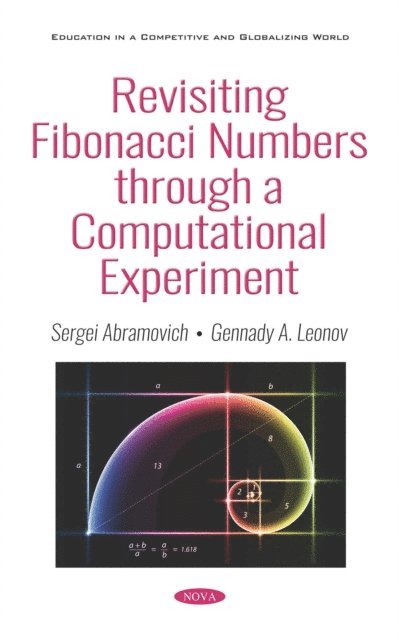
Revisiting Fibonacci Numbers through a Computational Experiment
E-bok, 2019
3178 kr
Lägg i varukorg
The material of this book stems from the idea of integrating a classic concept of Fibonacci numbers with commonly available digital tools including a computer spreadsheet, Maple, Wolfram Alpha, and the graphing calculator. This integration made it possible to introduce a number of new concepts such …
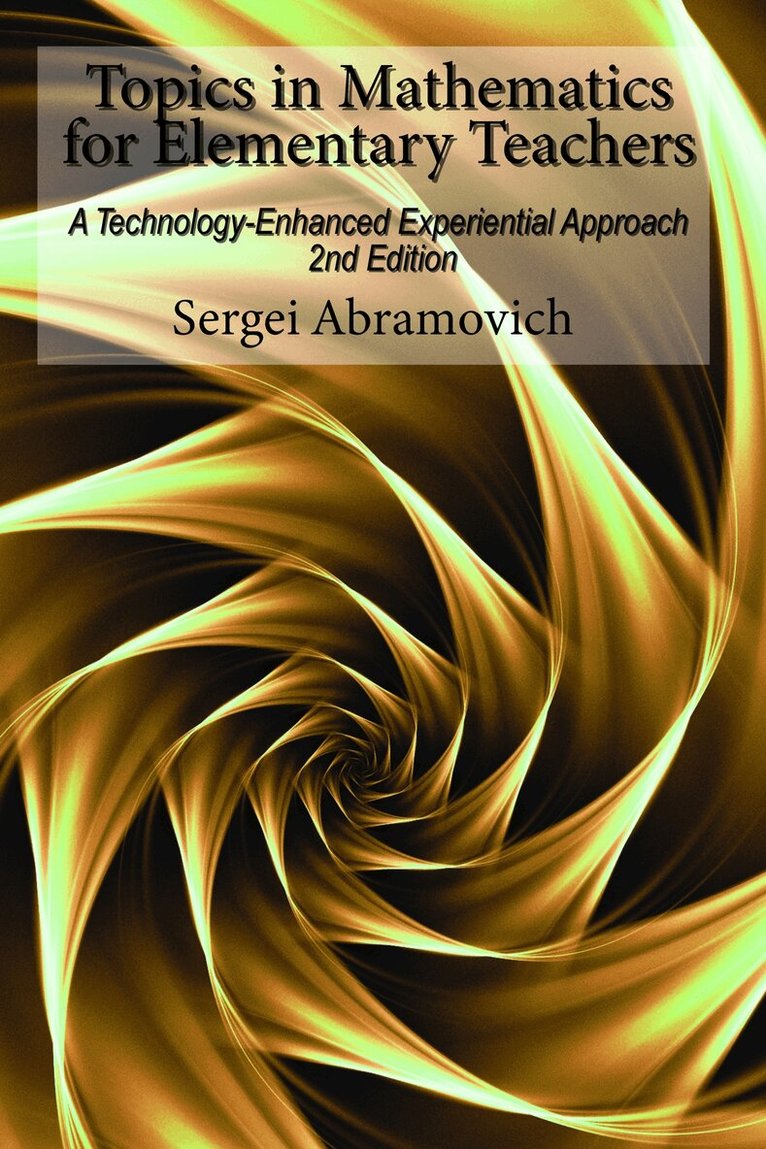
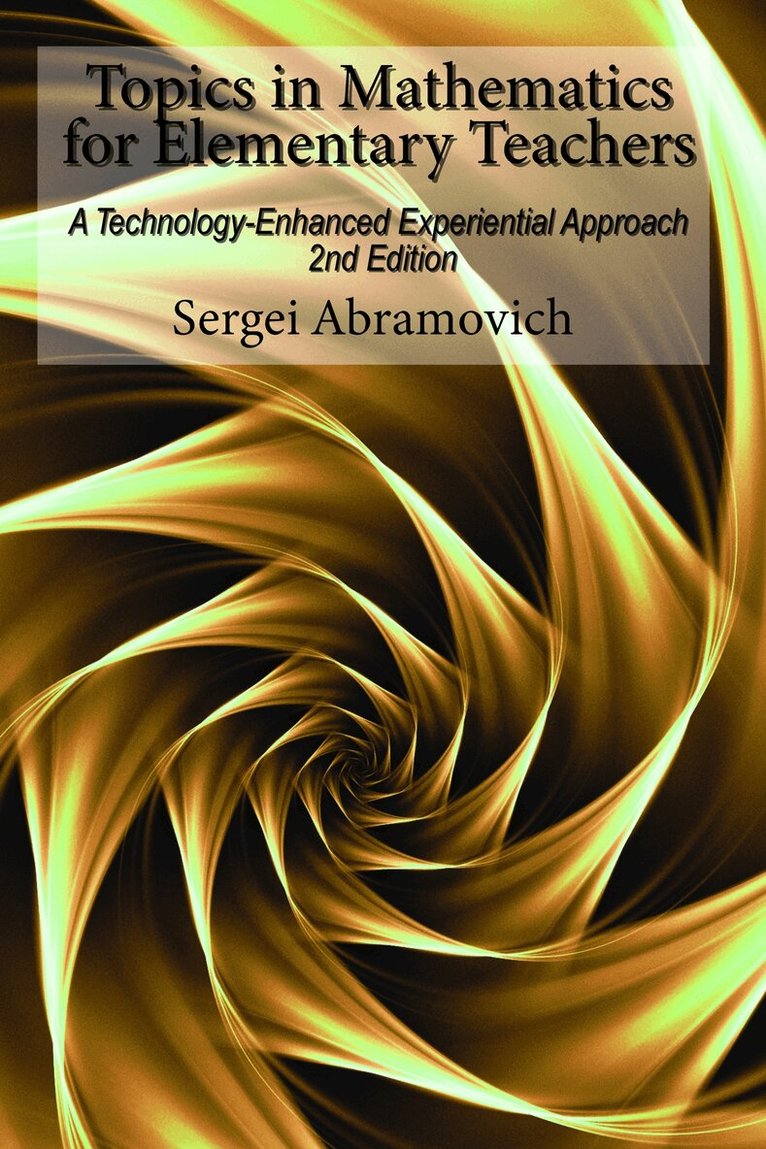
Topics in Mathematics For Elementary Teachers
A Technology-Enhanced Experiential Approach
E-bok, 2023
581 kr
Lägg i varukorg
This is the second (revised) edition of the book published in 2010 under the same title. It reflects the author's experience teaching a graduate level mathematics content course for elementary teacher candidates at SUNY Potsdam since 2003. The book addresses a number of recommendations of the …
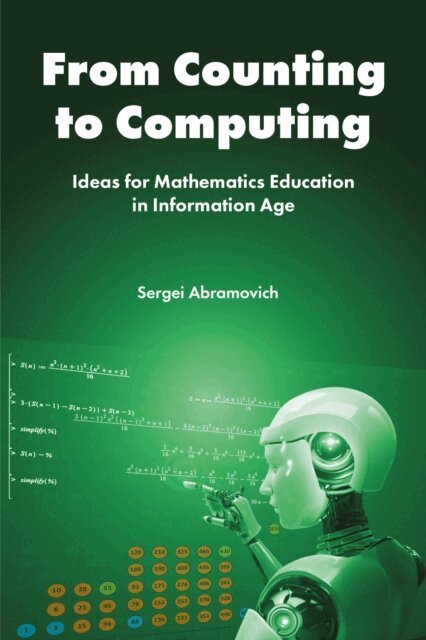
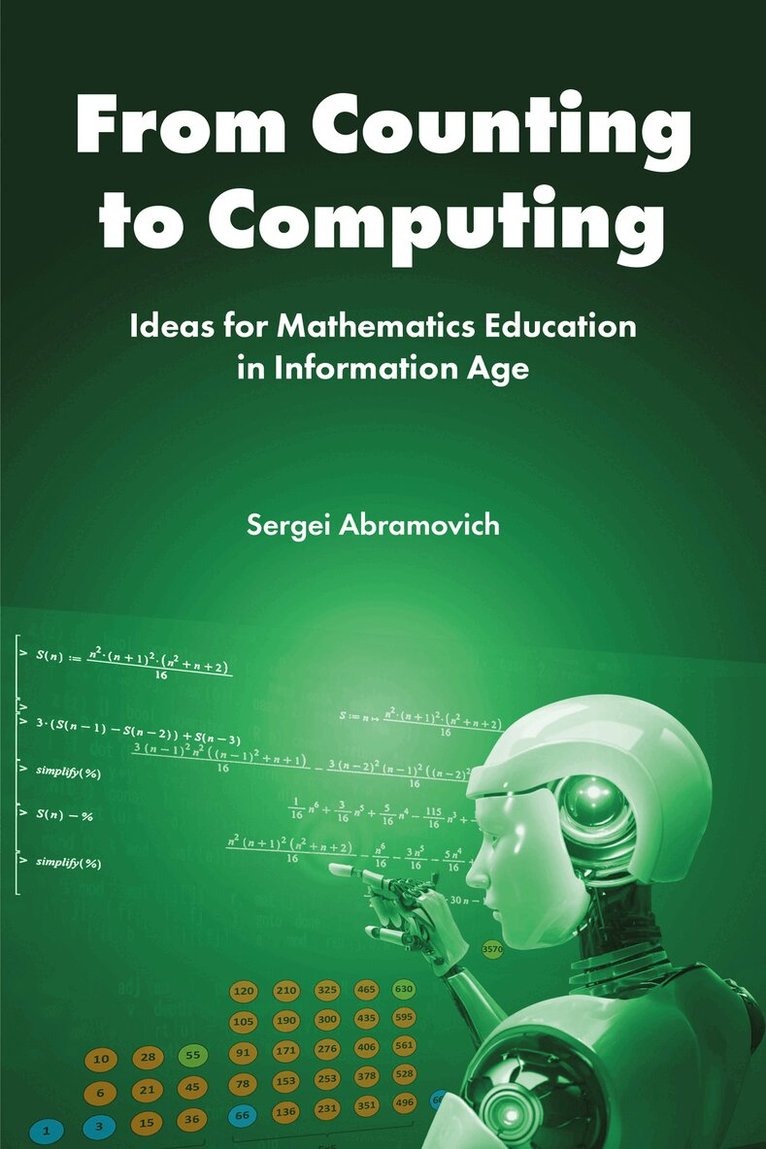
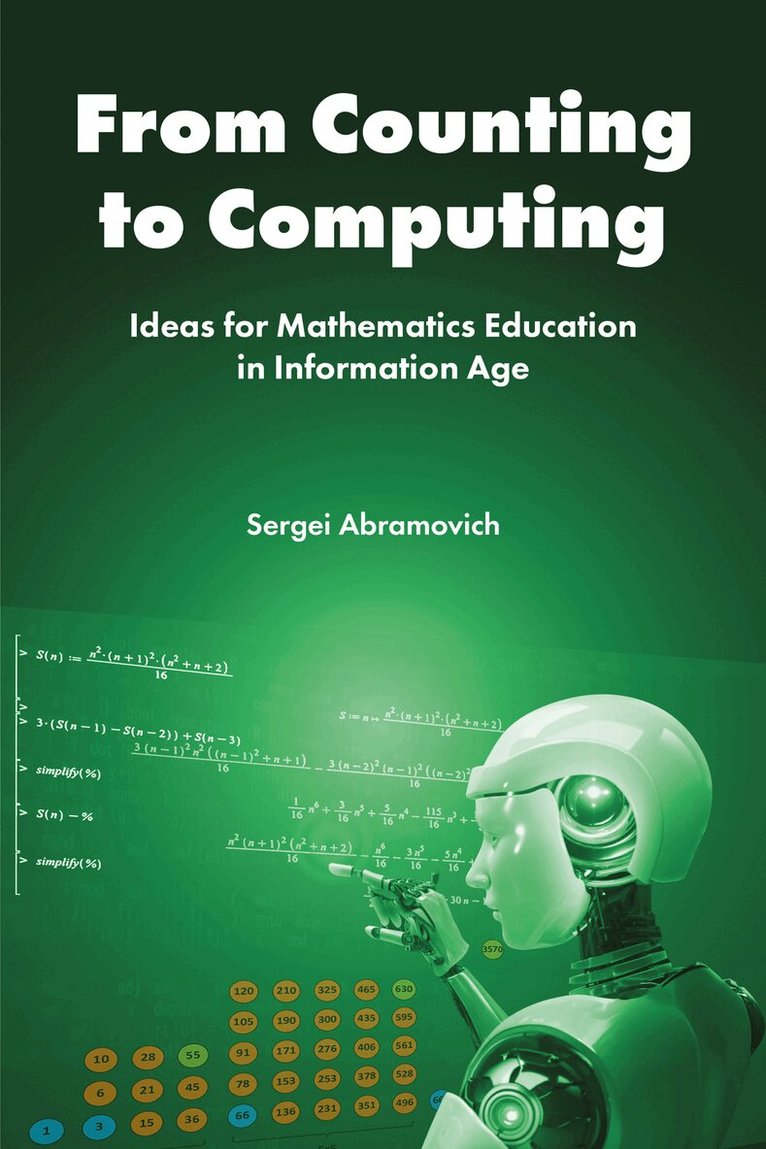
From Counting to Computing
Ideas for Mathematics Education in Information Age
E-bok, 2025
594 kr
Lägg i varukorg
From Counting to Computing demonstrates the powerful integration of formal mathematical reasoning, hands-on educational experiments, and digital computation to solve problems. It focuses on numeric tables shaped as squares, equilateral and isosceles triangles, offering ample opportunities for …
From Counting to Computing
Ideas for Mathematics Education in Information Age
Inbunden, 2025
1026 kr
Lägg i varukorg
From Counting to Computing demonstrates the powerful integration of formal mathematical reasoning, hands-on educational experiments, and digital computation to solve problems. It focuses on numeric tables shaped as squares, equilateral and isosceles triangles, offering ample opportunities for …
From Counting to Computing
Ideas for Mathematics Education in Information Age
E-bok, 2025
594 kr
Lägg i varukorg
From Counting to Computing demonstrates the powerful integration of formal mathematical reasoning, hands-on educational experiments, and digital computation to solve problems. It focuses on numeric tables shaped as squares, equilateral and isosceles triangles, offering ample opportunities for …
From Counting to Computing
Ideas for Mathematics Education in Information Age
Häftad, 2025
551 kr
Lägg i varukorg
From Counting to Computing demonstrates the powerful integration of formal mathematical reasoning, hands-on educational experiments, and digital computation to solve problems. It focuses on numeric tables shaped as squares, equilateral and isosceles triangles, offering ample opportunities for …
Developing Deep Knowledge in Middle School Mathematics
A Textbook for Teaching in the Age of Technology
Av Sergei Abramovich, Michael L. Connell
Häftad, 2021
1062 kr
Lägg i varukorg
This textbook is for prospective teachers of middle school mathematics. It reflects on the authors’ experience in offering various mathematics education courses to prospective teachers in the US and Canada. In particular, the content can support one or more of 24-semester-hour courses recommended …
Developing Deep Knowledge in Middle School Mathematics
A Textbook for Teaching in the Age of Technology
Av Michael L. Connell, Sergei Abramovich
E-bok, 2021
1459 kr
Lägg i varukorg
This textbook is for prospective teachers of middle school mathematics. It reflects on the authors’ experience in offering various mathematics education courses to prospective teachers in the US and Canada. In particular, the content can support one or more of 24-semester-hour courses recommended …
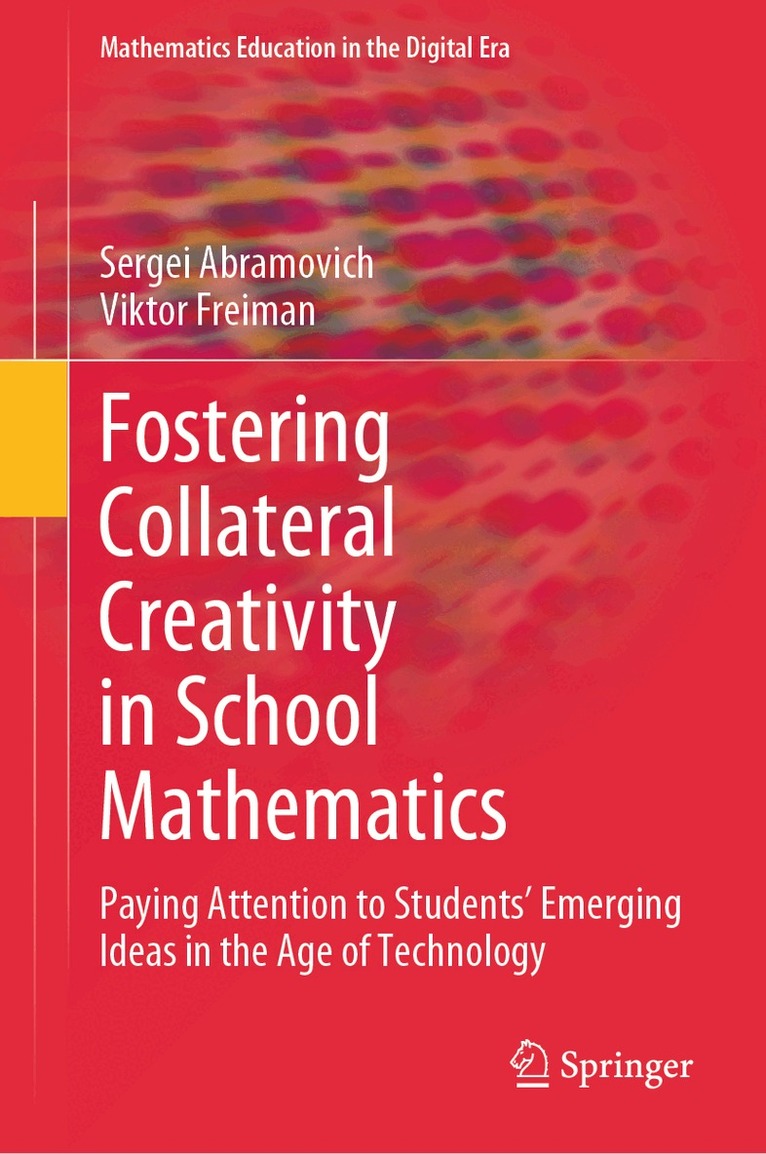
Fostering Collateral Creativity in School Mathematics
Paying Attention to Students’ Emerging Ideas in the Age of Technology
Av Sergei Abramovich, Viktor Freiman
Inbunden, 2023
1636 kr
Lägg i varukorg
This book explores the topic of using technology, both physical and digital, to motivate creative mathematical thinking among students who are not considered ‘mathematically advanced.’ The book reflects the authors’ experience of teaching mathematics to Canadian and American teacher candidates and …
Fostering Collateral Creativity in School Mathematics
Paying Attention to Students’ Emerging Ideas in the Age of Technology
Av Viktor Freiman, Sergei Abramovich
E-bok, 2023
2174 kr
Lägg i varukorg
This book explores the topic of using technology, both physical and digital, to motivate creative mathematical thinking among students who are not considered ‘mathematically advanced.’ The book reflects the authors’ experience of teaching mathematics to Canadian and American teacher candidates and …
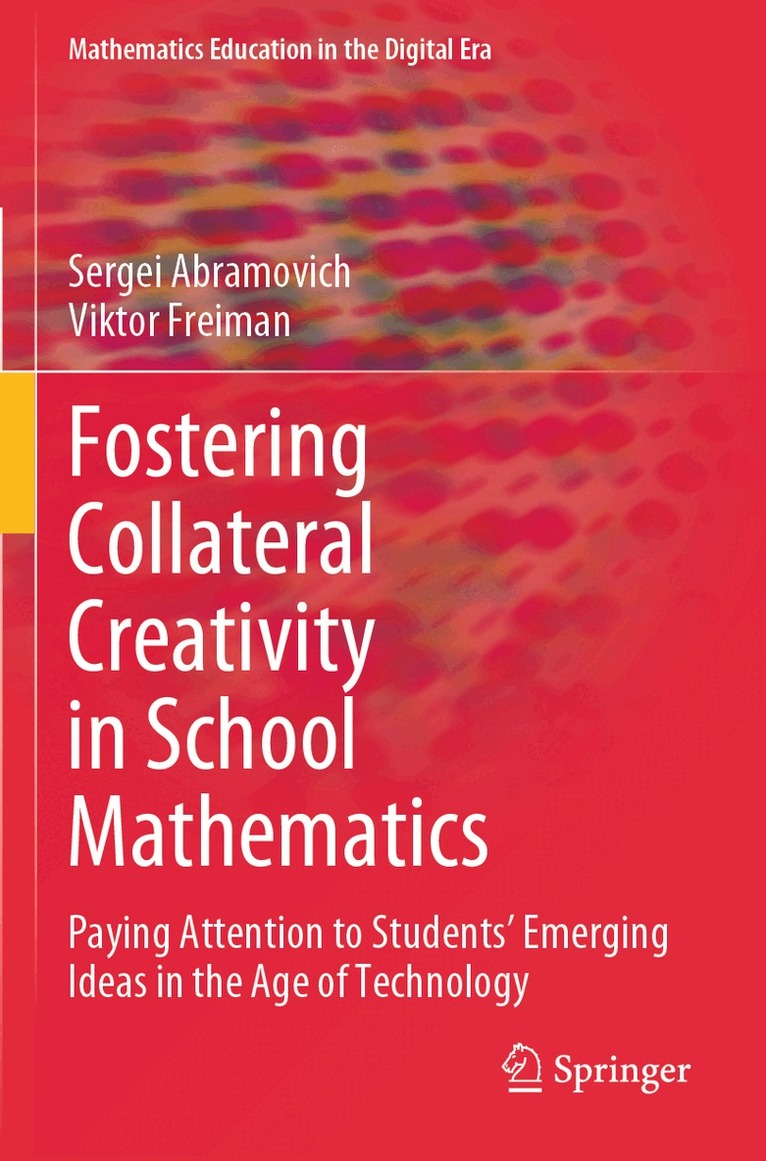
Fostering Collateral Creativity in School Mathematics
Paying Attention to Students’ Emerging Ideas in the Age of Technology
Av Sergei Abramovich, Viktor Freiman
Häftad, 2024
1685 kr
Lägg i varukorg
This book explores the topic of using technology, both physical and digital, to motivate creative mathematical thinking among students who are not considered ‘mathematically advanced.’ The book reflects the authors’ experience of teaching mathematics to Canadian and American teacher candidates and …
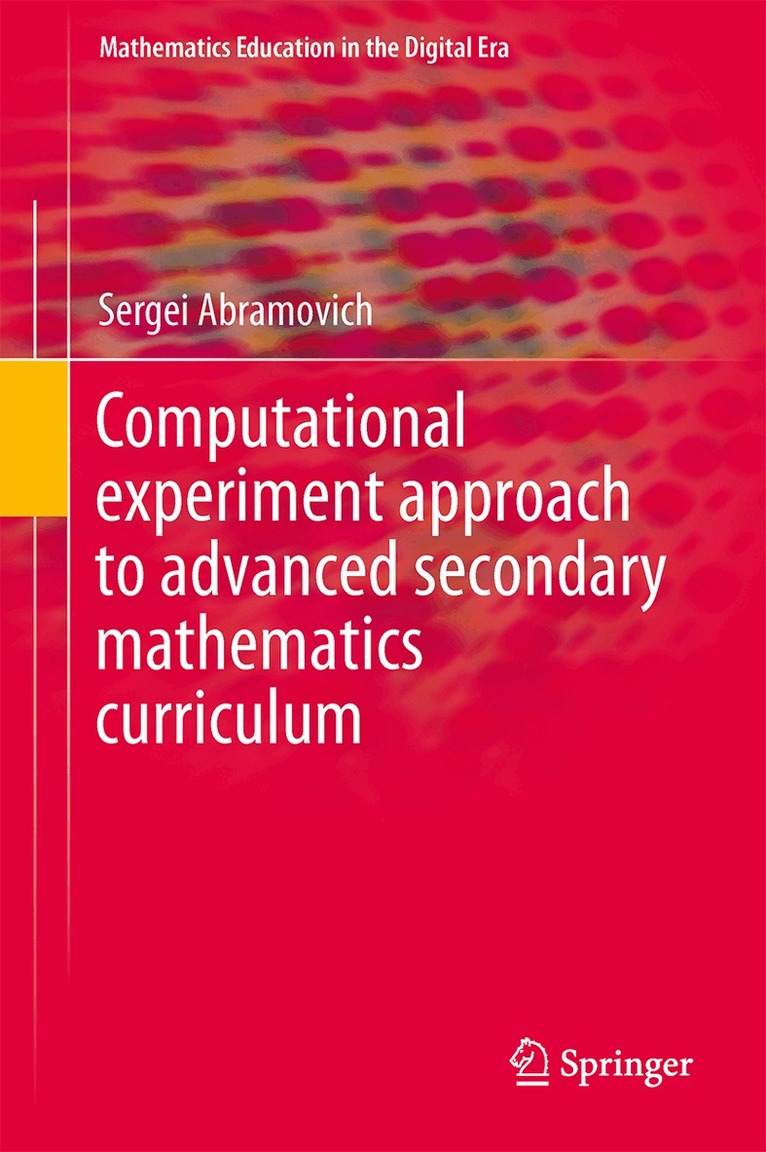
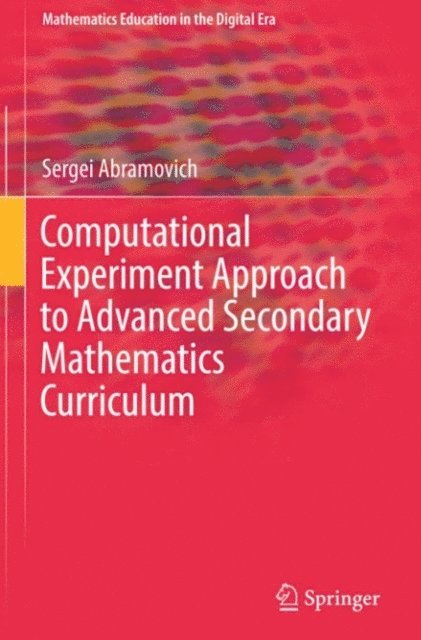
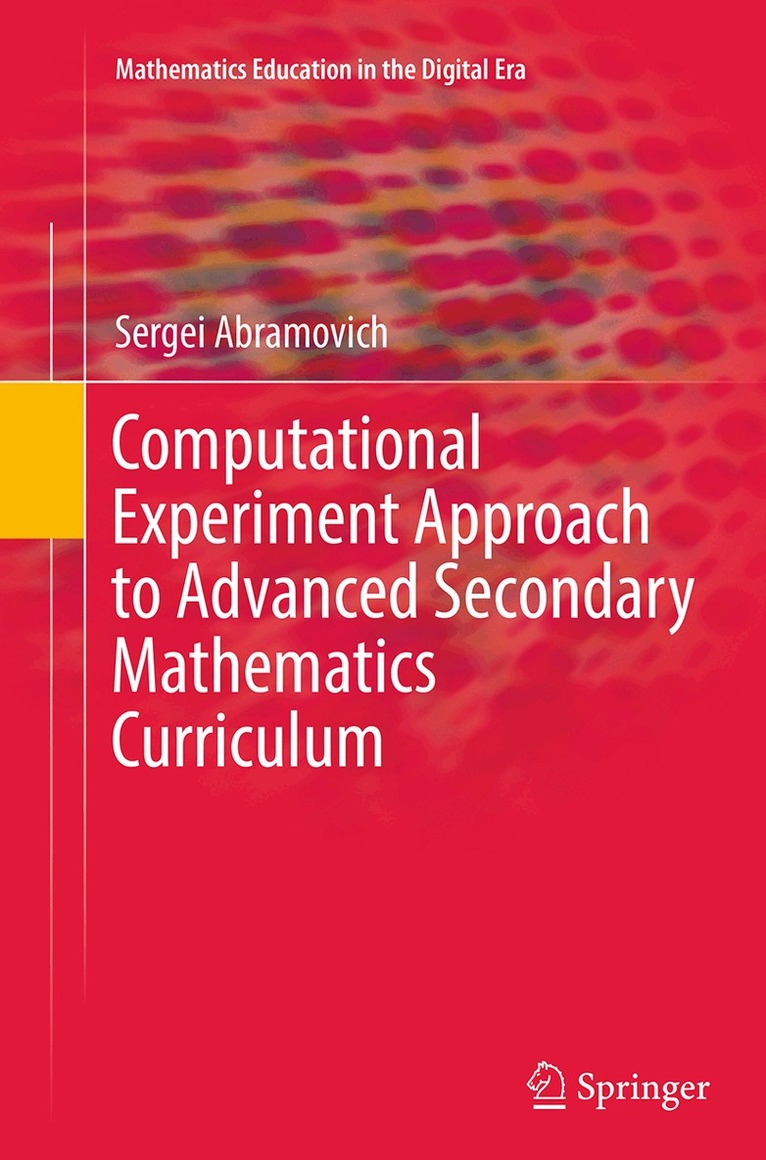
Computational Experiment Approach to Advanced Secondary Mathematics Curriculum
Inbunden, 2014
1093 kr
Lägg i varukorg
This book promotes the experimental mathematics approach in the context of secondary mathematics curriculum by exploring mathematical models depending on parameters that were typically considered advanced in the pre-digital education era. This approach, by drawing on the power of computers to …
Computational Experiment Approach to Advanced Secondary Mathematics Curriculum
E-bok, 2014
1459 kr
Lägg i varukorg
This book promotes the experimental mathematics approach in the context of secondary mathematics curriculum by exploring mathematical models depending on parameters that were typically considered advanced in the pre-digital education era. This approach, by drawing on the power of computers to …
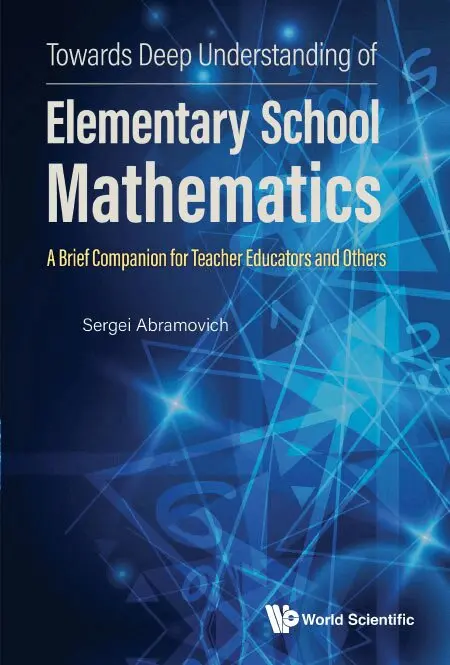
TOWARDS DEEP UNDERSTANDING OF ELEMENTARY SCHOOL MATHEMATICS: A BRIEF COMPANION FOR TEACHER EDUCATORS AND OTHERS
Inbunden, 2022
1128 kr
Lägg i varukorg
The book is intended to serve as a brief companion for mathematical educators of elementary teacher candidates who learn mathematics within a college of education both at the undergraduate and graduate levels. Being informed by mathematics teaching and learning standards of the United States, …
DIVERSIFYING MATHEMATICS TEACHING: ADVANCED EDUCATIONAL CONTENT AND METHODS FOR PROSPECTIVE ELEMENTARY TEACHERS
Inbunden, 2017
1293 kr
Lägg i varukorg
"What one takes away from this book is the notion that there’s a lot of potential to do more with these students, and the book stands as a resource for anyone who shares that opinion … Books like Abramovich’s are a welcome addition to our options as we try to do our best by these students, and by …
DIVERSIFYING MATHEMATICS TEACHING: ADVANCED EDUCATIONAL CONTENT AND METHODS FOR PROSPECTIVE ELEMENTARY TEACHERS
Häftad, 2017
667 kr
Lägg i varukorg
"What one takes away from this book is the notion that there’s a lot of potential to do more with these students, and the book stands as a resource for anyone who shares that opinion … Books like Abramovich’s are a welcome addition to our options as we try to do our best by these students, and by …
INTEGRATING COMPUTERS AND PROBLEM POSING IN MATHEMATICS TEACHER EDUCATION
Inbunden, 2018
1360 kr
Lägg i varukorg
The book is written to share ideas stemming from technology-rich K-12 mathematics education courses taught by the author to American and Canadian teacher candidates over the past two decades. It includes examples of problems posed by the teacher candidates using computers. These examples are …
EXPLORING MATHEMATICS WITH INTEGRATED SPREADSHEETS IN TEACHER EDUCATION
Inbunden, 2015
1335 kr
Lägg i varukorg
The goal of the book is to technologically enhance the preparation of mathematics schoolteachers using an electronic spreadsheet integrated with Maple and Wolfram Alpha — digital tools capable of sophisticated symbolic computations. The content of the book is a combination of mathematical ideas and …
EXPLORING MATHEMATICS WITH INTEGRATED SPREADSHEETS IN TEACHER EDUCATION
Häftad, 2015
646 kr
Lägg i varukorg
The goal of the book is to technologically enhance the preparation of mathematics schoolteachers using an electronic spreadsheet integrated with Maple and Wolfram Alpha — digital tools capable of sophisticated symbolic computations. The content of the book is a combination of mathematical ideas and …
TOWARDS DEEP UNDERSTANDING OF ELEMENTARY SCHOOL MATHEMATICS: A BRIEF COMPANION FOR TEACHER EDUCATORS AND OTHERS
Häftad, 2022
743 kr
Lägg i varukorg
The book is intended to serve as a brief companion for mathematical educators of elementary teacher candidates who learn mathematics within a college of education both at the undergraduate and graduate levels. Being informed by mathematics teaching and learning standards of the United States, …
Topics in Mathematics For Elementary Teachers
A Technology-Enhanced Experiential Approach
Häftad, 2023
551 kr
Lägg i varukorg
This is the second (revised) edition of the book published in 2010 under the same title. It reflects the author’s experience teaching a graduate level mathematics content course for elementary teacher candidates at SUNY Potsdam since 2003. The book addresses a number of recommendations of the …
Topics in Mathematics For Elementary Teachers
A Technology-Enhanced Experiential Approach
Inbunden, 2023
1026 kr
Lägg i varukorg
This is the second (revised) edition of the book published in 2010 under the same title. It reflects the author’s experience teaching a graduate level mathematics content course for elementary teacher candidates at SUNY Potsdam since 2003. The book addresses a number of recommendations of the …
Topics in Mathematics For Elementary Teachers
A Technology-Enhanced Experiential Approach
E-bok, 2023
594 kr
Lägg i varukorg
This is the second (revised) edition of the book published in 2010 under the same title. It reflects the author’s experience teaching a graduate level mathematics content course for elementary teacher candidates at SUNY Potsdam since 2003. The book addresses a number of recommendations of the …
Computational Experiment Approach to Advanced Secondary Mathematics Curriculum
Häftad, 2016
1481 kr
Tillfälligt slut
This book promotes the experimental mathematics approach in the context of secondary mathematics curriculum by exploring mathematical models depending on parameters that were typically considered advanced in the pre-digital education era.