The nuclear-powered supercarrier USS Nimitz is the oldest carrier in the US fleet. Commissioned in 1975, CVN-68 is named after famed navy admiral Chester Nimitz and has been at the front line of many naval operations in its 40-plus years of service. Nimitz’s design and development, construction, sea trials, commissioning, and first cruise are presented in concise, detailed text. Also covered are all of the ship's systems, including electronics, defensive/offensive armament, command and control, and aircraft launching and recovery. Nimitz’s military campaigns—including the Gulf of Sidra Incident, Operation Desert Shield/Storm, and Operations Southern Watch, Enduring Freedom, and Iraqi Freedom—are also covered in detail, including their results. The book concludes with its latest operational deployment, Operation Inherent Resolve, and the ship’s current status. Part of the Legends of Warfare series.
During the Cold War, the Soviet Union's Air Defence Forces (PVO) were responsible for defending Soviet airspace. Comprising three specialized branches—radio-technical troops, surface-to-air missile troops, and fighter aviation (IA-PVO)—its primary role was to intercept and destroy enemy aircraft, from bombers to reconnaissance planes. The IA-PVO operated separately from the Soviet Air Force, and its pilots were considered elite, chosen for their exceptional flying skills and granted higher salaries due to the immense responsibility they carried, particularly in the event of a NATO airstrike.One notable figure in the IA-PVO was Major Oleg Petrovich Vydrenok. A graduate of the Stavropol Higher Military Aviation School in 1976, he was one of only 20 air lieutenants out of 200 to be declared ‘Military Pilot Third Class.’ Over his 14-year career, Vydrenok flew various aircraft, including the Tupolev Tu-128 Fiddler and Mikoyan MiG-31 Foxhound, gaining extensive experience in Cold War missions.In Soviet Cold War Pilot, Vydrenok's training and operational experiences offer a detailed comparison with Western air forces and insight into the techniques developed to counter NATO aircraft like the SR-71 Blackbird and B-52 Stratofortress, showcasing his critical role in the Soviet air defence system.
In June 1963, two operational commands of the United States Air Force - the Air Defense Command (ADC) and the Tactical Air Command (TAC) - presented a joint proposal for an airborne early warning and control system far superior to the existing costly and complex 'DEW Line'. This network of warning radars installed on slow-moving aircraft, ground stations and ships to detect Soviet bomber formations was clearly incapable of not only detecting the new threat posed by nuclear missile attacks but also surviving them. The practical result of their proposal came in July 1970 when Boeing's 707-320B model was declared the winner of a competition for that AEW&C system - the E-3 Sentry was born.Having flown for the first time on 6 February 1972, still under the designation EC-137D, the new aircraft was officially passed on to the United States Air Force (USAF) as E-3A on 24 March 1977 after having demonstrated its unprecedented detection capabilities in European airspace, including tracking targets at high supersonic speeds operated by Warsaw Pact assets.Sentry's full operational capability was achieved in 1984 when the last of the 34 units ordered by the USAF was received. By that time, the aircraft had already begun to be delivered to NATO's AEW&C Force, beginning a trajectory that led to it being used by the Air Forces of nations as different as Saudi Arabia, France and the United Kingdom.Throughout its operational life, the E-3's unique detection and command and control capabilities made it a mandatory presence in every major military campaign carried out by the countries that acquired it, determining that it was continually updated to face emerging threats, until its most recent designation, E-3G.This book provides a complete history of the development and operational use of the aircraft, from its first mission to the most recent. While it is now gradually beginning to be phased out, the E-3 Sentry established the paradigm in AEW&C missions. This detailed monograph on the aircraft and its operations makes a significant contribution to our knowledge of this crucial but sometimes overlooked element of military aviation.
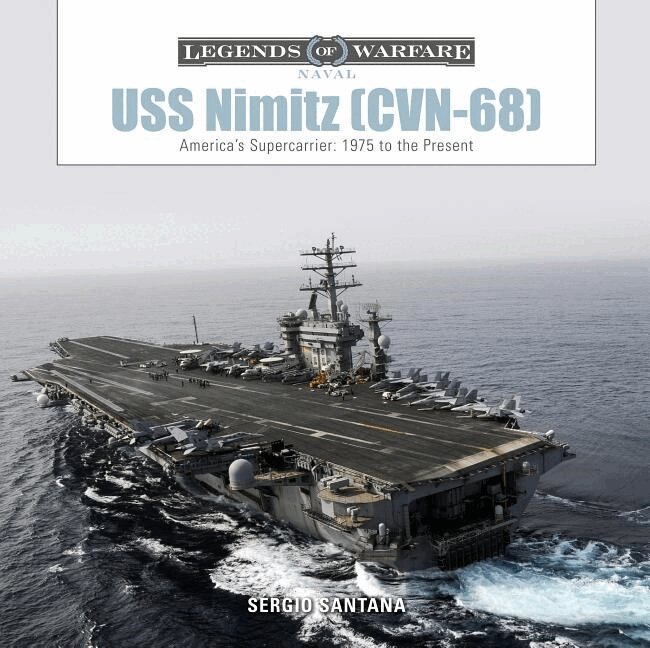
The nuclear-powered supercarrier USS Nimitz is the oldest carrier in the US fleet. Commissioned in 1975, CVN-68 is named after famed navy admiral Chester Nimitz and has been at the front line of many naval operations in its 40-plus years of service. Nimitz’s design and development, construction, sea trials, commissioning, and first cruise are presented in concise, detailed text. Also covered are all of the ship's systems, including electronics, defensive/offensive armament, command and control, and aircraft launching and recovery. Nimitz’s military campaigns—including the Gulf of Sidra Incident, Operation Desert Shield/Storm, and Operations Southern Watch, Enduring Freedom, and Iraqi Freedom—are also covered in detail, including their results. The book concludes with its latest operational deployment, Operation Inherent Resolve, and the ship’s current status. Part of the Legends of Warfare series.
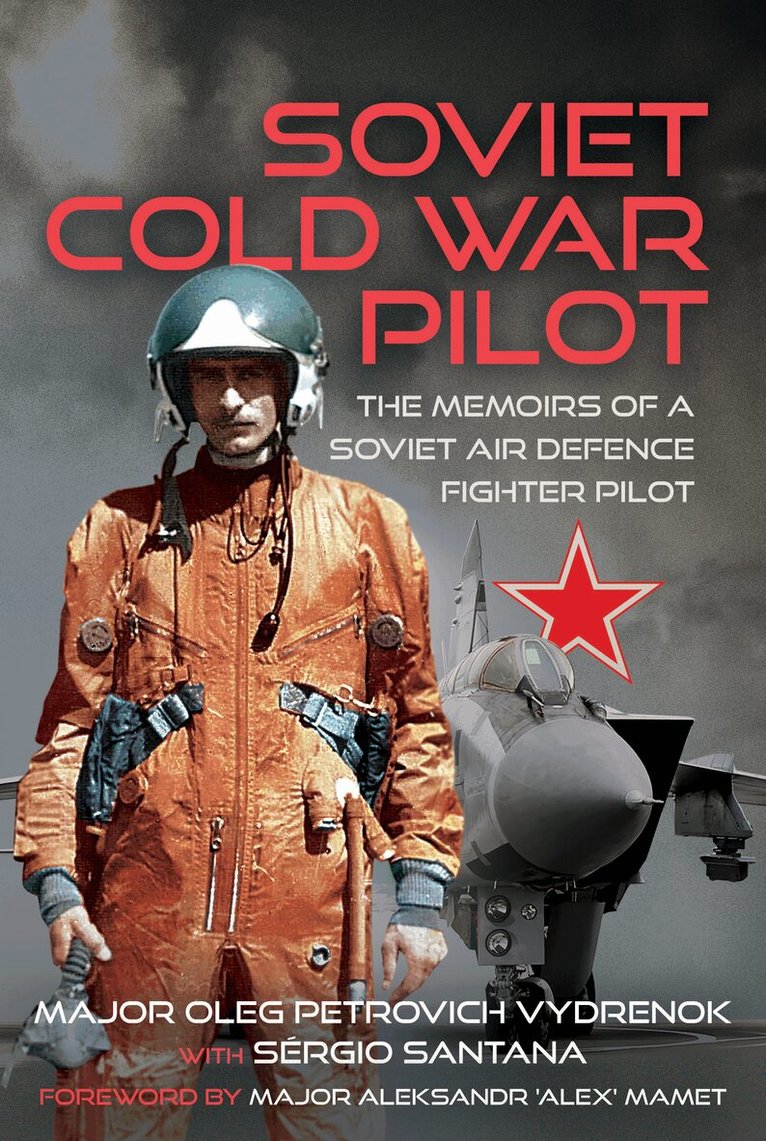
During the Cold War, the Soviet Union's Air Defence Forces (PVO) were responsible for defending Soviet airspace. Comprising three specialized branches—radio-technical troops, surface-to-air missile troops, and fighter aviation (IA-PVO)—its primary role was to intercept and destroy enemy aircraft, from bombers to reconnaissance planes. The IA-PVO operated separately from the Soviet Air Force, and its pilots were considered elite, chosen for their exceptional flying skills and granted higher salaries due to the immense responsibility they carried, particularly in the event of a NATO airstrike.One notable figure in the IA-PVO was Major Oleg Petrovich Vydrenok. A graduate of the Stavropol Higher Military Aviation School in 1976, he was one of only 20 air lieutenants out of 200 to be declared ‘Military Pilot Third Class.’ Over his 14-year career, Vydrenok flew various aircraft, including the Tupolev Tu-128 Fiddler and Mikoyan MiG-31 Foxhound, gaining extensive experience in Cold War missions.In Soviet Cold War Pilot, Vydrenok's training and operational experiences offer a detailed comparison with Western air forces and insight into the techniques developed to counter NATO aircraft like the SR-71 Blackbird and B-52 Stratofortress, showcasing his critical role in the Soviet air defence system.
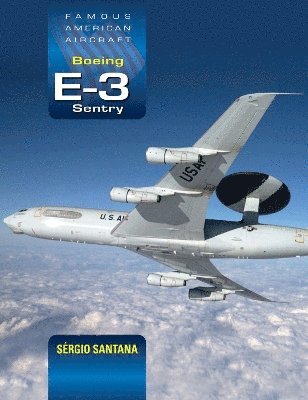
In June 1963, two operational commands of the United States Air Force - the Air Defense Command (ADC) and the Tactical Air Command (TAC) - presented a joint proposal for an airborne early warning and control system far superior to the existing costly and complex 'DEW Line'. This network of warning radars installed on slow-moving aircraft, ground stations and ships to detect Soviet bomber formations was clearly incapable of not only detecting the new threat posed by nuclear missile attacks but also surviving them. The practical result of their proposal came in July 1970 when Boeing's 707-320B model was declared the winner of a competition for that AEW&C system - the E-3 Sentry was born.Having flown for the first time on 6 February 1972, still under the designation EC-137D, the new aircraft was officially passed on to the United States Air Force (USAF) as E-3A on 24 March 1977 after having demonstrated its unprecedented detection capabilities in European airspace, including tracking targets at high supersonic speeds operated by Warsaw Pact assets.Sentry's full operational capability was achieved in 1984 when the last of the 34 units ordered by the USAF was received. By that time, the aircraft had already begun to be delivered to NATO's AEW&C Force, beginning a trajectory that led to it being used by the Air Forces of nations as different as Saudi Arabia, France and the United Kingdom.Throughout its operational life, the E-3's unique detection and command and control capabilities made it a mandatory presence in every major military campaign carried out by the countries that acquired it, determining that it was continually updated to face emerging threats, until its most recent designation, E-3G.This book provides a complete history of the development and operational use of the aircraft, from its first mission to the most recent. While it is now gradually beginning to be phased out, the E-3 Sentry established the paradigm in AEW&C missions. This detailed monograph on the aircraft and its operations makes a significant contribution to our knowledge of this crucial but sometimes overlooked element of military aviation.