Servaas Storm - Böcker
Visar alla böcker från författaren Servaas Storm. Handla med fri frakt och snabb leverans.
4 produkter
4 produkter
629 kr
Skickas inom 10-15 vardagar
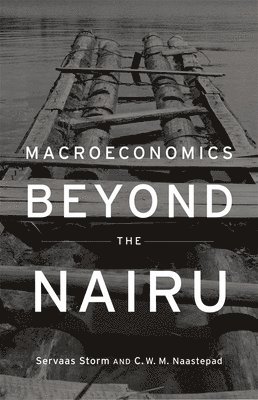
Economists and the governments they advise have based their macroeconomic policies on the idea of a natural rate of unemployment. Government policy that pushes the rate below this point—about 6 percent—is apt to trigger an accelerating rate of inflation that is hard to reverse, or so the argument goes. In this book, Storm and Naastepad make a strong case that this concept is flawed: that a stable non-accelerating inflation rate of unemployment (NAIRU), independent of macroeconomic policy, does not exist. Consequently, government decisions based on the NAIRU are not only misguided but have huge and avoidable social costs, namely, high unemployment and sustained inequality.Skillfully merging theoretical and empirical analysis, Storm and Naastepad show how the NAIRU’s neglect of labor’s impact on technological change and productivity growth eclipses the many positive contributions that labor and its regulation make to economic performance. When these positive effects are taken into account, the authors contend, a more humane policy becomes feasible, one that would enhance productivity and technological progress while maintaining profits, thus creating conditions for low unemployment and wider equality.
1 254 kr
Skickas inom 5-8 vardagar
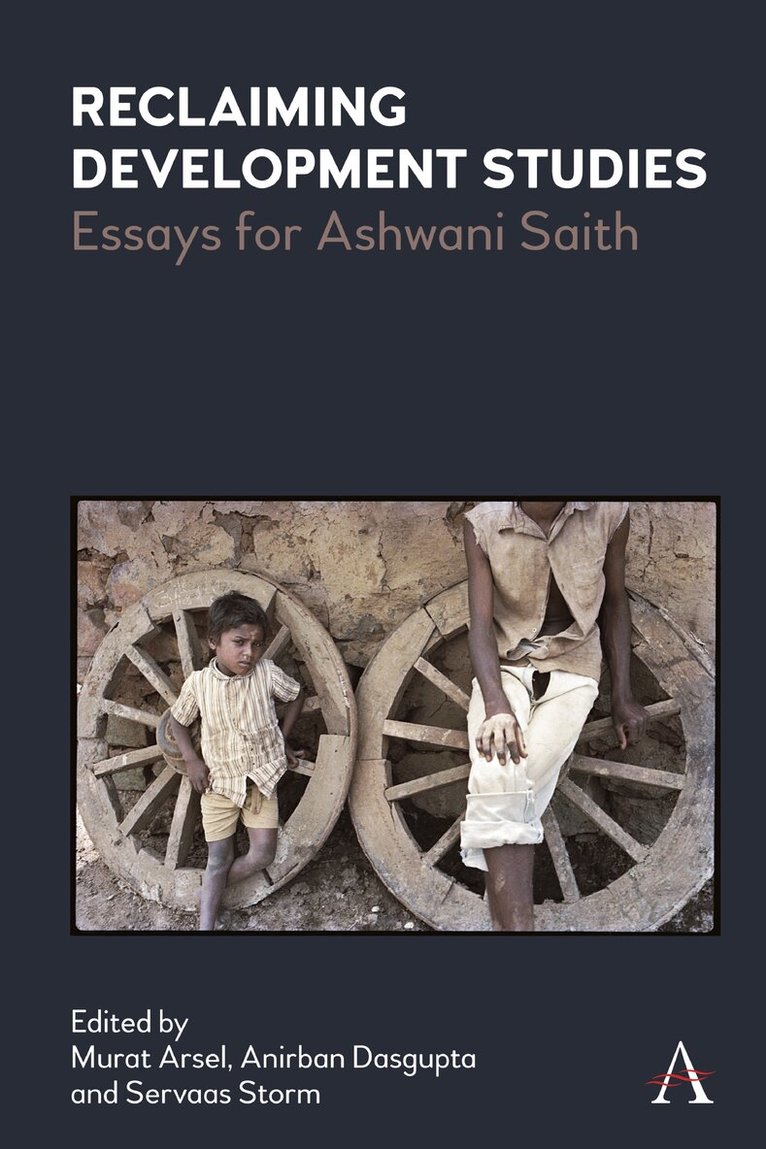
The mission, relevance and intellectual orientation of development studies is increasingly challenged from various fronts such as decoloniality, ‘global development’ and randomized control trials. The essays featured in this collection together argue for the need of the field to reclaim its critical political economy tradition. Building on the contributions of Ashwani Saith, the contributions touch upon many of the central questions of development studies centred around structural change, labour and inequality.
Globalization and Economic Development
Essays in Honour of J. George Waardenburg
Inbunden, Engelska, 2001
2 424 kr
Skickas inom 7-10 vardagar
Globalization is widely regarded as a means not only of ensuring efficiency and growth, but also of achieving equity and development for those countries operating in the global economy. The book argues that this perception of globalization as the road to development has lost its lustre. The experience of the 1990s belied expectation of the gains, such as faster growth and reduced poverty, which could be achieved through closer integration in the world economy. The authors demonstrate that the downside of globalization for developing countries has proved to be far greater than is generally accepted. Based on empirical facts and sound economic reasoning, they arrive at a non-conventional interpretation of the impact of globalisation on the development process of poor countries and propose policy alternatives to the standard 'Washington consensus'. On the external front, they find that developing countries need to actively manage their integration into the global economy if they are to overcome the imbalances and instabilities associated with international flows of goods and capital and be capable of pursuing broad based and equitable economic development. Domestically, they show that such development can often be achieved by deviating from, rather than adhering to, the 'Washington consensus' (fiscal and other) policy norms. The distinguished group of contributors have produced a provocative book which is a substantial contribution to the debate on globalization. It will appeal to development economists in particular, and economists in general who like to question contemporary economic reasoning.
1 945 kr
Skickas inom 7-10 vardagar
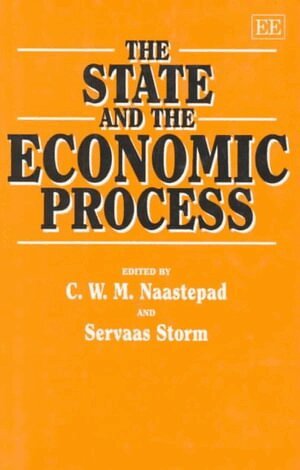
How can economic policies be designed - and redesigned - to increase growth and reduce unemployment in developing, developed and transitional economies? In The State and the Economic Process, a distinguished group of economists provides - through a comparison of postwar economic performance and policies - sound analytical support and historical evidence in favour of vigorous market guiding policies. These include targeting strategic industries, carefully managing both market collusion and competition, promoting environmentally sound technical change, and managing foreign trade and investment. The papers featured in this volume address such issues as widespread unemployment in the OECD, the deep and protracted contraction in the transitional economies, and the large variety in growth performance in developing countries. The authors go beyond the usual advocacy of the market as the solution to most economic problems, while avoiding the stale controversy over 'market failure' versus 'government failure'.