Seth D. Postell – författare
Visar alla böcker från författaren . Handla med fri frakt och snabb leverans.
7 produkter
7 produkter
Häftad, Engelska, 2011
285 kr
Häftad, Engelska, 2012
289 kr
Skickas inom 5-8 vardagar
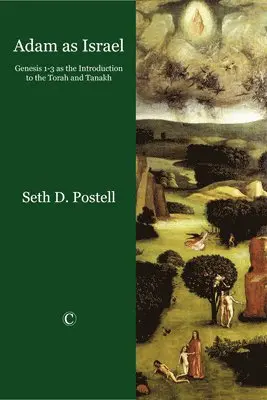
A discussion of how the links between the stories of Adam and of the people of Israel explain otherwise perplexing features of the Eden narrative.Postell contends that the opening chapters of the Bible, when interpreted as a strategic literary introduction to the Torah and to the Tanakh, intentionally foreshadows Israel's failure to keep the Sinai Covenant and their consequent exile from the Promised Land, in order to point the reader to a future work of God. Postell highlights numerous intentional links between the story of Adam and the story of Israel and, in the process, explains numerous otherwise perplexing features of the Eden story.Postell employs a wealth of theologies to support his argument including those of Nicholas of Lyra, John Calvin, Wellhausen, Johannes Coccejus and Matthew Poole; successfully breathing new life into the wealth of exegeses.
E-bok
Engelska, 2025238 kr
Läs direkt efter köp
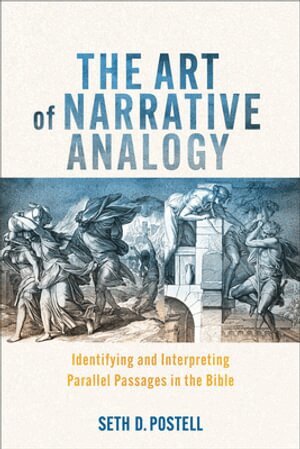
In The Art of Narrative Analogy, Seth Postell offers a literary approach for understanding the relationship between the two Testaments, and between various biblical narratives, that is more sensitive to the verbal meaning of the Old Testament than popular typological approaches. He argues that narrative analogy--the deliberate paralleling of characters, events, and themes across biblical texts--provides a more exegetically responsible and theologically fruitful method for understanding the Bible's unity and depth.Drawing on extensive examples from the Hebrew Bible and the New Testament, Postell reveals how scriptural authors employ parallels to illuminate theological truths and deepen narrative coherence. From the connections between Rahab and Lot to the analogies between Jonah and the calming of the storm in Mark's Gospel, he shows how these parallels invite readers into the Bible's grand theological narrative. Postell also integrates illustrations from modern storytelling, such as Star Wars, to demonstrate how analogy shapes meaning in both ancient and contemporary contexts.Postell offers clear criteria for identifying narrative analogies, and practical guidance for interpreting them, making this volume an indispensable resource for students, pastors, and church leaders.
Inbunden, Engelska, 2011
455 kr
Skickas inom 5-8 vardagar
Häftad, Engelska, 2025
250 kr
Skickas inom 5-8 vardagar
In The Art of Narrative Analogy, Seth Postell offers a literary approach for understanding the relationship between the two Testaments, and between various biblical narratives, that is more sensitive to the verbal meaning of the Old Testament than popular typological approaches. He argues that narrative analogy--the deliberate paralleling of characters, events, and themes across biblical texts--provides a more exegetically responsible and theologically fruitful method for understanding the Bible's unity and depth.Drawing on extensive examples from the Hebrew Bible and the New Testament, Postell reveals how scriptural authors employ parallels to illuminate theological truths and deepen narrative coherence. From the connections between Rahab and Lot to the analogies between Jonah and the calming of the storm in Mark's Gospel, he shows how these parallels invite readers into the Bible's grand theological narrative. Postell also integrates illustrations from modern storytelling, such as Star Wars, to demonstrate how analogy shapes meaning in both ancient and contemporary contexts.Postell offers clear criteria for identifying narrative analogies, and practical guidance for interpreting them, making this volume an indispensable resource for students, pastors, and church leaders.
Inbunden, Engelska
828 kr
Skickas inom 3-6 vardagar
E-bok
PDF, Engelska, 2011438 kr
Läs direkt efter köp
The story of Adam is the story of Israel writ smallIn this text-centered interpretation of Genesis 1-3, Seth Postell contends that the opening chapters of the Bible, when interpreted as a strategic literary introduction to the Torah and to the Tanakh, intentionally foreshadows Israel's failure to keep the Sinai Covenant and their exile from the Promised Land, in order to point the reader to a future work of God, whereby a king will come in "e;the last days"e; to fulfill Adam's original mandate to conquer the land (Gen 1:28). Thus Genesis 1-3, the Torah, and the Hebrew Bible as a whole have an eschatological trajectory. Postell highlights numerous intentional links between the story of Adam and the story of Israel and, in the process, explains numerous otherwise perplexing features of the Eden story.