
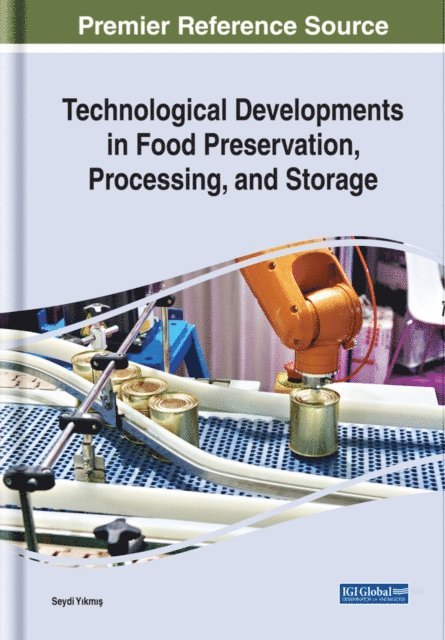
In recent years, professionals have combined nutrition, health, and engineering sciences to develop new technologies within the food industry. As we are beginning to shift focus on how we view the health benefits of various food products, perseveration and processing techniques have become much more vital. New developments regarding how we store and preserve food are emerging rapidly, making it necessary for research to be done that studies the latest scientific improvements and contemporary methods of food processing. Technological Developments in Food Preservation, Processing, and Storage is a collection of innovative research on the latest developments and advancements of preservation technologies and storage methods within the food processing industry. While highlighting topics including nutritional supplements, microfiltration, and thermal technology, this book is ideally designed for biologists, nutrition scientists, health professionals, engineers, government officials, policymakers, food service professionals, industry practitioners, researchers, academicians, and students.
This 15th number of Bridges is a special issue. Bridging cultures, geographical spaces, literatures and other disciplines, the present collection of twenty-six essays in English and French addresses challenges in modern sciences as well as in the contemporary world. Hopefully, it contains valuable and insightful contributions to multidisciplinary research. Divided into two main sections, the first "e;Identity, Society and Culture"e;, and the second "e;Language, Discourse and Aesthetics"e;, the different papers presented here cover current subject-matters, themes and concerns in the arts, the humanities, education and social sciences. Culture is ultimately at the core of all the contribu-tions proposed in the collection. Specifi c contributions examine a variety of topics such as aging in T. S. Eliot's poetry, Postcolonial discourses in African literature, satire in the Postmodern age, to name just these. Founded in 1988, Bridges reflects the idea that topics of the contemporary world can be approached from various perspectives and vistas. This special issue definitely encapsulates insightful ideas that demonstrate the way researchers are concerned with subject-matters of their time.
In recent years, professionals have combined nutrition, health, and engineering sciences to develop new technologies within the food industry. As we are beginning to shift focus on how we view the health benefits of various food products, perseveration and processing techniques have become much more vital. New developments regarding how we store and preserve food are emerging rapidly, making it necessary for research to be done that studies the latest scientific improvements and contemporary methods of food processing. Technological Developments in Food Preservation, Processing, and Storage is a collection of innovative research on the latest developments and advancements of preservation technologies and storage methods within the food processing industry. While highlighting topics including nutritional supplements, microfiltration, and thermal technology, this book is ideally designed for biologists, nutrition scientists, health professionals, engineers, government officials, policymakers, food service professionals, industry practitioners, researchers, academicians, and students.
This 15th number of Bridges is a special issue. Bridging cultures, geographical spaces, literatures and other disciplines, the present collection of twenty-six essays in English and French addresses challenges in modern sciences as well as in the contemporary world. Hopefully, it contains valuable and insightful contributions to multidisciplinary research. Divided into two main sections, the first "e;Identity, Society and Culture"e;, and the second "e;Language, Discourse and Aesthetics"e;, the different papers presented here cover current subject-matters, themes and concerns in the arts, the humanities, education and social sciences. Culture is ultimately at the core of all the contribu-tions proposed in the collection. Specifi c contributions examine a variety of topics such as aging in T. S. Eliot's poetry, Postcolonial discourses in African literature, satire in the Postmodern age, to name just these. Founded in 1988, Bridges reflects the idea that topics of the contemporary world can be approached from various perspectives and vistas. This special issue definitely encapsulates insightful ideas that demonstrate the way researchers are concerned with subject-matters of their time.