S.H. Irvine - Böcker
Visar alla böcker från författaren S.H. Irvine. Handla med fri frakt och snabb leverans.
9 produkter
9 produkter
2 051 kr
Skickas inom 10-15 vardagar
Against the background of NATO's Istanbul conference of 1971 (Cronbach and Drenth, 1972), the Kingston conference shows that great progress has been made by the community of cross-cultural psychologists. The progress is as much in the psychology of the investigators as in the investigations being reported. In 1971 the investigators were mostly strangers to each other. Behind their reports lay radically different field experiences, disparate research traditions, and mutually contradictory social ideals. Istanbul was not a Tower of Babel, but participants did speak past each other. Now a community exists, thanks to the meetings of NATO and the International Association for Cross-Cultural Psychology, to flourishing journals, and the Triandis et a1. (1980) Handbook. The members tend to know each other, can anticipate how their formu lations will fallon the ears of others, and accept superficially divergent approaches as making up a collective enterprise. Ten years ago there was open conflict between those who con fronted exotic peoples with traditional tests and applied tradi tional interpretations to the responses, and the relativists who insisted that tasks, test taking, and interpretation cannot be "standardized" in the ways that matter. Today's investigators are conscious of the need to revalidate tasks carried into alien settings; they often prefer to redesign the mode of presentation and to attune the subject to test taking. They face the diffi culties squarely and recognize that even the best means of coping are only partially successful.
Del 7 - Theory and Decision Library D:
Advances in Computer-Based Human Assessment
Inbunden, Engelska, 1990
2 051 kr
Skickas inom 10-15 vardagar
2 110 kr
Skickas inom 10-15 vardagar
Against the background of NATO's Istanbul conference of 1971 (Cronbach and Drenth, 1972), the Kingston conference shows that great progress has been made by the community of cross-cultural psychologists. The progress is as much in the psychology of the investigators as in the investigations being reported. In 1971 the investigators were mostly strangers to each other. Behind their reports lay radically different field experiences, disparate research traditions, and mutually contradictory social ideals. Istanbul was not a Tower of Babel, but participants did speak past each other. Now a community exists, thanks to the meetings of NATO and the International Association for Cross-Cultural Psychology, to flourishing journals, and the Triandis et a1. (1980) Handbook. The members tend to know each other, can anticipate how their formu lations will fallon the ears of others, and accept superficially divergent approaches as making up a collective enterprise. Ten years ago there was open conflict between those who con fronted exotic peoples with traditional tests and applied tradi tional interpretations to the responses, and the relativists who insisted that tasks, test taking, and interpretation cannot be "standardized" in the ways that matter. Today's investigators are conscious of the need to revalidate tasks carried into alien settings; they often prefer to redesign the mode of presentation and to attune the subject to test taking. They face the diffi culties squarely and recognize that even the best means of coping are only partially successful.
3 073 kr
Skickas inom 10-15 vardagar
Proceedings of the NATO Advanced Study Institute, Athens, Greece, December 10-20, 1984
Del 38 - NATO Science Series D:
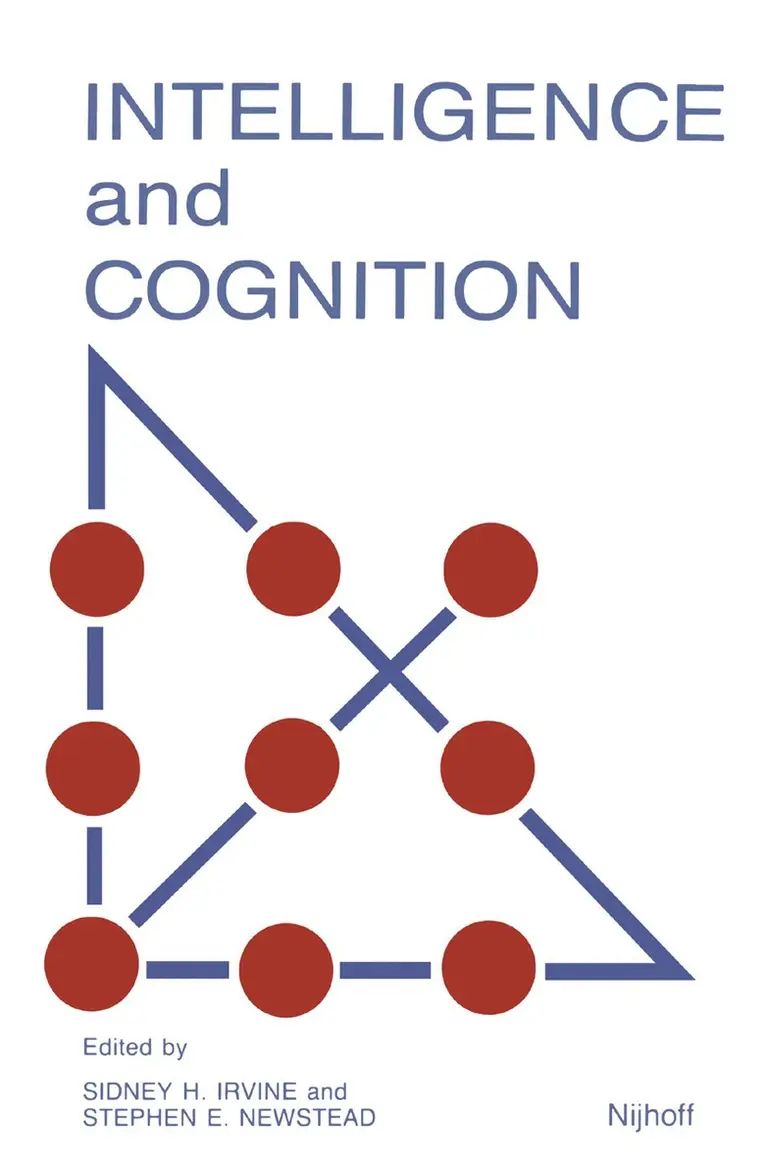
Intelligence and Cognition: Contemporary Frames of Reference
Häftad, Engelska, 1987
523 kr
Skickas inom 10-15 vardagar
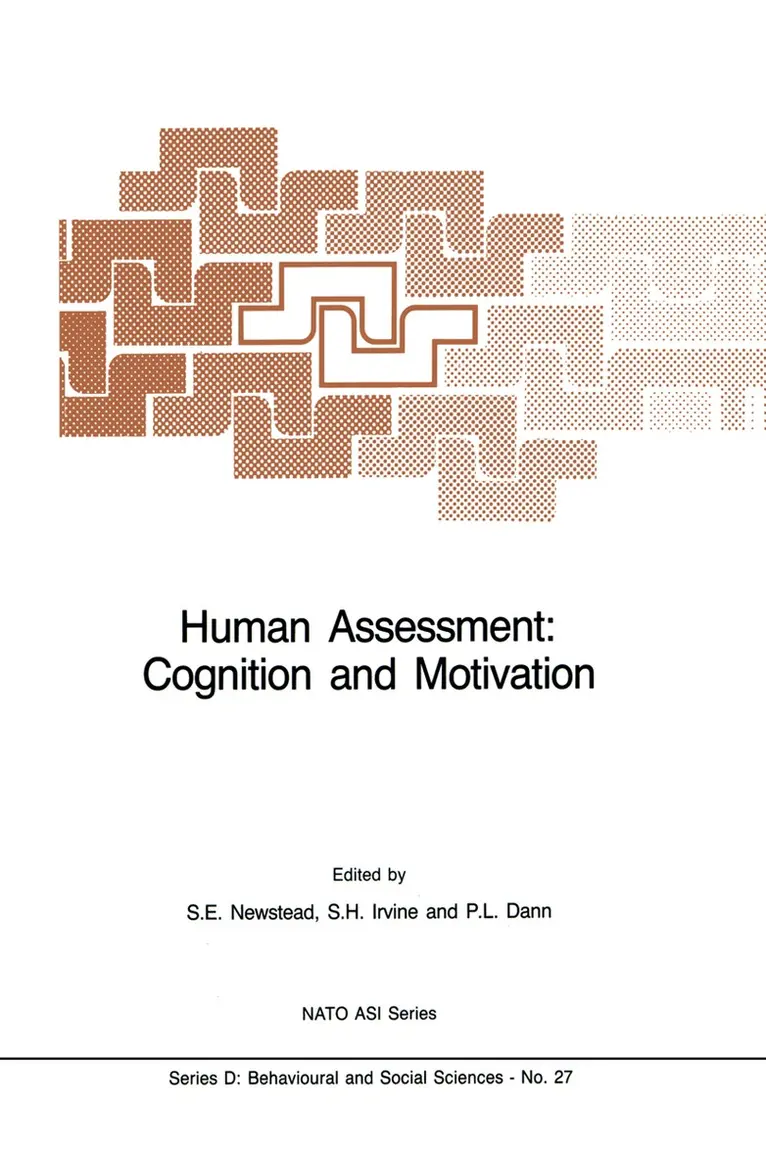
In Decembe,r, 1984 a NATO-sponsored Advanced Study Institute entitled "Human Asessment:Cognition and Motivation" took place in Athens. It succeeded in attracting a great many of the most eminent scholars and researchers in this area, both as lecturers and participants. The contributors to this book are mostly members of staff who taught at the Institute. The chapters they have written are designed to provide an introduction to the principal issues that arise in the study of the assessment of intelligence and cognition. Since most of the protagonists are represented in this book the student is provided with an excellent overview. Many different people are responsible for preparation of a book such as this. We would like to express particular thanks to Siobhan Breslin and Julie Coleman, who typed the text despite an unfriendly and unreliable word-processing system. Thanks are also due to Steve Gill who helped with the preparation of the figures. Finally, as a mark of respect for his achievements and leadership in the field of mental measurement, we dedicate this volume to Norman Frederiksen. Sidney H. Irvine Stephen E. Newstead Plymouth, September 1985. -VII- CONTENTS Preface VII Contributors to this volume XI Functions and constants in mental measurement: Chapter 1 A taxonomic approach. 1 Sidney H. Irvine Human cognition and intelligence: Towards an Chapter 2 integrated theoretical perspective. 27 John M. Verster Chapter 3 Synopsis of a triarchic theory of human intelligence.
2 051 kr
Skickas inom 10-15 vardagar
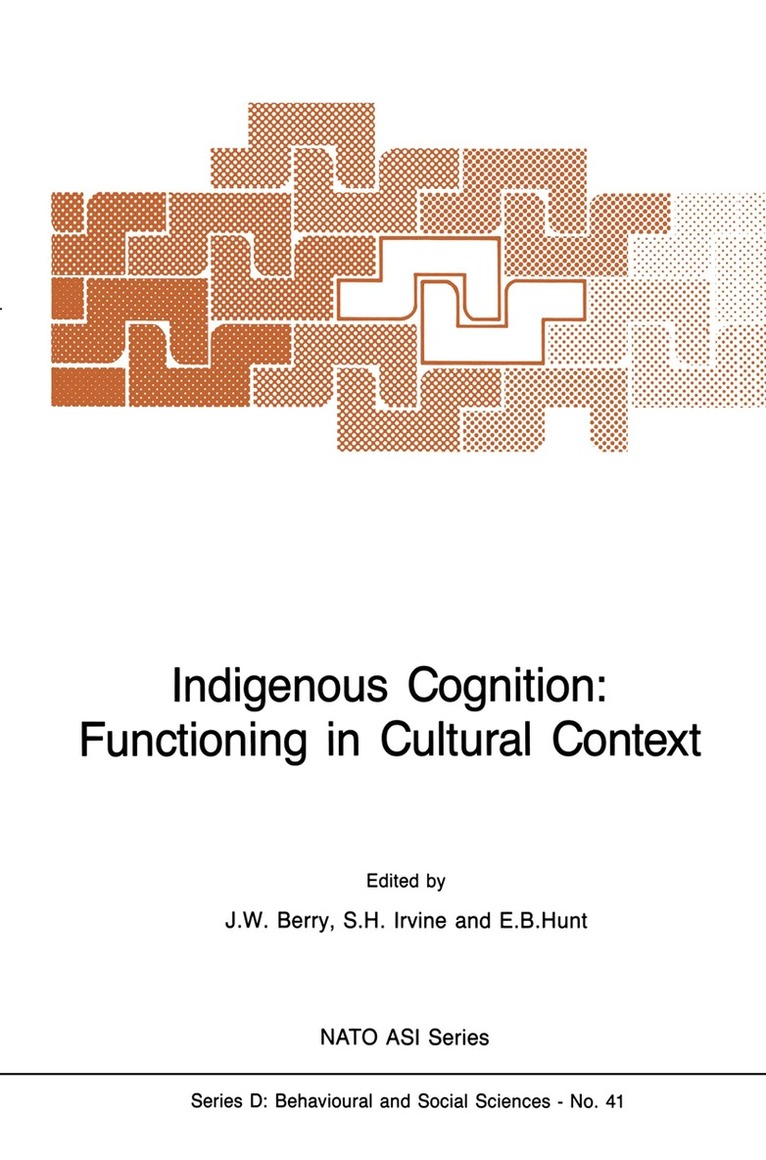
Cognitive psychology has established itself as one of the major branches of the discipline. with much to its credit in such areas as decision making. information processing. memory and learning. Similarly. the assessment of cognitive abilities has become one of the hallmarks of the practice of psychology in the school. in the factory and in the clinic. In recent years. these two branches have begun to interact. and the two approaches have begun mutually to engage each other. A third trend, that of cross-cultural cognitive psychology, has been informed both by experimental cognitive sciences and by the practice of ability assessment (see. for example. Berry and Dasen, 1974; Cole and Scribner, 1974). However. the reverse has not been true: the cognitive processes and abilities of much of the world's peoples studied by cross-cultural psychologists have not been introduced to psychologists working in these two Western traditions (see Irvine and Berry, 1987). This volume attempts to begin this introduction by asking the question: "What is known about the cognitive functions of other peoples that could enable extant psychology to become more comprehensive, to attain a 'universal' cognitive psychology?" Who are these "other peoples". and by extension, what then is "indigenous cognition"? The first question is rather easy to answer. but the second is more difficult.
2 051 kr
Skickas inom 10-15 vardagar
2 051 kr
Skickas inom 10-15 vardagar
Cognitive psychology has established itself as one of the major branches of the discipline. with much to its credit in such areas as decision making. information processing. memory and learning. Similarly. the assessment of cognitive abilities has become one of the hallmarks of the practice of psychology in the school. in the factory and in the clinic. In recent years. these two branches have begun to interact. and the two approaches have begun mutually to engage each other. A third trend, that of cross-cultural cognitive psychology, has been informed both by experimental cognitive sciences and by the practice of ability assessment (see. for example. Berry and Dasen, 1974; Cole and Scribner, 1974). However. the reverse has not been true: the cognitive processes and abilities of much of the world's peoples studied by cross-cultural psychologists have not been introduced to psychologists working in these two Western traditions (see Irvine and Berry, 1987). This volume attempts to begin this introduction by asking the question: "What is known about the cognitive functions of other peoples that could enable extant psychology to become more comprehensive, to attain a 'universal' cognitive psychology?" Who are these "other peoples". and by extension, what then is "indigenous cognition"? The first question is rather easy to answer. but the second is more difficult.
3 073 kr
Skickas inom 10-15 vardagar
Proceedings of the NATO Advanced Study Institute, Athens, Greece, December 10-20, 1984