Shahid Yusuf - Böcker
Visar alla böcker från författaren Shahid Yusuf. Handla med fri frakt och snabb leverans.
15 produkter
15 produkter
2 372 kr
Skickas inom 3-6 vardagar
432 kr
Skickas inom 3-6 vardagar
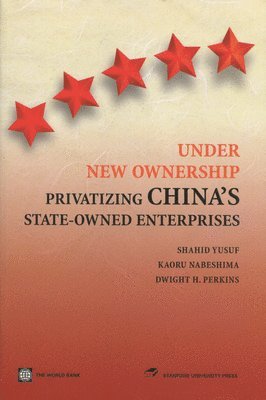
Although the relative size of the public sector has been much reduced worldwide since the early 1980s, it remains the dominant borrower from the banking system and responsible for the majority of the non-performing assets of banks. Drawing upon new firm-level survey data, this volume assesses how changes in the ownership structure of SOEs affect management, governance, innovation, and performance, comparing these SOEs to other types of firms in China. It also considers China's reform efforts against the experiences of other transition economies. The research reveals that the medium- and longer-term gains from privatization far outweigh costs of adjustment and that the precise mechanics of privatization have little effect on outcomes. The volume argues that privatization of large industrial SOEs and market-based consolidation of small- and medium-sized enterprises will be necessary to transform them into competitive and innovative world-class firms.Chapters include: China's Industrial System: Where is it, Where it Should be Headed, and Why; Reform in China, 1978-1997; The Accelerated Change in Enterprise Ownership, 1997-2003; Chinese Ownership Reform in the East European Mirror; Empirical Evidence on the Effect of SOE Reform in China; and Making Privatization Work.
1 886 kr
Skickas inom 3-6 vardagar
377 kr
Skickas inom 3-6 vardagar
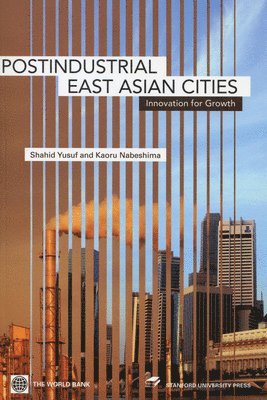
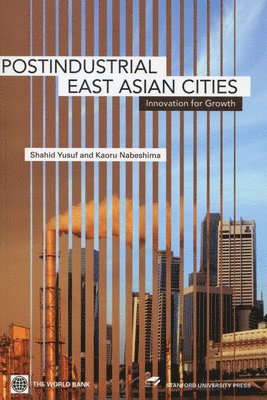
Throughout East Asia, the growth process and its sources are changing in a number of important respects, especially for middle- and high-income economies. Growth is increasingly coming from the strength of innovative activities in these economies rather than from factor accumulation as in the past. Such innovative activities-especially in producer services and the creative industries-are concentrated in high-tech clusters in globally linked cities. Drawing on a wide range of literature and on interviews with firms, this book explores these issues with a focus on six East Asian cities: Bangkok, Beijing, Seoul, Shanghai, Singapore, and Tokyo. It suggests how policies and institutions can induce and furnish an urban environment that supports innovative activities. A valuable resource for researchers, urban planners, urban geographers, and policy makers interested in East Asia, Post-Industrial East Asian Cities presents the latest findings on creative industries in East Asia and their effect on economic growth.
227 kr
Skickas inom 10-15 vardagar
Although China's centrally planned economy is a little more than a shadow of its former self, the closely inter-linked reforms of the enterprise and banking sectors are still incomplete. The relative size of the state-owned enterprise sector has been much reduced, however, the sector remains the dominant borrower from the banking system and is responsible for the majority of bank non-performing assets. Thus in the interests of financial stability it is crucial to implement the remaining reform agenda. The accession to the WTO has also made it more urgent for China's most-dynamic state-owned enterprises and her banking industry to compete through innovation, continuing process upgrades, and active pursuit of strategies aimed at succeeding in global markets. In order to do so, not only do large state-owned industrial enterprises need to be privatized, but the government also needs to create the conditions that will result in market determined consolidation of small and medium size firms into entities with a core strength. Under New Ownership explores the effects of ownership reform in China on the performance of reformed industrial state-owned enterprises, and proposes privatization as a course of action to truly transform these enterprises into world class firms which compete on the basis of sound strategy, effective organization, and innovation. It draws upon newly collected firm level survey data to assess changes in the ownership structure of state enterprises on management, governance, innovation, and performance relative to other types of firms in China. This title provides researchers, students, and policymakers interested in the Chinese economy with in depth information and analysis on key issues related to the reform of state-owned enterprises.
278 kr
Skickas inom 7-10 vardagar
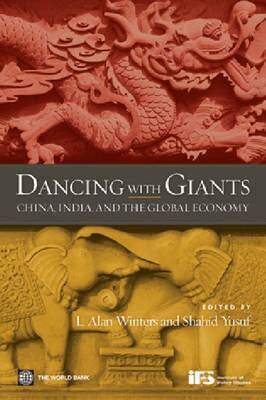
China is now the world's fourth largest economy and growing very fast. India's economic salience is also on the rise. Together, these two countries will profoundly influence the pace and nature of global economic change. Drawing upon the latest research, this timely new book analyzes the influences on the rapid future development of these two countries and examines how their growth is likely to impinge upon other countries. It considers international trade, industrialization, foreign investment, and capital flows, and the implications of their broadening environmental footprints. It also discusses how the two countries have tackled poverty, inequality and governance issues and whether progress in these areas will be a key to rapid and stable growth.
370 kr
Skickas inom 10-15 vardagar
With the competitiveness of firms in an open and integrated world environment increasingly reliant on technological capability, universities are being asked to take on a growing role in stimulating economic growth. Beyond imparting education, they are now viewed as sources of industrially valuable technical skills, innovations, and entrepreneurship. Developed and developing countries alike have made it a priority to realize this potential of universities to spur growth, a strategy that calls for coordinated policy actions. The distinguished contributors to How Universities Promote Economic Growth examine the wealth of international experience on efforts to multiply links between universities and businesses. They offer valuable and succinct guidance on some of the most effective policy measures deployed by national and regional governments, firms and universities to enhance the contribution that tertiary institutions can make to economic change.
274 kr
Skickas inom 10-15 vardagar
The key challenges facing China in the next two decades derive from the ongoing process of urbanization. China's urbanization rate in 2005 was about 43%. Over the next 10-15 years, it is expected to rise to well over 50%, adding an additional 200 million mainly rural migrants to the current urban population of 560 million. How China copes with such a large migration flow will strongly influence rural-urban inequality, the pace at which urban centers expand their economic performance, and the urban environment. The growing population will necessitate a big push strategy to maintain a high rate of investment in housing and the urban physical infrastructure and urban services. To finance such expansion will require a significant strengthening and diversification of China's financial system. Growing cities will greatly increase consumption of energy and water. Containing this without at the same time constraining the economic performance of cities or the improvement in the standards of living will call for enlightened policies, strategies, careful urban planning, and significant technological advances. This volume identifies the key developments to watch and discusses the policies which would affect the course as well as the fruitfulness of change.
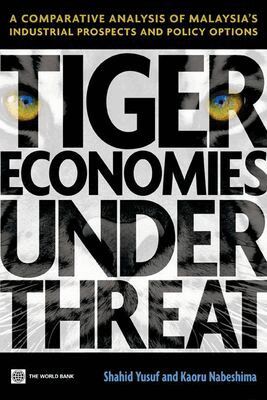
Tiger Economies Under Threat
A Comparative Analysis of Malaysia's Industrial Prospects and Policy Options
Häftad, Engelska, 2009
282 kr
Skickas inom 10-15 vardagar
Southeast Asian tiger economies feel threatened by competition from other countries and worry that their growth momentum might be flagging. Even though their growth rates are above the average for the world and for developing countries, they fall short of yesterday's economic performance. The underlying worry is that they presage the beginning of a downward trend, the harbingers of which are lower rates of investment, persistently low rates of total factor productivity and low levels of innovativeness. The South East Asian tigers' worries motivate three questions: First, are the tigers rightly threatened by a creeping economic sclerosis or what some observers are calling the "middle income trap"? Second, if the threat is real, what are the underlying causes? Third, are there ways of neutralizing the problems and at least maintaining if not raising the growth rates of the recent past? This book tackles these questions by means of a comparative analysis of the Southeast Asian tiger economies, centered on Malaysia.This analysis draws upon a comprehensive set of techniques and indicators to assess competitive pressures, gauge industrial and technological capabilities and to indicate the directions of industrial change in Southeast Asia could take.
227 kr
Skickas inom 10-15 vardagar
Sources of economic growth are well understood. Successfully translating that knowledge into sustained high rates of growth is harder to achieve. Relatively few countries have done so. Of those, China—with an unmatched average GDP growth rate of 10 percent between 1978 and 2008—stands out.At the crux of China’s success lie two cities: Beijing, the powerful hinge of the Bohai region, and Shanghai, the economic axis of the thriving Yangtze River Delta. The performance of these two megacities, along with a handful of other urban regions, will determine China’s economic fortunes in the decades to come. Can their momentum be sustained? Can the growth rates of the past be continued into the future?Two Dragon Heads explores the contrasting development options available to Beijing and Shanghai, and it proposes strategies for each city based on the current and acquired capabilities of each, the experiences of other world cities, the emerging demand in the national market, and likely trends in global trade. Its fi ndings, which are supported by a wealth of research, will be of particular interest to policy makers, urban planners, business people, and researchers.This is a fascinating book about the future development paths of the 'twin capitals' of China: the political capital of Beijing and the commercial capital of Shanghai. The authors weave economic growth, urban development, and technological innovation into a seamlessly coherent and cogent analysis. The book not only offers important insights and lessons for the development of other megacities in China, but also has long-term implications for many developing countries undergoing similar transitions.
270 kr
Skickas inom 7-10 vardagar
A great burst of globalisation brought the 20th century to a close, creating upheaval in the world economy from roughly 1995 to 2008. And now, with the new century barely commenced, a second upheaval is in the offing following the severe financial crisis that plunged the global economy into recession in 2008-09. The first upheaval witnessed a massive migration of manufacturing and certain business services that transformed Asia into the industrial heartland of the world. The second upheaval will likely consolidate Asia's industrial preeminence and could result in a concentration of industrial activities in the two most populous and fastest growing Asian economies - China and India. As the two Asian giants become the industrial equals of the United States, Germany, and Japan, the ramifications will affect trade and growth worldwide, the future of development in China and India, and industrialisation throughout Asia. Changing the Industrial Geography in Asia: The Impact of China and India examines these developments, focusing specifically on China and India.Its analysis and conclusions will be of particular interest to policy makers and academics, as well as anyone with an interest in the impacts of China and India on Asia's industrial activities.
422 kr
Skickas inom 10-15 vardagar
This book assesses whether East Asian higher education is providing research and innovation for growth and delivering its graduates with the skills necessary for productivity in the labor market. It also seeks to determine how higher education systems could be improved in order to deliver these outcomes. It features new data and diagnostic material to better understand labor markets, what skills firms want, and what skills graduates have; shows how countries can become more innovative; and describes in detail the key areas of reform needed for higher education to be a larger engine of East Asian growth. It will be of interest to policymakers, governments, academia, donors, NGOs, students, researchers, and lower- and middle-income countries looking to break the "middle-income trap."
Some Small Countries Do It Better
Rapid Growth and Its Causes in Singapore, Finland and Ireland
Häftad, Engelska, 2012
282 kr
Skickas inom 10-15 vardagar
Countries worldwide are struggling to imitate the industrial prowess of the East Asian pacesetters, but growth accelerations have proven remarkably transient. Building a portfolio of tradable goods and services and steadily raising the level of investment in these activities, has generally defied the best policy efforts - in particular, bringing investment ratios on par with East Asian averages has presented the greatest challenge. Hence the search is on for growth recipes not so tightly bound to investment, to manufacturing activities, and to the export of manufactured products. In casting around for such recipes validated by demonstrated results, the experience of economies which have relied more on other drivers of growth - human capital and knowledge - is highly attractive. Finland and Ireland are among the tiny band of small nations that grew rapidly for well over a decade by achieving the maximum mileage from an adequate investment in physical assets and by harnessing the potential of human capital and technologies.
327 kr
Skickas inom 10-15 vardagar
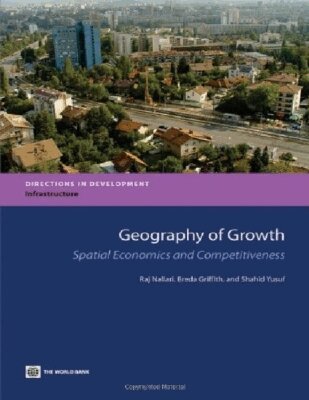
"Since the 1990s, new economic geography has received a lot of attention as mainstream economists such as Krugman and others began to focus on where economic activity occurs and why. Coincidentally, international trade, location theory, and urban economics all appear to be asking the same question: where is economic activity located and why? The challenge is to explain the economic concentration or agglomeration of a large number of activities in certain geographical space. This volume breaks down the various types of cities and evaluates the key factors used to look at cities, such as innovation, green growth, spatial concentration, and smart cities in order to understand how cities work. Why is it that certain cities attract talent? How do some cities become business hubs? Why is it that few cities become increasingly competitive while others remain stagnant?
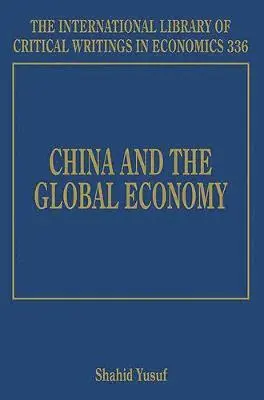
Del 336 - The International Library of Critical Writings in Economics series
China and the Global Economy
Inbunden, Engelska, 2017
5 402 kr
Skickas inom 7-10 vardagar
China's Global Economic Footprint is large and growing. In recent years, China has contributed a third or more to the growth of the global economy following its meteoric rise starting in the 1980s and gathering momentum in the 1990s. China has convincingly demonstrated the efficacy of investment and export-led growth as a model of development and has achieved economic stardom using a mix of industrial, trade and exchange rate policies within the framework of a gradually reforming socialist market economy. This Research Review explores China's economy and will be an invaluable resource for China watchers and researchers, students and policymakers interested in learning from East Asia's development, understanding how China transformed its economy and exploring how China might come to grips with the challenges ahead.