Shai M Dromi - Böcker
Visar alla böcker från författaren Shai M Dromi. Handla med fri frakt och snabb leverans.
6 produkter
6 produkter
785 kr
Skickas inom 7-10 vardagar
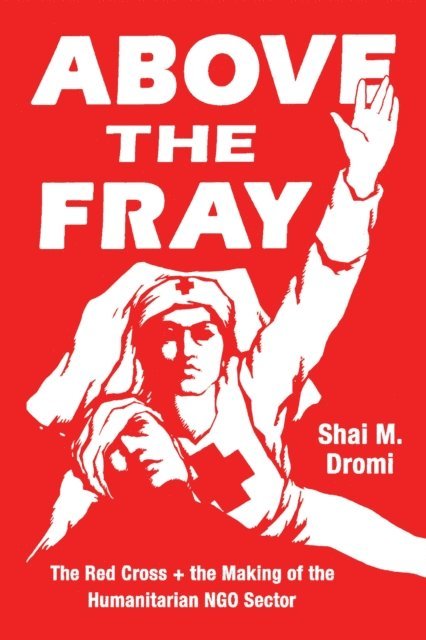
From Lake Chad to Iraq, nongovernmental organizations (NGOs) provide relief around the globe, and their scope is growing every year. Policymakers and activists often assume that humanitarian aid is best provided by these organizations, which are generally seen as impartial and neutral. In Above the Fray, Shai M. Dromi investigates why the international community overwhelmingly trusts humanitarian NGOs by looking at the historical development of their culture. With a particular focus on the Red Cross, Dromi reveals that NGOs arose because of the efforts of orthodox Calvinists, demonstrating for the first time the origins of the unusual moral culture that has supported NGOs for the past 150 years.Drawing on archival research, Dromi traces the genesis of the Red Cross to a Calvinist movement working in mid-nineteenth-century Geneva. He shows how global humanitarian policies emerged from the Red Cross founding members' faith that an international volunteer program not beholden to the state was the only ethical way to provide relief to victims of armed conflict. By illustrating how Calvinism shaped the humanitarian field, Dromi argues for the key role belief systems play in establishing social fields and institutions. Ultimately, Dromi shows the immeasurable social good that NGOs have achieved, but also points to their limitations and suggests that alternative models of humanitarian relief need to be considered.
243 kr
Skickas inom 7-10 vardagar
From Lake Chad to Iraq, nongovernmental organizations (NGOs) provide relief around the globe, and their scope is growing every year. Policymakers and activists often assume that humanitarian aid is best provided by these organizations, which are generally seen as impartial and neutral. In Above the Fray, Shai M. Dromi investigates why the international community overwhelmingly trusts humanitarian NGOs by looking at the historical development of their culture. With a particular focus on the Red Cross, Dromi reveals that NGOs arose because of the efforts of orthodox Calvinists, demonstrating for the first time the origins of the unusual moral culture that has supported NGOs for the past 150 years.Drawing on archival research, Dromi traces the genesis of the Red Cross to a Calvinist movement working in mid-nineteenth-century Geneva. He shows how global humanitarian policies emerged from the Red Cross founding members' faith that an international volunteer program not beholden to the state was the only ethical way to provide relief to victims of armed conflict. By illustrating how Calvinism shaped the humanitarian field, Dromi argues for the key role belief systems play in establishing social fields and institutions. Ultimately, Dromi shows the immeasurable social good that NGOs have achieved, but also points to their limitations and suggests that alternative models of humanitarian relief need to be considered.
785 kr
Skickas inom 7-10 vardagar
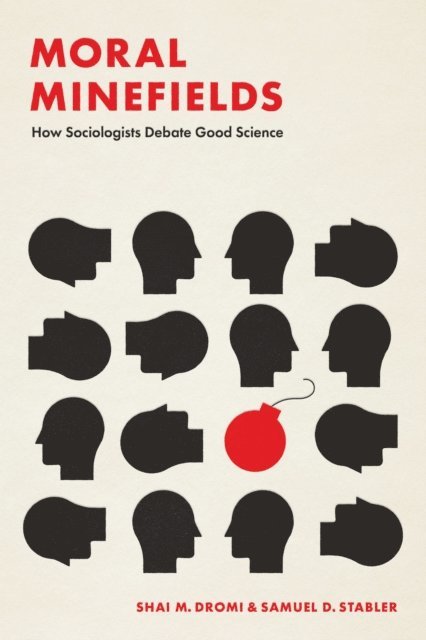
An analysis of the effects of moral debates on sociological research.Few academic disciplines are as contentious as sociology. Sociologists routinely turn on their peers with fierce criticisms not only of their empirical rigor and theoretical clarity but of their character as well. Yet despite the controversy, scholars manage to engage in thorny debates without being censured. How? In Moral Minefields, Shai M. Dromi and Samuel D. Stabler consider five recent controversial topics in sociology—race and genetics, secularization theory, methodological nationalism, the culture of poverty, and parenting practices—to reveal how moral debates affect the field. Sociologists, they show, tend to respond to moral criticism of scholarly work in one of three ways. While some accept and endorse the criticism, others work out new ways to address these topics that can transcend the criticism, while still others build on the debates to form new, more morally acceptable research. Moral Minefields addresses one of the most prominent questions in contemporary sociological theory: how can sociology contribute to the development of a virtuous society? Rather than suggesting that sociologists adopt a clear paradigm that can guide their research toward neatly defined moral aims, Dromi and Stabler argue that sociologists already largely possess and employ the repertoires to address questions of moral virtue in their research. The conversation thus is moved away from attempts to theorize the moral goods sociologists should support and toward questions about how sociologists manage the plurality of moral positions that present themselves in their studies. Moral diversity within sociology, they show, fosters disciplinary progress.
223 kr
Skickas inom 7-10 vardagar
An analysis of the effects of moral debates on sociological research.Few academic disciplines are as contentious as sociology. Sociologists routinely turn on their peers with fierce criticisms not only of their empirical rigor and theoretical clarity but of their character as well. Yet despite the controversy, scholars manage to engage in thorny debates without being censured. How? In Moral Minefields, Shai M. Dromi and Samuel D. Stabler consider five recent controversial topics in sociology—race and genetics, secularization theory, methodological nationalism, the culture of poverty, and parenting practices—to reveal how moral debates affect the field. Sociologists, they show, tend to respond to moral criticism of scholarly work in one of three ways. While some accept and endorse the criticism, others work out new ways to address these topics that can transcend the criticism, while still others build on the debates to form new, more morally acceptable research. Moral Minefields addresses one of the most prominent questions in contemporary sociological theory: how can sociology contribute to the development of a virtuous society? Rather than suggesting that sociologists adopt a clear paradigm that can guide their research toward neatly defined moral aims, Dromi and Stabler argue that sociologists already largely possess and employ the repertoires to address questions of moral virtue in their research. The conversation thus is moved away from attempts to theorize the moral goods sociologists should support and toward questions about how sociologists manage the plurality of moral positions that present themselves in their studies. Moral diversity within sociology, they show, fosters disciplinary progress.
2 414 kr
Skickas inom 10-15 vardagar
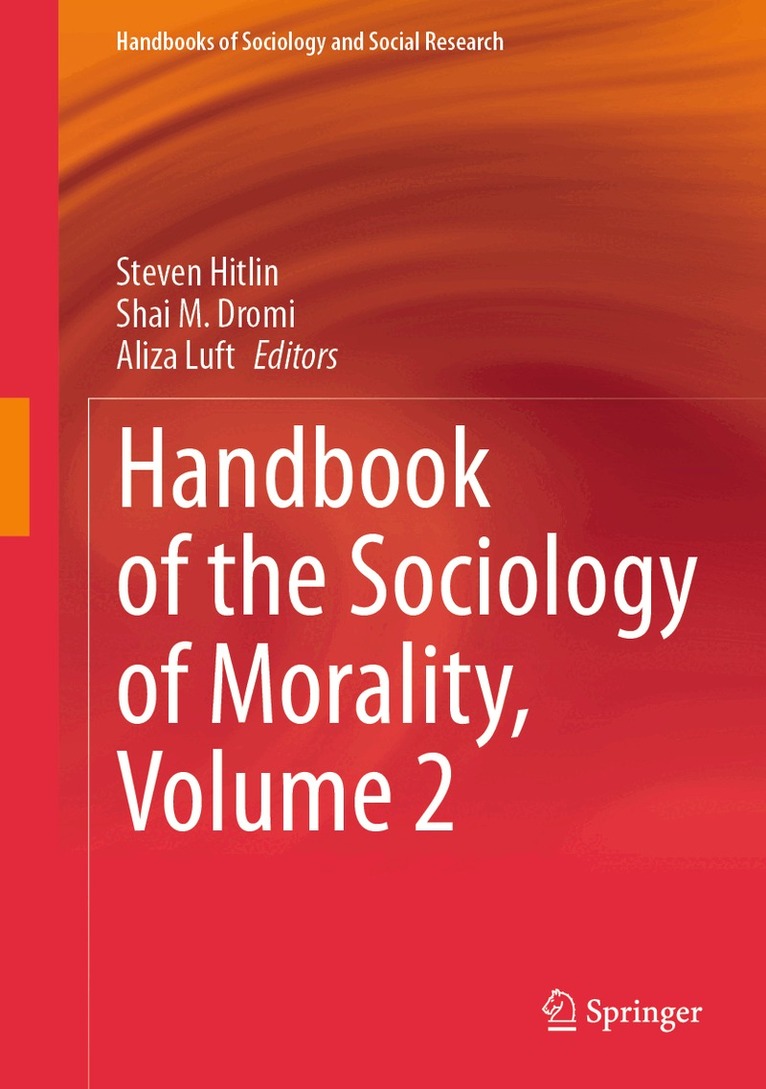
This handbook articulates how sociology can re-engage its roots as the scientific study of human moral systems, actions, and interpretation. This second volume builds on the successful original volume published in 2010, which contributed to the initiation of a new section of the American Sociological Association (ASA), thus growing the field. This volume takes sociology back to its roots over a century ago, when morality was a central topic of work and governance. It engages scholars from across subfields in sociology, representing each section of the ASA, who each contribute a chapter on how their subfield connects to research on morality. This reference work appeals to broader readership than was envisaged for the first volume, as the relationship between sociology as a discipline and its origins in questions of morality is further renewed. The volume editors focus on three areas: the current state of the sociology of morality across a range of sociologicalsubfields; taking a new look at some of the issues discussed in the first handbook, which are now relevant in sometimes completely new contexts; and reflecting on where the sociology of morality should go next. This is a must-read reference for students and scholars interested in topics of morality, ethics, altruism, religion, and spirituality from across the social science.
2 414 kr
Skickas inom 10-15 vardagar
This handbook articulates how sociology can re-engage its roots as the scientific study of human moral systems, actions, and interpretation.