Shambhu P. Dasgupta – författare
Visar alla böcker från författaren Shambhu P. Dasgupta. Handla med fri frakt och snabb leverans.
8 produkter
8 produkter
E-bok
PDF, Engelska, 20084 791 kr
Läs direkt efter köp
Designed to provide engineers with quick access to current and practical information on the dynamics of structure and foundation, this unique work, consisting of two separately available volumes, serves as a complete reference, especially for those involved with earthquake or dynamic analysis, or the design of machine foundations in the oil, gas, a
Inbunden, Engelska, 2008
3 432 kr
Skickas inom 5-8 vardagar
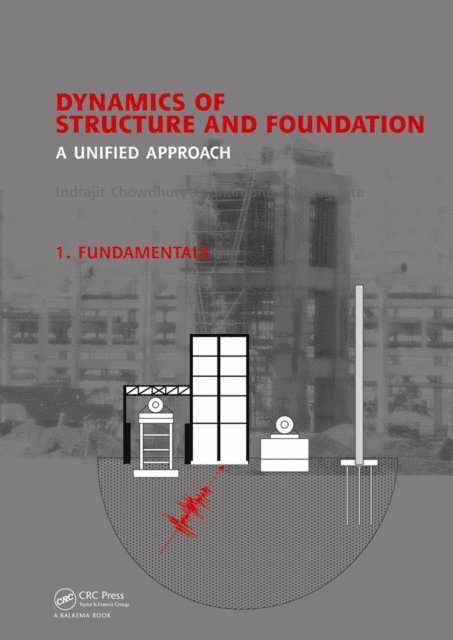
Designed to provide engineers with quick access to current and practical information on the dynamics of structure and foundation, this 2-volume reference work is intended for engineers involved with earthquake or dynamic analysis, or the design of machine foundations in the oil, gas, and energy sector. Whereas Volume 1 (ISBN 9780415471459) deals with theory and fundamentals, this volume is concentrated on three major application areas: dynamic soil-structure interaction (DSSI), the analysis and design of machine foundations, and on the analytical and design concepts for earthquake engineering. It presents innovative, easy-to-apply and practical solutions to various problems and difficulties a design engineer will encounter. It allows quick access to targeted information; it includes a wealth of case studies and also examines geotechnical considerations with regard to dynamic soil-structure interaction.
E-bok
Engelska, 20084 119 kr
Läs direkt efter köp
The second part of this well-illustrated guide is dedicated to applications in various civil engineering problems related to dynamic soil-structure interaction, machine foundation and earthquake engineering. The book presents innovative, easy-to-apply, and practical solutions to various problems and difficulties that a design engineer will encounter. The book focuses on dynamic soil-structure interaction (DSSI), the analysis and design of machine foundations, and the analytical and design concepts for earthquake engineering.
E-bok
Engelska, 20084 791 kr
Läs direkt efter köp
Designed to provide engineers with quick access to current and practical information on the dynamics of structure and foundation, this unique work, consisting of two separately available volumes, serves as a complete reference, especially for those involved with earthquake or dynamic analysis, or the design of machine foundations in the oil, gas, a
E-bok
PDF, Engelska, 20084 119 kr
Läs direkt efter köp
The second part of this well-illustrated guide is dedicated to applications in various civil engineering problems related to dynamic soil-structure interaction, machine foundation and earthquake engineering. The book presents innovative, easy-to-apply, and practical solutions to various problems and difficulties that a design engineer will encounter. The book focuses on dynamic soil-structure interaction (DSSI), the analysis and design of machine foundations, and the analytical and design concepts for earthquake engineering.
Häftad, Engelska, 2019
2 174 kr
Skickas inom 10-15 vardagar
Despite significant development in earthquake analysis and design in the last 50 years or more, different structures related to industry, infra structure and human habitats get destroyed with monotonic regularity under strong motion earthquake. Even the recent earthquake in Mexico in September 2017 killed a number of people and destroyed national assets amounting to hundreds of millions of dollars.Careful evaluation of the technology reveals that, despite significant development in earthquake engineering, most of the books that are available on the market for reference are primarily focused towards buildings and framed type structures. It is accepted that during an earthquake it is buildings that get destroyed most and has been the biggest killers of human life. Yet, there are a number of structures like retaining walls, water tanks, Bunkers, silos, tall chimneys, bridge piers etc that are equally susceptible to earthquake, and if damaged can cause serious trouble and great economic distress. Unfortunately, many of these systems are analyzed by techniques that are too simplified, unrealistic/obsolete or nothing is done about them, ignoring completely the seismic effects, as no guidelines exist for their analysis/design (like seismic analysis of counterfort retaining walls or dynamic pressures on bunker walls etc.).This highly informative book addresses many of these items for which there exists a significant gap in technology and yet remain an important life line of considerable commercial significance.The book is an outcome of authors' academic research and practice across the four continents (USA, Europe, Africa and Asia) in the last thirty two years, where many of these technologies have been put in practice, that got tested against real time earthquakes. All methods presented herein have been published previously in peer reviewed research journals and international conferences of repute before being put to practice. Professionals working in international EPC and consulting engineering firms, graduates taking advanced courses in earthquake engineering, doctoral scholars pursuing research in earthquake engineering in the area of dynamic soil structure interaction (DSSI) and advanced under graduates wanting to self-learn and update themselves on earthquake analysis and design are greatly benefited from this book.
Inbunden, Engelska, 2018
2 178 kr
Skickas inom 10-15 vardagar
Despite significant development in earthquake analysis and design in the last 50 years or more, different structures related to industry, infra structure and human habitats get destroyed with monotonic regularity under strong motion earthquake. Even the recent earthquake in Mexico in September 2017 killed a number of people and destroyed national assets amounting to hundreds of millions of dollars.Careful evaluation of the technology reveals that, despite significant development in earthquake engineering, most of the books that are available on the market for reference are primarily focused towards buildings and framed type structures. It is accepted that during an earthquake it is buildings that get destroyed most and has been the biggest killers of human life. Yet, there are a number of structures like retaining walls, water tanks, Bunkers, silos, tall chimneys, bridge piers etc that are equally susceptible to earthquake, and if damaged can cause serious trouble and great economic distress. Unfortunately, many of these systems are analyzed by techniques that are too simplified, unrealistic/obsolete or nothing is done about them, ignoring completely the seismic effects, as no guidelines exist for their analysis/design (like seismic analysis of counterfort retaining walls or dynamic pressures on bunker walls etc.).This highly informative book addresses many of these items for which there exists a significant gap in technology and yet remain an important life line of considerable commercial significance.The book is an outcome of authors' academic research and practice across the four continents (USA, Europe, Africa and Asia) in the last thirty two years, where many of these technologies have been put in practice, that got tested against real time earthquakes. All methods presented herein have been published previously in peer reviewed research journals and international conferences of repute before being put to practice. Professionals working in international EPC and consulting engineering firms, graduates taking advanced courses in earthquake engineering, doctoral scholars pursuing research in earthquake engineering in the area of dynamic soil structure interaction (DSSI) and advanced under graduates wanting to self-learn and update themselves on earthquake analysis and design are greatly benefited from this book.
E-bok
Engelska, 20182 840 kr
Läs direkt efter köp
Despite significant development in earthquake analysis and design in the last 50 years or more, different structures related to industry, infra structure and human habitats get destroyed with monotonic regularity under strong motion earthquake. Even the recent earthquake in Mexico in September 2017 killed a number of people and destroyed national assets amounting to hundreds of millions of dollars.Careful evaluation of the technology reveals that, despite significant development in earthquake engineering, most of the books that are available on the market for reference are primarily focused towards buildings and framed type structures. It is accepted that during an earthquake it is buildings that get destroyed most and has been the biggest killers of human life. Yet, there are a number of structures like retaining walls, water tanks, Bunkers, silos, tall chimneys, bridge piers etc that are equally susceptible to earthquake, and if damaged can cause serious trouble and great economic distress. Unfortunately, many of these systems are analyzed by techniques that are too simplified, unrealistic/obsolete or nothing is done about them, ignoring completely the seismic effects, as no guidelines exist for their analysis/design (like seismic analysis of counterfort retaining walls or dynamic pressures on bunker walls etc.).This highly informative book addresses many of these items for which there exists a significant gap in technology and yet remain an important life line of considerable commercial significance.The book is an outcome of authors'' academic research and practice across the four continents (USA, Europe, Africa and Asia) in the last thirty two years, where many of these technologies have been put in practice, that got tested against real time earthquakes. All methods presented herein have been published previously in peer reviewed research journals and international conferences of repute before being put to practice. Professionals working in international EPC and consulting engineering firms, graduates taking advanced courses in earthquake engineering, doctoral scholars pursuing research in earthquake engineering in the area of dynamic soil structure interaction (DSSI) and advanced under graduates wanting to self-learn and update themselves on earthquake analysis and design are greatly benefited from this book.