Shandar Ahmad – författare
Visar alla böcker från författaren Shandar Ahmad. Handla med fri frakt och snabb leverans.
4 produkter
4 produkter
Häftad, Engelska, 2008
561 kr
Skickas inom 10-15 vardagar
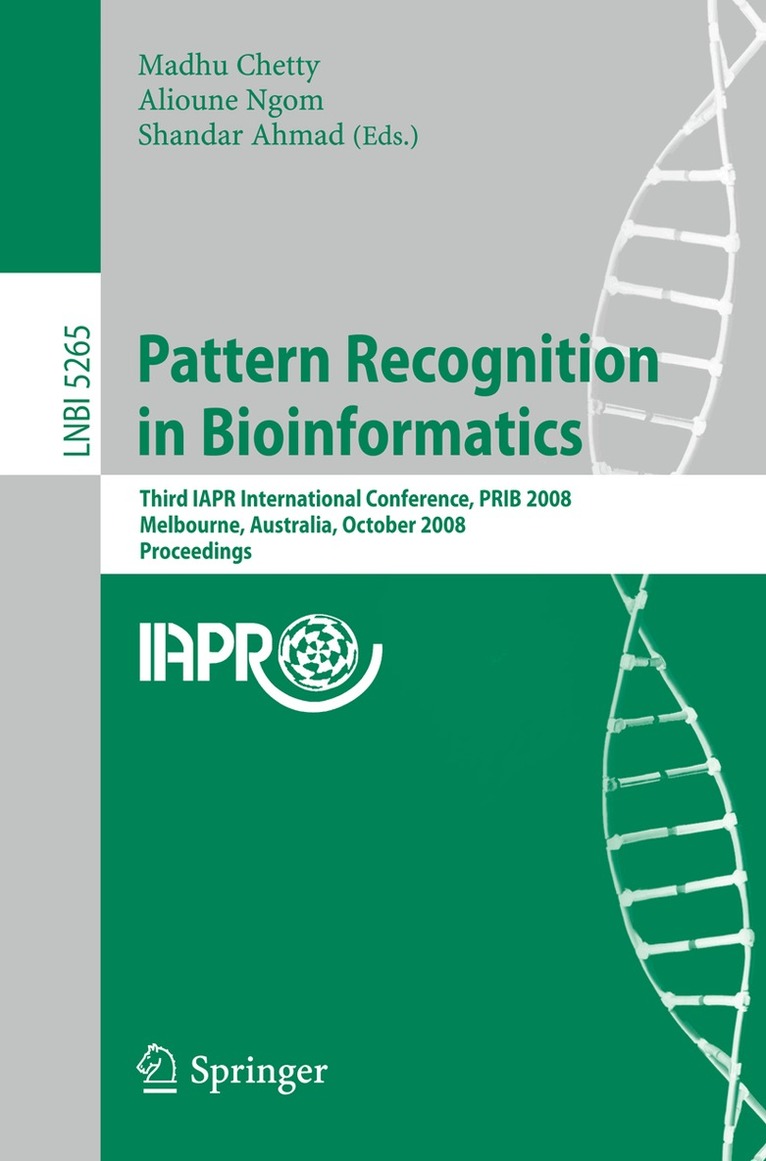
In the post-genomic era, a holistic understanding of biological systems and p- cesses,inalltheircomplexity,is criticalincomprehendingnature’schoreography of life. As a result, bioinformatics involving its two main disciplines, namely, the life sciences and the computational sciences, is fast becoming a very promising multidisciplinary research ?eld. With the ever-increasing application of lar- scalehigh-throughputtechnologies,suchasgeneorproteinmicroarraysandmass spectrometry methods, the enormous body of information is growing rapidly. Bioinformaticians are posed with a large number of di?cult problems to solve, arising not only due to the complexities in acquiring the molecular infor- tion but also due to the size and nature of the generated data sets and/or the limitations of the algorithms required for analyzing these data. Although the ?eld of bioinformatics is still in its embryonic stage, the recent advancements in computational and information-theoretic techniques are enablingus to c- ductvariousinsilicotestingandscreeningofmanylab-basedexperimentsbefore these are actually performed in vitro or in vivo. These in silico investigations are providing new insights for interpretation and establishing a new direction for a deeper understanding. Among the various advanced computational methods currently being applied to such studies, the pattern recognition techniques are mostly found to be at the core of the whole discovery process for apprehending the underlying biological knowledge. Thus, we can safely surmise that the - going bioinformatics revolution may, in future, inevitably play a major role in many aspects of medical practice and/or the discipline of life sciences.
E-bok
PDF, Engelska, 2008708 kr
Läs direkt efter köp
In the post-genomic era, a holistic understanding of biological systems and p- cesses,inalltheircomplexity,is criticalincomprehendingnature’schoreography of life. As a result, bioinformatics involving its two main disciplines, namely, the life sciences and the computational sciences, is fast becoming a very promising multidisciplinary research ?eld. With the ever-increasing application of lar- scalehigh-throughputtechnologies,suchasgeneorproteinmicroarraysandmass spectrometry methods, the enormous body of information is growing rapidly. Bioinformaticians are posed with a large number of di?cult problems to solve, arising not only due to the complexities in acquiring the molecular infor- tion but also due to the size and nature of the generated data sets and/or the limitations of the algorithms required for analyzing these data. Although the ?eld of bioinformatics is still in its embryonic stage, the recent advancements in computational and information-theoretic techniques are enablingus to c- ductvariousinsilicotestingandscreeningofmanylab-basedexperimentsbefore these are actually performed in vitro or in vivo. These in silico investigations are providing new insights for interpretation and establishing a new direction for a deeper understanding. Among the various advanced computational methods currently being applied to such studies, the pattern recognition techniques are mostly found to be at the core of the whole discovery process for apprehending the underlying biological knowledge. Thus, we can safely surmise that the - going bioinformatics revolution may, in future, inevitably play a major role in many aspects of medical practice and/or the discipline of life sciences.
Häftad, Engelska, 2012
501 kr
Skickas inom 10-15 vardagar
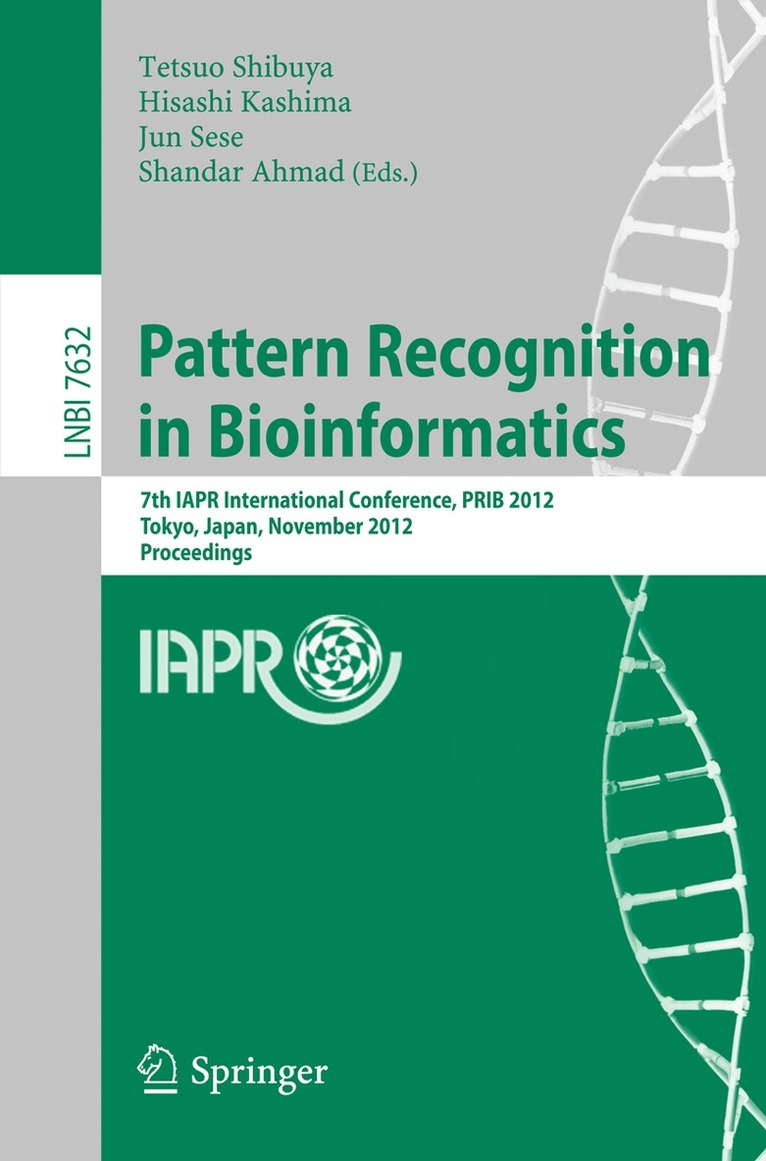
This book constitutes the refereed proceedings of the 7th International Conference on Pattern Recognition in Bioinformatics, PRIB 2012, held in Tokyo, Japan, in November 2012.The 24 revised full papers presented were carefully reviewed and selected from 33 submissions. Their topics are widely ranging from fundamental techniques, sequence analysis to biological network analysis. The papers are organized in topical sections on generic methods, visualization, image analysis, and platforms, applications of pattern recognition techniques, protein structure and docking, complex data analysis, and sequence analysis.
E-bok
PDF, Engelska, 2012641 kr
Läs direkt efter köp
This book constitutes the refereed proceedings of the 7th International Conference on Pattern Recognition in Bioinformatics, PRIB 2012, held in Tokyo, Japan, in November 2012.The 24 revised full papers presented were carefully reviewed and selected from 33 submissions. Their topics are widely ranging from fundamental techniques, sequence analysis to biological network analysis. The papers are organized in topical sections on generic methods, visualization, image analysis, and platforms, applications of pattern recognition techniques, protein structure and docking, complex data analysis, and sequence analysis.