Shankru Guggari – författare
1 580 kr
Skickas inom 10-15 vardagar
Lessons from COVID-19: Impact on Healthcare Systems and Technology uncovers the impact that COVID-19 has made on healthcare and technology industries. State-of-the-art case studies, empirical research, and new trends in technology-mediated solution are discussed to help inform and guide readers in understanding the effects that the COVID-19 outbreak has had across healthcare and technology industries. The book discusses challenges to identify vaccines, changes in legislation on clinical trials and re-purposing of licensed drugs, effects on primary healthcare, best practices adopted by different countries to control the pandemic, and different effects on patients within diverse age groups and comorbidities.
In addition, the book covers technology-mediated solutions and infrastructures applied, digital transformations, modeling techniques, statistical projections, and the benefits and use of cloud computing and artificial intelligence. This is a valuable resource for healthcare professionals, medical doctors, researchers and graduate students from both biomedical and technological fields who are interested in learning more about the use of new technologies to fight a pandemic.
Discusses the effects of COVID-19 on healthcare and technology Presents case studies and state-of-the-art research and technologies to help readers effectively understand the effects of COVID-19 Empowers researchers to work on effective hypothesis to test the disruptions and changes that have occurred as a result of COVID-19 Bridges practical and theoretical gaps in terms of lessons learned during COVID-19 in the healthcare and technology sectors2 247 kr
Läs direkt efter köp
1 741 kr
Kommande
2 359 kr
Skickas inom 10-15 vardagar
2 758 kr
Läs direkt efter köp
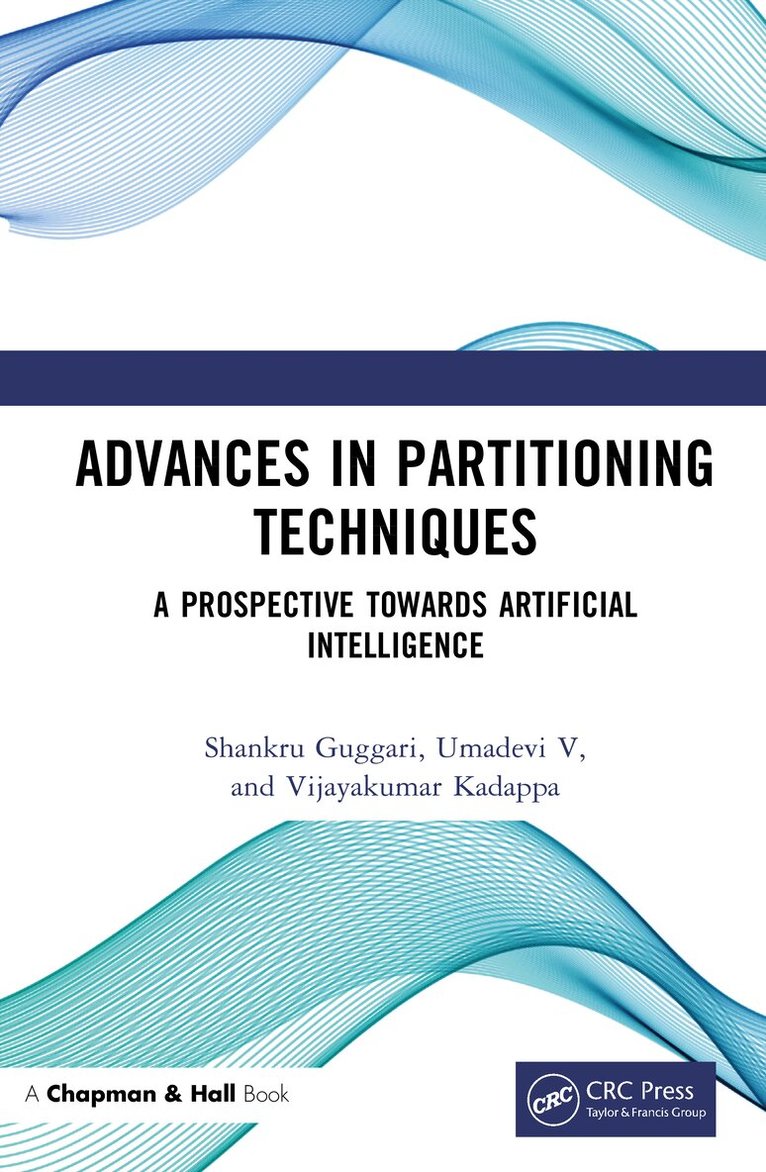
This book discusses various partitioning strategies tailored for traditional machine learning algorithms. It examines how data can be divided efficiently to enhance the performance and scalability of classic machine learning models. It explores how partitioning methods can be applied to neural networks and other deep learning architectures and describes various ways to accelerate training, reduce memory consumption, and enhance overall efficiency.
Graphs are prevalent in various AI domains. This book is specifically designed for graph data structures using partitioning techniques and also explores insights into optimizing graph algorithms and analytics. With the explosion of data, efficient partitioning becomes crucial for processing large datasets. This book discusses various partitioning techniques that enable effective management and analysis of big data, enhancing speed and resource utilization. Edge computing demands resource-efficient strategies. It examines partitioning methods tailored for edge devices, enabling AI capabilities at the edge while addressing resource. This book showcases how partitioning techniques have been successfully applied across various AI domains. It demonstrates real-world scenarios where partitioning optimizes AI algorithms and systems.
By bridging the gap between theory and practical applications, this book intends to equip researchers, practitioners, and students with invaluable insights into harnessing partitioning for optimizing AI-driven systems, data processing, and problem-solving strategies. It describes the various advantages and disadvantages of partitioning techniques. This book is a vital resource, illuminating the path towards unlocking the full potential of partitioning in shaping the future of AI technologies.
2 758 kr
Läs direkt efter köp
This book discusses various partitioning strategies tailored for traditional machine learning algorithms. It examines how data can be divided efficiently to enhance the performance and scalability of classic machine learning models. It explores how partitioning methods can be applied to neural networks and other deep learning architectures and describes various ways to accelerate training, reduce memory consumption, and enhance overall efficiency.
Graphs are prevalent in various AI domains. This book is specifically designed for graph data structures using partitioning techniques and also explores insights into optimizing graph algorithms and analytics. With the explosion of data, efficient partitioning becomes crucial for processing large datasets. This book discusses various partitioning techniques that enable effective management and analysis of big data, enhancing speed and resource utilization. Edge computing demands resource-efficient strategies. It examines partitioning methods tailored for edge devices, enabling AI capabilities at the edge while addressing resource. This book showcases how partitioning techniques have been successfully applied across various AI domains. It demonstrates real-world scenarios where partitioning optimizes AI algorithms and systems.
By bridging the gap between theory and practical applications, this book intends to equip researchers, practitioners, and students with invaluable insights into harnessing partitioning for optimizing AI-driven systems, data processing, and problem-solving strategies. It describes the various advantages and disadvantages of partitioning techniques. This book is a vital resource, illuminating the path towards unlocking the full potential of partitioning in shaping the future of AI technologies.