Shannon J. Linning – författare
Visar alla böcker från författaren Shannon J. Linning. Handla med fri frakt och snabb leverans.
10 produkter
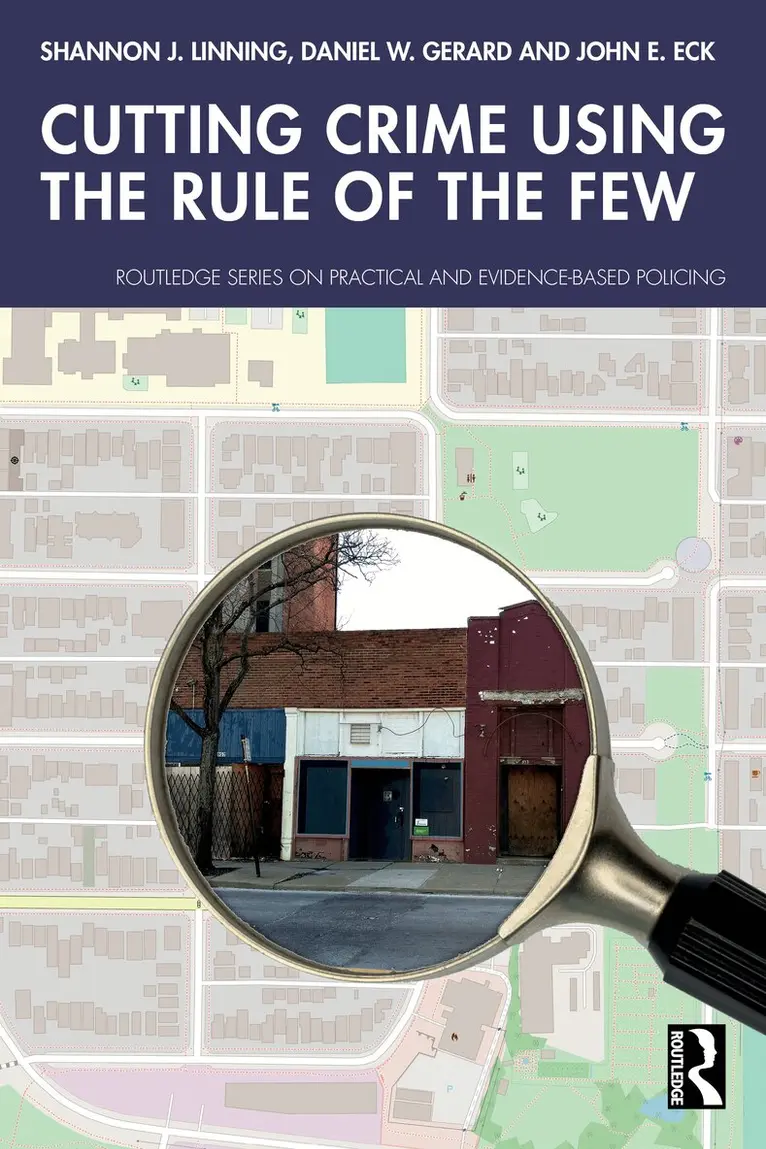
Cutting Crime Using the Rule of the Few
Av Shannon J. Linning, Daniel W. Gerard m. fl.
Häftad, 2026
589 kr
Lägg i varukorg
Based on decades of research, this book reveals how the rule of the few can redirect your focus to create effective crime control policies. Many crime reduction strategies fail because they apply common crime fallacies. They assume that: solutions to crime need to be complicated, crime is …
Cutting Crime Using the Rule of the Few
Av Shannon J. Linning, Daniel W. Gerard m. fl.
Inbunden, 2026
2510 kr
Lägg i varukorg
Based on decades of research, this book reveals how the rule of the few can redirect your focus to create effective crime control policies. Many crime reduction strategies fail because they apply common crime fallacies. They assume that: solutions to crime need to be complicated, crime is …
Cutting Crime Using the Rule of the Few
Av John E. Eck, Daniel W. Gerard m. fl.
E-bok, 2026
693 kr
Lägg i varukorg
Based on decades of research, this book reveals how the rule of the few can redirect your focus to create effective crime control policies. Many crime reduction strategies fail because they apply common crime fallacies. They assume that: solutions to crime need to be complicated, crime is …
Cutting Crime Using the Rule of the Few
Av John E. Eck, Daniel W. Gerard m. fl.
E-bok, 2026
678 kr
Lägg i varukorg
Based on decades of research, this book reveals how the rule of the few can redirect your focus to create effective crime control policies. Many crime reduction strategies fail because they apply common crime fallacies. They assume that: solutions to crime need to be complicated, crime is …
Whose 'Eyes on the Street' Control Crime?
Expanding Place Management into Neighborhoods
Av Shannon J. Linning, John E. Eck
Häftad, 2021
308 kr
Lägg i varukorg
Jane Jacobs coined the phrase 'eyes on the street' to depict those who maintain order in cities. Most criminologists assume these eyes belong to residents. In this Element we show that most of the eyes she described belonged to shopkeepers and property owners. They, along with governments, wield …
Whose 'Eyes on the Street' Control Crime?
Expanding Place Management into Neighborhoods
Av John E. Eck, Shannon J. Linning
E-bok, 2021
287 kr
Lägg i varukorg
Jane Jacobs coined the phrase ''eyes on the street'' to depict those who maintain order in cities. Most criminologists assume these eyes belong to residents. In this Element we show that most of the eyes she described belonged to shopkeepers and property owners. They, along with governments, wield …
Whose 'Eyes on the Street' Control Crime?
Expanding Place Management into Neighborhoods
Av John E. Eck, Shannon J. Linning
E-bok, 2021
287 kr
Lägg i varukorg
Jane Jacobs coined the phrase ''eyes on the street'' to depict those who maintain order in cities. Most criminologists assume these eyes belong to residents. In this Element we show that most of the eyes she described belonged to shopkeepers and property owners. They, along with governments, wield …
Place Management and Crime
Ownership and Property Rights as a Source of Social Control
Av John E. Eck, Shannon J. Linning m. fl.
Häftad, 2023
659 kr
Lägg i varukorg
This brief describes the theory and evidence of a form of social control known as place management. Created by property owners, place management is an alternative to the two other domains of social control: formally created by the state and informally created by residents. It helps explain the high …
Place Management and Crime
Ownership and Property Rights as a Source of Social Control
Av Tamara D. Herold, Shannon J. Linning m. fl.
E-bok, 2023
897 kr
Lägg i varukorg
This brief describes the theory and evidence of a form of social control known as place management. Created by property owners, place management is an alternative to the two other domains of social control: formally created by the state and informally created by residents. It helps explain the high …
Place Management and Crime : Ownership and Property Rights as a Source of Social Control
Av John E. Eck, Shannon J. Linning
2023
667 kr
Lägg i varukorg