Shannon K. McManimon – Författare
Visar alla böcker från författaren Shannon K. McManimon. Handla med fri frakt och snabb leverans.
3 produkter
3 produkter
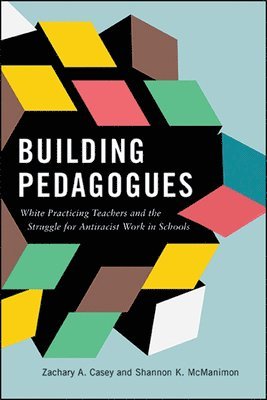
Building Pedagogues
White Practicing Teachers and the Struggle for Antiracist Work in Schools
Häftad, Engelska, 2021
550 kr
Skickas inom 3-6 vardagar
An in-depth account and model of antiracist professional development for white practicing teachers.Antiracist professional development for white teachers often follows a one-size-fits-all model, focusing on narrow notions of race and especially white privilege at the expense of more radical analyses of white supremacy. Frustrated with this model, Zachary A. Casey and Shannon K. McManimon, both white teacher educators, developed a two-year professional development seminar called "RaceWork" with eight white practicing teachers committed to advancing antiracism in their classrooms, schools, and communities. Drawing on interviews, field notes, teacher reflections, and classroom observations, Building Pedagogues details the program's theoretical and pedagogical foundations; Casey and McManimon's unique tripartite approach to race and racism at personal, local, and structural levels; learnings, strategies, and practical interventions that emerged from the program; and the challenges and resistance these teachers faced. As the story of RaceWork and a model for implementing it, the book concludes by reminding its audience of teachers, teacher educators, and researchers that antiracist professional development is a continual, open-ended process. The work of building pedagogues is an ongoing process.
Building Pedagogues
White Practicing Teachers and the Struggle for Antiracist Work in Schools
Inbunden, Engelska, 2020
1 415 kr
Skickas inom 3-6 vardagar
An in-depth account and model of antiracist professional development for white practicing teachers.Antiracist professional development for white teachers often follows a one-size-fits-all model, focusing on narrow notions of race and especially white privilege at the expense of more radical analyses of white supremacy. Frustrated with this model, Zachary A. Casey and Shannon K. McManimon, both white teacher educators, developed a two-year professional development seminar called "RaceWork" with eight white practicing teachers committed to advancing antiracism in their classrooms, schools, and communities. Drawing on interviews, field notes, teacher reflections, and classroom observations, Building Pedagogues details the program's theoretical and pedagogical foundations; Casey and McManimon's unique tripartite approach to race and racism at personal, local, and structural levels; learnings, strategies, and practical interventions that emerged from the program; and the challenges and resistance these teachers faced. As the story of RaceWork and a model for implementing it, the book concludes by reminding its audience of teachers, teacher educators, and researchers that antiracist professional development is a continual, open-ended process. The work of building pedagogues is an ongoing process.
500 kr
Skickas inom 10-15 vardagar
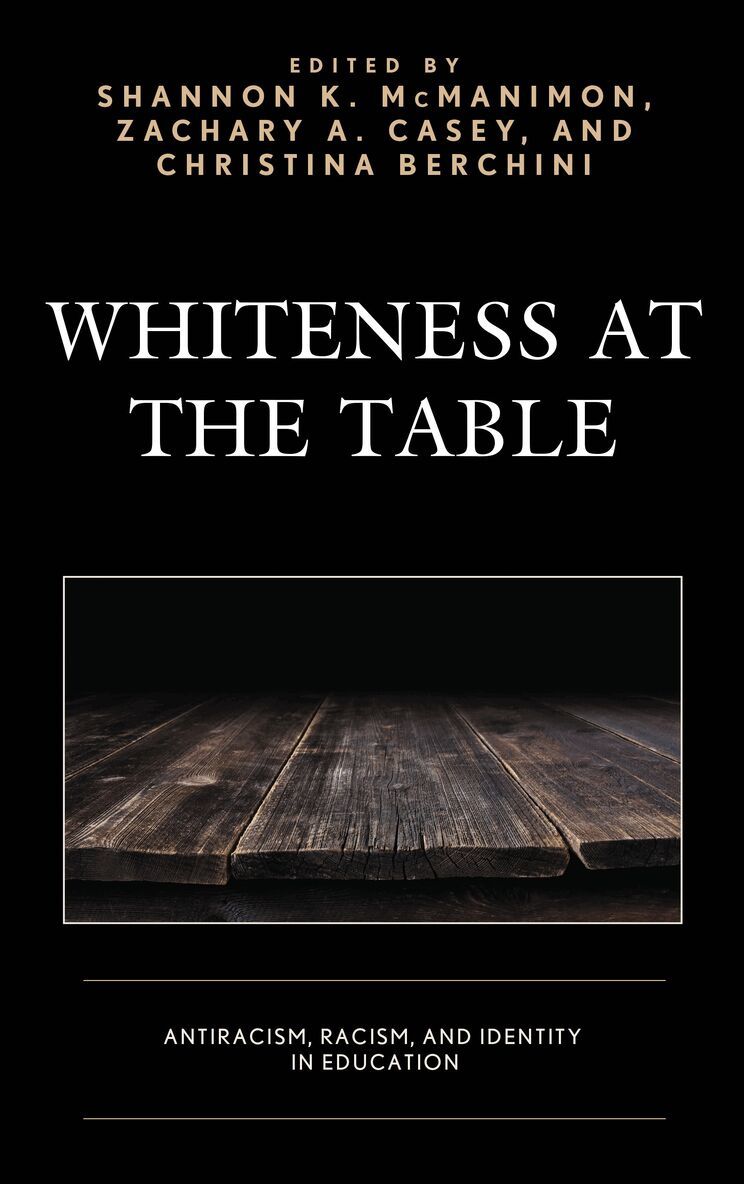
Antiracist work in education has proceeded as if the only social relation at issue is the one between white people and people of color. But what if our antiracist efforts are being undermined by unexamined difficulties and struggles among white people?Whiteness at the Table examines whiteness in the lived experiences of young children, family members, students, teachers, and school administrators. It focuses on racism and antiracism within the context of relationships. Its authors argue that we cannot read or understand whiteness as a phenomenon without attending to the everyday complexities and conflicts of white people’s lives.This edited volume is entitled Whiteness at the Table, then, for at least three reasons. First, the title evokes the origins of this book in the ongoing storytelling and theorizing of the Midwest Critical Whiteness Collective—a small collective of antiracist educators, scholars, and activists who have been gathering at its founders’ dining room table for almost a decade.Second, the book’s authors are theorizing whiteness not just in terms of structural aspects of white power, but in terms of how whiteness is reproduced and challenged in the day-to-day interactions and relationships of white people. In this sense, whiteness is always already at the table, and this book seeks to illuminate how and why this is so.Finally, one of the primary aims of Whiteness at the Table is to persuade white people of their moral and political responsibility to bring whiteness—as an explicit topic, as perhaps the most important problem to be solved at this historical moment—to the table. This responsibility to theorize and combat whiteness cannot and should not fall only to people of color.