Sharon Bertsch McGrayne – författare
Visar alla böcker från författaren . Handla med fri frakt och snabb leverans.
6 produkter
6 produkter
Häftad, Engelska, 2012
157 kr
Skickas inom 5-8 vardagar
A New York Times Book Review Editor’s Choice: A vivid account of the generations-long dispute over Bayes’ rule, one of the greatest breakthroughs in the history of applied mathematics and statistics “An intellectual romp touching on, among other topics, military ingenuity, the origins of modern epidemiology, and the theological foundation of modern mathematics.”—Michael Washburn, Boston Globe “To have crafted a page-turner out of the history of statistics is an impressive feat. If only lectures at university had been this racy.”—David Robson, New Scientist Bayes’ rule appears to be a straightforward, one-line theorem: by updating our initial beliefs with objective new information, we get a new and improved belief. To its adherents, it is an elegant statement about learning from experience. To its opponents, it is subjectivity run amok. In the first-ever account of Bayes’ rule for general readers, Sharon Bertsch McGrayne explores this controversial theorem and the human obsessions surrounding it. She traces its discovery by an amateur mathematician in the 1740s through its development into roughly its modern form by French scientist Pierre Simon Laplace. She reveals why respected statisticians rendered it professionally taboo for 150 years—at the same time that practitioners relied on it to solve crises involving great uncertainty and scanty information (Alan Turing’s role in breaking Germany’s Enigma code during World War II), and explains how the advent of off-the-shelf computer technology in the 1980s proved to be a game-changer. Today, Bayes’ rule is used everywhere from DNA de-coding to Homeland Security. Drawing on primary source material and interviews with statisticians and other scientists, The Theory That Would Not Die is the riveting account of how a seemingly simple theorem ignited one of the greatest controversies of all time.
Häftad, Engelska, 2001
427 kr
Skickas inom 3-6 vardagar
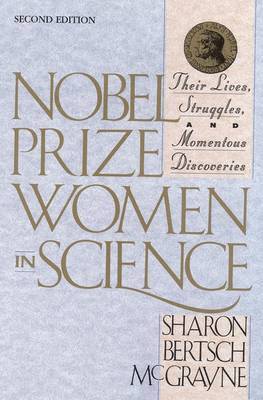
Since 1901 there have been over three hundred recipients of the Nobel Prize in the sciences. Only ten of them -- about 3 percent -- have been women. Why? In this updated version of Nobel Prize Women in Science, Sharon Bertsch McGrayne explores the reasons for this astonishing disparity by examining the lives and achievements of fifteen women scientists who either won a Nobel Prize or played a crucial role in a Nobel Prize - winning project. The book reveals the relentless discrimination these women faced both as students and as researchers. Their success was due to the fact that they were passionately in love with science. The book begins with Marie Curie, the first woman to win the Nobel Prize in physics. Readers are then introduced to Christiane Nusslein-Volhard, Emmy Noether, Lise Meitner, Barbara McClintock, Chien-Shiung Wu, and Rosalind Franklin. These and other remarkable women portrayed here struggled against gender discrimination, raised families, and became political and religious leaders. They were mountain climbers, musicians, seamstresses, and gourmet cooks. Above all, they were strong, joyful women in love with discovery.Nobel Prize Women in Science is a startling and revealing look into the history of science and the critical and inspiring role that women have played in the drama of scientific progress.
Häftad, Engelska, 1997
140 kr
Skickas inom 5-8 vardagar
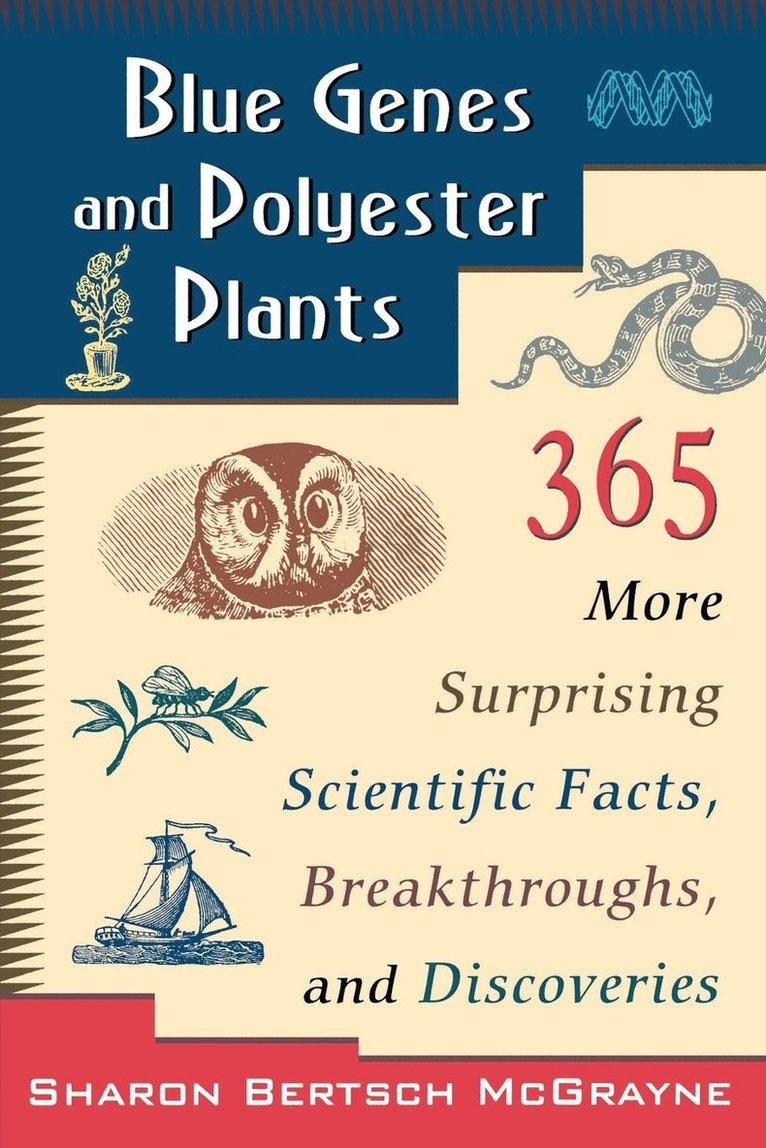
What is the world's largest single-celled organism? What type of grass can support more weight per square inch thanconcrete? What male mammal makes breast milk? Why are dancing cockroaches so fascinating to mathematicians? Get ready to find out fascinating facts about everything from blueroses and deep earthquakes to singing sand dunes and tickinghourglasses. Blue Genes and Polyester Plants takes you on a livelytour of the universe's astonishing oddities and extremes. Based oncutting-edge scientific research, here are hundreds of juicytidbits culled from every corner of science--including biology,medicine, engineering, technology, zoology, chemistry, andastronomy. This exciting overview of modern science is sure toinform, entertain, and astound.
E-bok
Engelska, 2020175 kr
Läs direkt efter köp
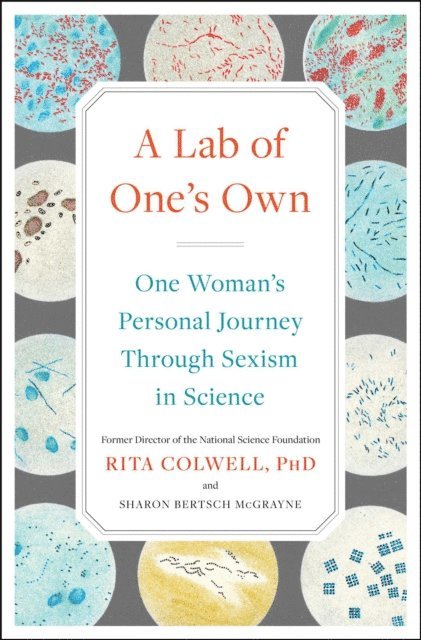
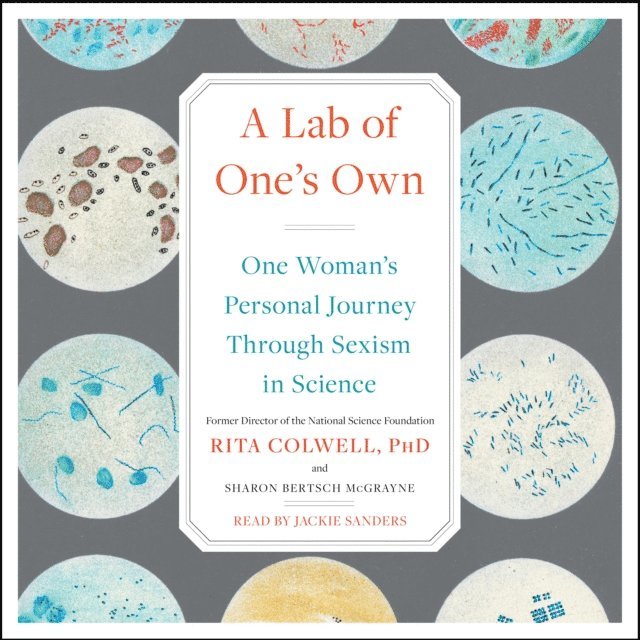
A “beautifully written” (Kirkus Reviews, starred review) memoir-manifesto from the first female director of the National Science Foundation about the entrenched sexism in science, the elaborate detours women have take to bypass the problem, and how to fix the system.If you think sexism thrives only on Wall Street or Hollywood, you haven’t visited a lab, a science department, a research foundation, or a biotech firm. Rita Colwell is one of the top scientists in America: the groundbreaking microbiologist who discovered how cholera survives between epidemics and the former head of the National Science Foundation. But when she first applied for a graduate fellowship in bacteriology, she was told, “We don’t waste fellowships on women.” A lack of support from some male superiors would lead her to change her area of study six times before completing her PhD. A Lab of One’s Own is an “engaging” (Booklist) book that documents all Colwell has seen and heard over her six decades in science, from sexual harassment in the lab to obscure systems blocking women from leading professional organizations or publishing their work. Along the way, she encounters other women pushing back against the status quo, including a group at MIT who revolt when they discover their labs are a fraction of the size of their male colleagues. Resistance gave female scientists special gifts: forced to change specialties so many times, they came to see things in a more interdisciplinary way, which turned out to be key to making new discoveries in the 20th and 21st centuries. Colwell would also witness the advances that could be made when men and women worked together—often under her direction, such as when she headed a team that helped to uncover the source of anthrax used in the 2001 letter attacks. A Lab of One’s Own is “an inspiring read for women embarking on a career or experiencing career challenges” (Library Journal, starred review) that shares the sheer joy a scientist feels when moving toward a breakthrough, and the thrill of uncovering a whole new generation of female pioneers. It is the science book for the #MeToo era, offering an astute diagnosis of how to fix the problem of sexism in science—and a celebration of women pushing back.
Häftad, Engelska, 2021
198 kr
Skickas
Ljudbok
Engelska, 2020368 kr
Lyssna direkt efter köp
A “beautifully written” (Kirkus Reviews, starred review) memoir-manifesto from the first female director of the National Science Foundation about the entrenched sexism in science, the elaborate detours women have take to bypass the problem, and how to fix the system.If you think sexism thrives only on Wall Street or Hollywood, you haven’t visited a lab, a science department, a research foundation, or a biotech firm. Rita Colwell is one of the top scientists in America: the groundbreaking microbiologist who discovered how cholera survives between epidemics and the former head of the National Science Foundation. But when she first applied for a graduate fellowship in bacteriology, she was told, “We don’t waste fellowships on women.” A lack of support from some male superiors would lead her to change her area of study six times before completing her PhD. A Lab of One’s Own is an “engaging” (Booklist) book that documents all Colwell has seen and heard over her six decades in science, from sexual harassment in the lab to obscure systems blocking women from leading professional organizations or publishing their work. Along the way, she encounters other women pushing back against the status quo, including a group at MIT who revolt when they discover their labs are a fraction of the size of their male colleagues. Resistance gave female scientists special gifts: forced to change specialties so many times, they came to see things in a more interdisciplinary way, which turned out to be key to making new discoveries in the 20th and 21st centuries. Colwell would also witness the advances that could be made when men and women worked together—often under her direction, such as when she headed a team that helped to uncover the source of anthrax used in the 2001 letter attacks. A Lab of One’s Own is “an inspiring read for women embarking on a career or experiencing career challenges” (Library Journal, starred review) that shares the sheer joy a scientist feels when moving toward a breakthrough, and the thrill of uncovering a whole new generation of female pioneers. It is the science book for the #MeToo era, offering an astute diagnosis of how to fix the problem of sexism in science—and a celebration of women pushing back.