Sharon P. Smith - Böcker
Visar alla böcker från författaren Sharon P. Smith. Handla med fri frakt och snabb leverans.
3 produkter
3 produkter
552 kr
Skickas inom 10-15 vardagar
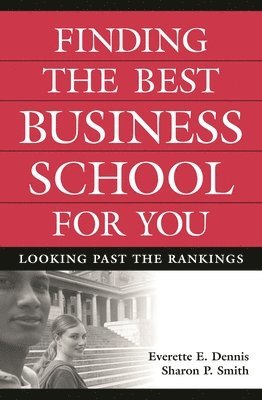
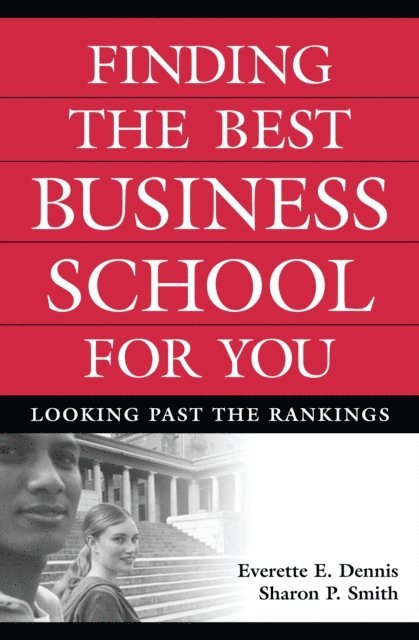
Ultimately, finding the best and most appropriate business school requires more than following trends and assessing rankings. Dennis and Smith offer an approach that is designed to help prospective MBA students cast their nets widely, thinking more expansively, creatively, and strategically, with both short- and long-term implications in mind. Discussing the pros and cons of a formal business education (in the context of evolving attitudes toward management and the role of the MBA in developing successful leaders), the authors help readers identify their underlying motivations for pursuing an MBA, learn how to read between the lines of the popular rankings, and utilize the concept of return on investment (ROI) to evaluate programs on the basis of their contribution to long-term professional and personal goals. At a time when one-fourth of all master's degrees conferred are in business, Finding the Best Business School for You offers practical insights for making wise decisions and getting the most out of the MBA experience.The truth is that, in response to changes in the global business environment, many schools are redesigning their curricula, forging closer ties with businesses, and giving students more freedom to customize their degrees. Some of the most innovative programs are being designed at public universities and other institutions out of the spotlight.
660 kr
Skickas inom 3-6 vardagar
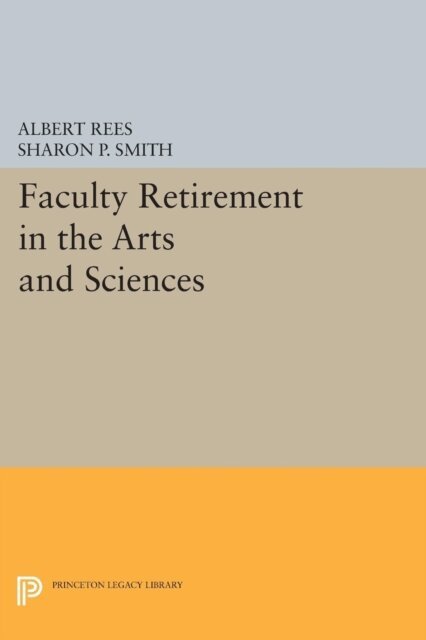
In 1986 the Age Discrimination in Employment Act (ADEA) was amended to abolish mandatory retirement for tenured faculty members in colleges and universities effective January 1, 1994. Will this "uncapping" of the retirement age adversely affect the vitality of academic departments or the prospects of advancement for younger scholars? In a definitive study of faculty retirement in the arts and sciences, Albert Rees and Sharon Smith seek to answer this question. Basing their conclusions on original data collected from thirty-three colleges and universities, they do much to resolve an issue that is a frequent subject of discussion in the academic world and in the press. Rees and Smith reveal that the ending of mandatory retirement will have much smaller effects than those generally anticipated--so small that there is no justification for efforts to have Congress continue exempting faculty members from the ADEA past 1994, the date that the exemption is now due to expire. In addition to their data on retirement patterns, the authors make use of surveys of senior faculty and retired faculty to explore attitudes toward retirement. Originally published in 1991.The Princeton Legacy Library uses the latest print-on-demand technology to again make available previously out-of-print books from the distinguished backlist of Princeton University Press. These editions preserve the original texts of these important books while presenting them in durable paperback and hardcover editions. The goal of the Princeton Legacy Library is to vastly increase access to the rich scholarly heritage found in the thousands of books published by Princeton University Press since its founding in 1905.
1 501 kr
Skickas inom 3-6 vardagar
In 1986 the Age Discrimination in Employment Act (ADEA) was amended to abolish mandatory retirement for tenured faculty members in colleges and universities effective January 1, 1994. Will this "uncapping" of the retirement age adversely affect the vitality of academic departments or the prospects of advancement for younger scholars? In a definitive study of faculty retirement in the arts and sciences, Albert Rees and Sharon Smith seek to answer this question. Basing their conclusions on original data collected from thirty-three colleges and universities, they do much to resolve an issue that is a frequent subject of discussion in the academic world and in the press. Rees and Smith reveal that the ending of mandatory retirement will have much smaller effects than those generally anticipated--so small that there is no justification for efforts to have Congress continue exempting faculty members from the ADEA past 1994, the date that the exemption is now due to expire. In addition to their data on retirement patterns, the authors make use of surveys of senior faculty and retired faculty to explore attitudes toward retirement. Originally published in 1991.The Princeton Legacy Library uses the latest print-on-demand technology to again make available previously out-of-print books from the distinguished backlist of Princeton University Press. These editions preserve the original texts of these important books while presenting them in durable paperback and hardcover editions. The goal of the Princeton Legacy Library is to vastly increase access to the rich scholarly heritage found in the thousands of books published by Princeton University Press since its founding in 1905.