Shaun Riordan - Böcker
Visar alla böcker från författaren Shaun Riordan. Handla med fri frakt och snabb leverans.
9 produkter
9 produkter
597 kr
Skickas inom 7-10 vardagar
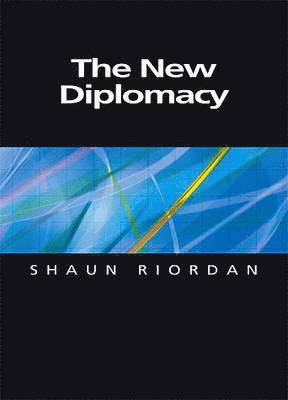
The world of international relations has changed radically in the last few years. Technological, social and political change have combined to undermine the traditional assumptions of diplomacy – in particular, the events of 11 September set in stark relief the risks and dangers.Shaun Riordan, a former British diplomat, draws on his own experience, case studies, and current debates in international relations to assess the performance of diplomatic services and to sketch out the new diplomatic environment. Traditional diplomatic services and structures are found wanting. Riordan argues forcibly against realpolitik and for a more pro-active diplomacy based on the promotion of ideas and values as a better way of securing the West's long-term interests. In doing so, he presses for radical re-structuring of diplomatic services, replacing hierarchical with networked structures, and the creation of new forms of global governance that incorporate NGOs and the private sector, as well as government officials, in a broader diplomatic effort.
247 kr
Skickas inom 5-8 vardagar
The world of international relations has changed radically in the last few years. Technological, social and political change have combined to undermine the traditional assumptions of diplomacy – in particular, the events of 11 September set in stark relief the risks and dangers.Shaun Riordan, a former British diplomat, draws on his own experience, case studies, and current debates in international relations to assess the performance of diplomatic services and to sketch out the new diplomatic environment. Traditional diplomatic services and structures are found wanting. Riordan argues forcibly against realpolitik and for a more pro-active diplomacy based on the promotion of ideas and values as a better way of securing the West's long-term interests. In doing so, he presses for radical re-structuring of diplomatic services, replacing hierarchical with networked structures, and the creation of new forms of global governance that incorporate NGOs and the private sector, as well as government officials, in a broader diplomatic effort.
575 kr
Kommande
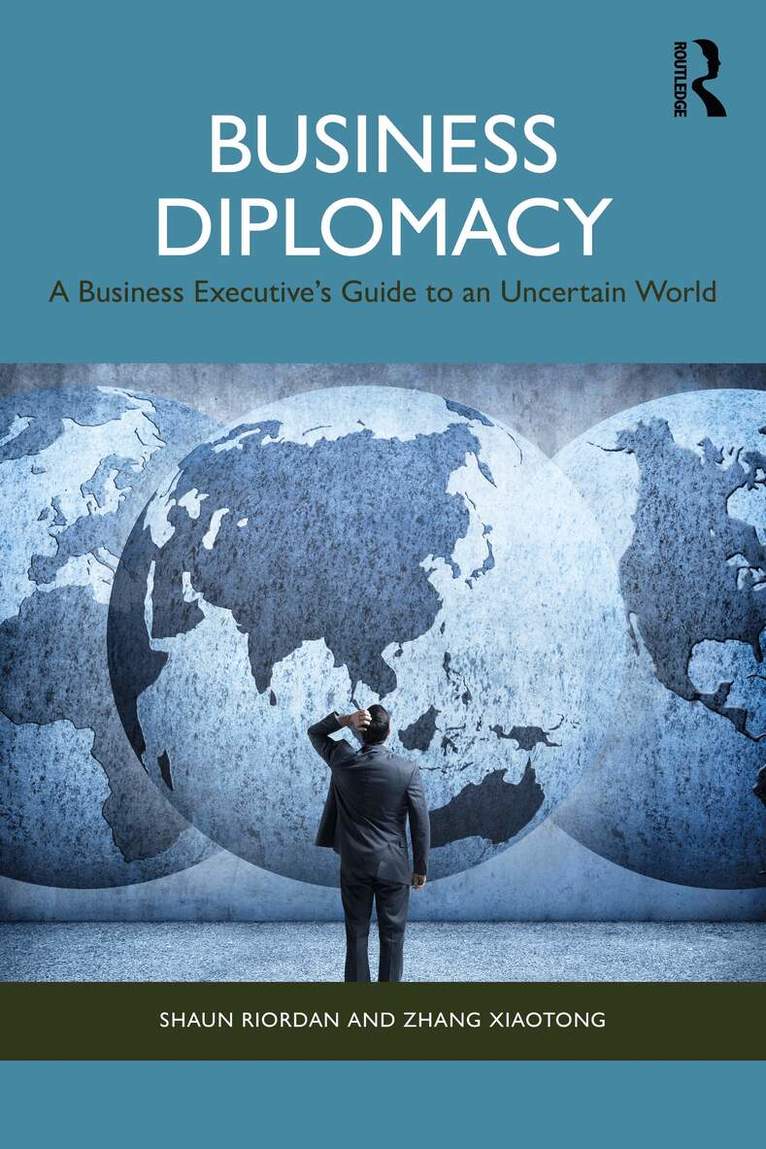
Riordan and Zhang share the skills, techniques, and mindsets used by diplomats and foreign ministries, and adapt them to the needs of executives and MNCs. Their guide employs real-life case studies in understanding the international business environment, and: Examines the shift to multipolarity and the rise of Permacrisis and Policrisis Highlights the long-term approach of diplomatic strategy and how it may be applied to business Provides a framework for companies to understand geopolitical risks Offers techniques to build resilience via network building and coalitions Engaging with topics such as cybersecurity, the re-shoring/friend-shoring phenomenon, and the evolution of technology companies as geopolitical actors, the authors demonstrate how the diplomat’s perspective offers insights to companies looking to navigate the increasingly complex geopolitical environments of international trade. With an emphasis on practical guidance, this book would interest business executives and strategy planners, as well as diplomats and government officials.
2 325 kr
Kommande
Riordan and Zhang share the skills, techniques, and mindsets used by diplomats and foreign ministries, and adapt them to the needs of executives and MNCs. Their guide employs real-life case studies in understanding the international business environment, and: Examines the shift to multipolarity and the rise of Permacrisis and Policrisis Highlights the long-term approach of diplomatic strategy and how it may be applied to business Provides a framework for companies to understand geopolitical risks Offers techniques to build resilience via network building and coalitions Engaging with topics such as cybersecurity, the re-shoring/friend-shoring phenomenon, and the evolution of technology companies as geopolitical actors, the authors demonstrate how the diplomat’s perspective offers insights to companies looking to navigate the increasingly complex geopolitical environments of international trade. With an emphasis on practical guidance, this book would interest business executives and strategy planners, as well as diplomats and government officials.
597 kr
Skickas inom 7-10 vardagar
The world has been sleep-walking into cyber chaos. The spread of misinformation via social media and the theft of data and intellectual property, along with regular cyberattacks, threaten the fabric of modern societies. All the while, the Internet of Things increases the vulnerability of computer systems, including those controlling critical infrastructure. What can be done to tackle these problems? Does diplomacy offer ways of managing security and containing conflict online?In this provocative book, Shaun Riordan shows how traditional diplomatic skills and mindsets can be combined with new technologies to bring order and enhance international cooperation. He explains what cyberdiplomacy means for diplomats, foreign services and corporations and explores how it can be applied to issues such as internet governance, cybersecurity, cybercrime and information warfare. Cyberspace, he argues, is too important to leave to technicians. Using the vital tools offered by cyberdiplomacy, we can reduce the escalation and proliferation of cyberconflicts by proactively promoting negotiation and collaboration online.
204 kr
Skickas inom 7-10 vardagar
The world has been sleep-walking into cyber chaos. The spread of misinformation via social media and the theft of data and intellectual property, along with regular cyberattacks, threaten the fabric of modern societies. All the while, the Internet of Things increases the vulnerability of computer systems, including those controlling critical infrastructure. What can be done to tackle these problems? Does diplomacy offer ways of managing security and containing conflict online?In this provocative book, Shaun Riordan shows how traditional diplomatic skills and mindsets can be combined with new technologies to bring order and enhance international cooperation. He explains what cyberdiplomacy means for diplomats, foreign services and corporations and explores how it can be applied to issues such as internet governance, cybersecurity, cybercrime and information warfare. Cyberspace, he argues, is too important to leave to technicians. Using the vital tools offered by cyberdiplomacy, we can reduce the escalation and proliferation of cyberconflicts by proactively promoting negotiation and collaboration online.
Del 25 - United Nations University Series on Regionalism
Science Diplomacy, Cyberdiplomacy and Techplomacy in EU-LAC Relations
Inbunden, Engelska, 2023
1 381 kr
Skickas inom 10-15 vardagar
This book explores collaborations between the European Union (EU) and the CELAC ( Community of Latin American and Caribbean States) in science diplomacy, as well as the related areas of cyberdiplomacy and techplomacy. It focuses on how interregional collaboration could strengthen societal resilience in both LAC and EU member countries and contribute to realising the SDGs and Agenda 2030 objectives. The book explores the history of EU relations with LAC, and provides a conceptual basis for science diplomacy, including cyberdiplomacy and techplomacy in the context of international relations and diplomacy studies. It highlights how COVID-19 has accelerated pre-existing trends in diplomacy in EU and LAC, forcing diplomats online and making them confront scientific and technical issues as core parts of foreign policy agendas and future pandemic preparedness. The book also examines the role of science diplomacy between these regions in relation to the climate change debate and reflects onwhether the EU-LAC collaboration in science and R&D can be taken to a policy level. It provides suggestions on ways in which the CELAC and the EU could collaborate, both in promoting a ruled-based cyberspace and in strengthening digital resilience, and situates this collaboration in the broader geopolitical, scientific and technological environments. Authored by experts in this field, this highly topical book is of interest to a wide readership interested in diplomacy studies, public policy, international relations, regionalism, and S&T studies.
1 381 kr
Skickas inom 10-15 vardagar
This book explores collaborations between the European Union (EU) and the CELAC ( Community of Latin American and Caribbean States) in science diplomacy, as well as the related areas of cyberdiplomacy and techplomacy. It focuses on how interregional collaboration could strengthen societal resilience in both LAC and EU member countries and contribute to realising the SDGs and Agenda 2030 objectives. The book explores the history of EU relations with LAC, and provides a conceptual basis for science diplomacy, including cyberdiplomacy and techplomacy in the context of international relations and diplomacy studies. It highlights how COVID-19 has accelerated pre-existing trends in diplomacy in EU and LAC, forcing diplomats online and making them confront scientific and technical issues as core parts of foreign policy agendas and future pandemic preparedness. The book also examines the role of science diplomacy between these regions in relation to the climate change debate and reflects onwhether the EU-LAC collaboration in science and R&D can be taken to a policy level. It provides suggestions on ways in which the CELAC and the EU could collaborate, both in promoting a ruled-based cyberspace and in strengthening digital resilience, and situates this collaboration in the broader geopolitical, scientific and technological environments. Authored by experts in this field, this highly topical book is of interest to a wide readership interested in diplomacy studies, public policy, international relations, regionalism, and S&T studies.
1 085 kr
Skickas inom 5-8 vardagar
In The Geopolitics of Cyberspace: A Diplomatic Perspective, Riordan explores the extent to which the key concepts of classical and critical Geopolitics can be applied to cyberspace, and how they might explain the behaviour of key state and non-state actors. Case studies seek to apply both kinds of geopolitical analysis to the US, Russia, China, the EU and internet companies, discussing what it can tell us about their past and future behaviour. Riordan then explores the implications for both the theory and, especially, the practice of diplomacy in relationship to cyberspace. He argues that foreign ministries and diplomatic services need to reform both their culture and structures to engage successfully with the challenges posed by cyberspace. Underlying the article is an attempt to rescue both diplomacy and geopolitics from popular usages that risk emptying both concepts of meaning.