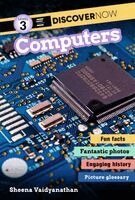
You see computers every day, but do you know how they work? Discover Now! MIT Kids presents an exciting “how things work” leveled reader series tailor-made for the next generation of innovators, scientists, and thinkers. Did you know that the first computers were as big as a room? Or that they could work only with numbers, not pictures or sound? Computers have improved vastly, growing smaller and more diverse in what they can do. But what exactly is a computer? How many types do you see around you? How can computers help people in their everyday lives—from fast-food restaurants to factories, airplanes to movie studios? Have you ever looked inside a computer? For kids who are curious about the world around them comes Discover Now!, a welcoming leveled reader series written by experts and developed with educators on a range of STEM subjects. Each fact-filled nonfiction book begins with an informative note to caregivers and a table of contents, is packed with colorful photos, and ends with a picture glossary and index. This book is a Level 3 reader, perfect for curious kids who are becoming confident in their reading skills.
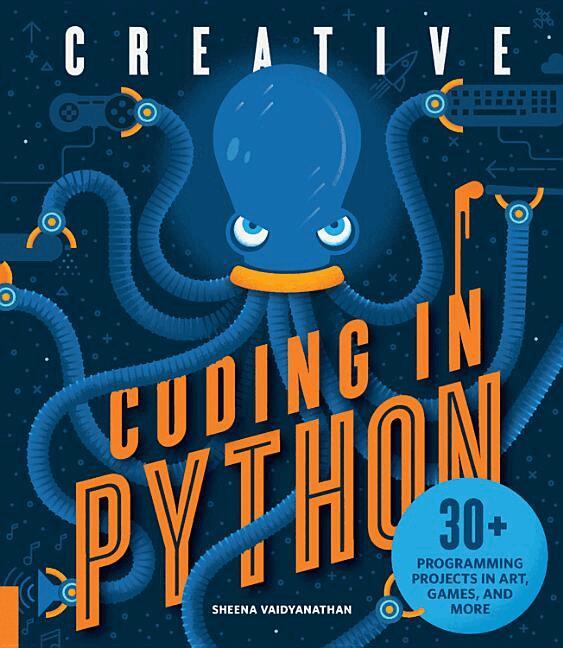
Creative Coding in Python teaches kids the fundamentals of computer programming and demonstrates how to code 30+ fun, creative projects using Python, a free, intuitive, open-source programming language that's one of the top five most popular worldwide.Computer science educator Sheena Vaidyanathan helps kids understand the fundamental ideas of computer programming and the process of computational thinking using illustrations, flowcharts, and pseudocode, then shows how to apply those essentials to code exciting projects in Python:Arcade games and apps: Understand GUI (graphical user interfaces) and create your own arcade games and apps.Geometric art: Use turtle graphics to create original masterpieces.Interactive fiction: Explore booleans and conditionals to invent “create your own adventure” games.Chatbots: Discover variables, strings, integers, and more to design conversational programs.Dice games: Reuse code to devise games of chance.What’s next? Look at exciting ways to use your powerful new skills and expand your knowledge of coding in Python.Creative Coding in Python gives kids the tools they need to create their own computer programs.
You see computers every day, but do you know how they work? Discover Now! MIT Kids presents an exciting “how things work” leveled reader series tailor-made for the next generation of innovators, scientists, and thinkers. Did you know that the first computers were as big as a room? Or that they could work only with numbers, not pictures or sound? Computers have improved vastly, growing smaller and more diverse in what they can do. But what exactly is a computer? How many types do you see around you? How can computers help people in their everyday lives—from fast-food restaurants to factories, airplanes to movie studios? Have you ever looked inside a computer? For kids who are curious about the world around them comes Discover Now!, a welcoming leveled reader series written by experts and developed with educators on a range of STEM subjects. Each fact-filled nonfiction book begins with an informative note to caregivers and a table of contents, is packed with colorful photos, and ends with a picture glossary and index. This book is a Level 3 reader, perfect for curious kids who are becoming confident in their reading skills.
Creative Coding in Python teaches kids the fundamentals of computer programming and demonstrates how to code 30+ fun, creative projects using Python, a free, intuitive, open-source programming language that's one of the top five most popular worldwide.Computer science educator Sheena Vaidyanathan helps kids understand the fundamental ideas of computer programming and the process of computational thinking using illustrations, flowcharts, and pseudocode, then shows how to apply those essentials to code exciting projects in Python:Arcade games and apps: Understand GUI (graphical user interfaces) and create your own arcade games and apps.Geometric art: Use turtle graphics to create original masterpieces.Interactive fiction: Explore booleans and conditionals to invent “create your own adventure” games.Chatbots: Discover variables, strings, integers, and more to design conversational programs.Dice games: Reuse code to devise games of chance.What’s next? Look at exciting ways to use your powerful new skills and expand your knowledge of coding in Python.Creative Coding in Python gives kids the tools they need to create their own computer programs.