Sherman E. Wilcox – författare
Visar alla böcker från författaren Sherman E. Wilcox. Handla med fri frakt och snabb leverans.
4 produkter
4 produkter
E-bok
Engelska, 2007554 kr
Läs direkt efter köp
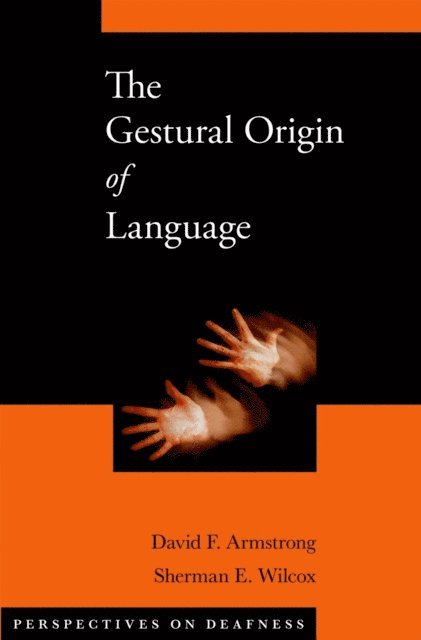
In The Gestural Origin of Language, Sherman Wilcox and David Armstrong use evidence from and about sign languages to explore the origins of language as we know it today. According to their model, it is sign, not spoken languages, that is the original mode of human communication. The authors demonstrate that modern language is derived from practical actions and gestures that were increasingly recognized as having the potential to represent, and hence to communicate. In other words, the fundamental ability that allows us to use language is our ability to use pictures or icons, rather than linguistic symbols. Evidence from the human fossil record supports the authors'' claim by showing that we were anatomically able to produce gestures and signs before we were able to speak fluently. Although speech evolved later as a secondary linguistic communication device that eventually replaced sign language as the primary mode of communication, speech has never entirely replaced signs and gestures. As the first comprehensive attempt to trace the origin of grammar to gesture, this volume will be an invaluable resource for students and professionals in psychology, linguistics, and philosophy.
Inbunden, Engelska, 2007
732 kr
Skickas inom 5-8 vardagar
In The Gestural Origin of Language, Wilcox and Armstrong use evidence from and about sign languages to explore the origins of language as we know it today. According to their model, it is sign, not spoken languages, that is the original mode of human communication.The authors demonstrate that modern language is derived from practical actions and gestures that were increasingly recognised as having the potential to represent and hence to communicate. In other words, the fundamental ability that allows us to use language is our ability to use pictures of icons, rather than linguistic symbols. Evidence from the human fossil record supports the authors' claim by showing that we were anatomically able to produce gestures and signs before we were able to speak fluently. Although speech evolved later as a secondary linguistic communication device that eventually replaced sign language as the primary mode of communication, speech has never entirely replaced signs and gestures.
E-bok
PDF, Engelska, 2007554 kr
Läs direkt efter köp
In The Gestural Origin of Language, Sherman Wilcox and David Armstrong use evidence from and about sign languages to explore the origins of language as we know it today. According to their model, it is sign, not spoken languages, that is the original mode of human communication. The authors demonstrate that modern language is derived from practical actions and gestures that were increasingly recognized as having the potential to represent, and hence to communicate. In other words, the fundamental ability that allows us to use language is our ability to use pictures or icons, rather than linguistic symbols. Evidence from the human fossil record supports the authors'' claim by showing that we were anatomically able to produce gestures and signs before we were able to speak fluently. Although speech evolved later as a secondary linguistic communication device that eventually replaced sign language as the primary mode of communication, speech has never entirely replaced signs and gestures. As the first comprehensive attempt to trace the origin of grammar to gesture, this volume will be an invaluable resource for students and professionals in psychology, linguistics, and philosophy.
Häftad, Engelska, 1995
656 kr
Skickas inom 7-10 vardagar
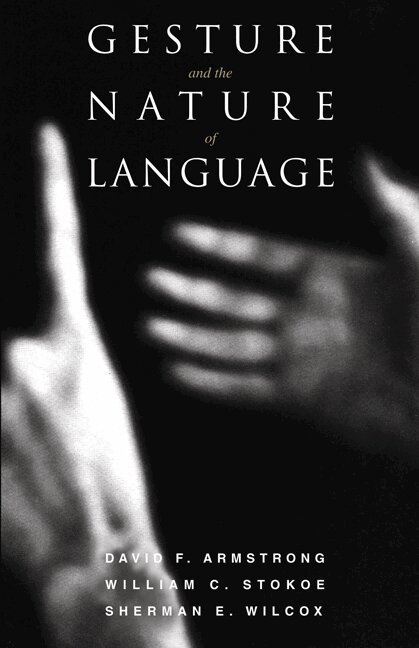
This book proposes a radical alternative to dominant views of the evolution of language, and in particular the origins of syntax. The authors argue that manual and vocal communication developed in parallel, and that the basic elements of syntax are intrinsic to gesture. They draw on evidence from areas such as primatology, anthropology, and linguistics, to present a groundbreaking account of the notion that language emerged through visible bodily action. They go on to examine the implications of their findings for linguistic theory and theories of the biological evolution of the capacity for language. Written in a clear and accessible style, Gesture and the Nature of Language will be indispensable reading for all those interested in the origins of language.