Shibusawa Masahide – författare
Visar alla böcker från författaren Shibusawa Masahide. Handla med fri frakt och snabb leverans.
4 produkter
4 produkter
E-bok
PDF, Engelska, 2025797 kr
Läs direkt efter köp
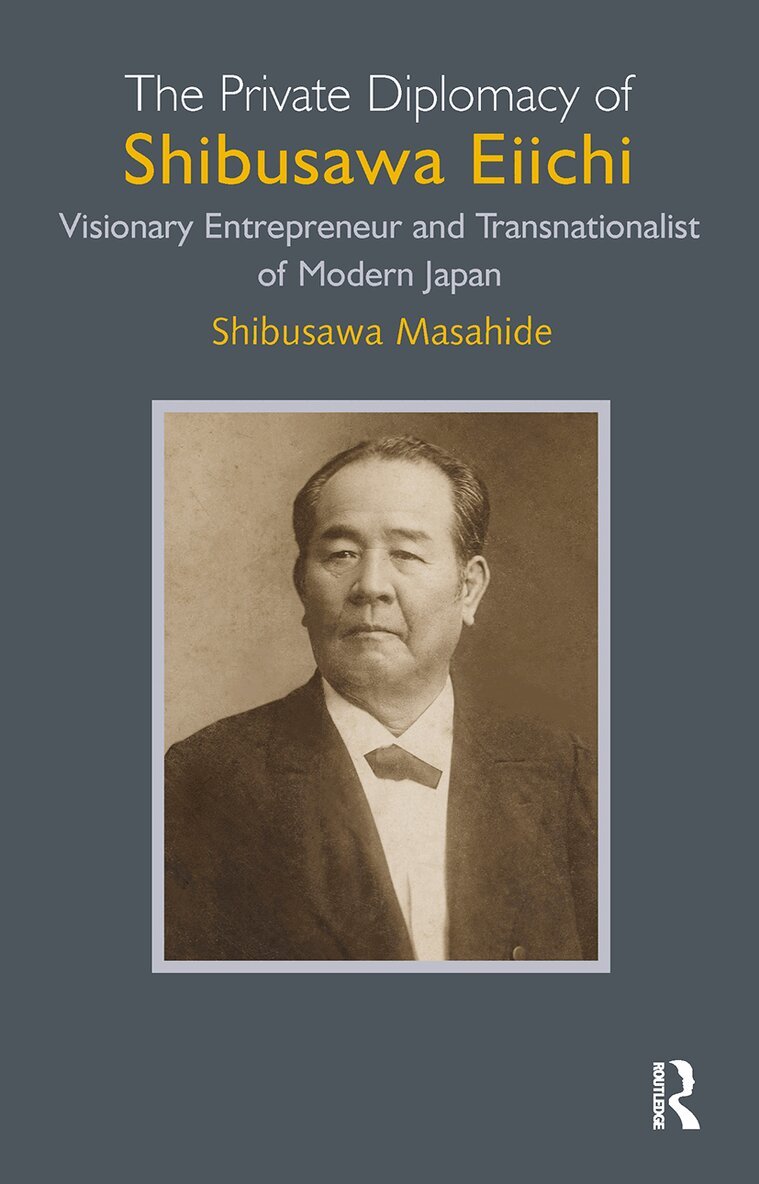
"e;This book offers an account of the life of Shibusawa Eiichi, who may be considered the first 'internationalist' in modern Japan, written by his great grandson Masahide and published in 1970 under the title, Taiheiyo ni kakeru hashi (Building Bridges Over the Pacific). Japan had a tortuous relationship with internationalism between 1840, when Shibusawa was born, and 1931, the year the nation invaded Manchuria and when he passed away. The key to understanding Shibusawa's thoughts against the background of this history, the author shows, lies in the concept of 'people's diplomacy,' namely an approach to international relations through non-governmental connections. Such connections entail more transnational than international relations. In that sense, Shibusawa was more a transnationalist than an internationalist thinker. Internationalism presupposes the prior existence of sovereign states among which they cooperate to establish a peaceful order. The best examples are the League of Nations and the United Nations. Transnationalism, in contrast, goes beyond the framework of sovereign nations and promotes connections among individuals and non-governmental organizations. It could be called "e;globalism"e; in the sense that transnationalism aims at building bridges across the globe apart from independent nation-states. In that sense Shibusawa was a pioneering globalist. It was only in the 1990s that expressions like globalism and globalization came to be widely used. This was more than sixty years after Shibusawa Eiichi's death, which suggests how pioneering his thoughts were."e; [Akira Iriye]
E-bok
Engelska, 2025797 kr
Läs direkt efter köp
"e;This book offers an account of the life of Shibusawa Eiichi, who may be considered the first 'internationalist' in modern Japan, written by his great grandson Masahide and published in 1970 under the title, Taiheiyo ni kakeru hashi (Building Bridges Over the Pacific). Japan had a tortuous relationship with internationalism between 1840, when Shibusawa was born, and 1931, the year the nation invaded Manchuria and when he passed away. The key to understanding Shibusawa's thoughts against the background of this history, the author shows, lies in the concept of 'people's diplomacy,' namely an approach to international relations through non-governmental connections. Such connections entail more transnational than international relations. In that sense, Shibusawa was more a transnationalist than an internationalist thinker. Internationalism presupposes the prior existence of sovereign states among which they cooperate to establish a peaceful order. The best examples are the League of Nations and the United Nations. Transnationalism, in contrast, goes beyond the framework of sovereign nations and promotes connections among individuals and non-governmental organizations. It could be called "e;globalism"e; in the sense that transnationalism aims at building bridges across the globe apart from independent nation-states. In that sense Shibusawa was a pioneering globalist. It was only in the 1990s that expressions like globalism and globalization came to be widely used. This was more than sixty years after Shibusawa Eiichi's death, which suggests how pioneering his thoughts were."e; [Akira Iriye]
Häftad, Engelska, 2025
693 kr
Skickas inom 10-15 vardagar
“This book offers an account of the life of Shibusawa Eiichi, who may be considered the first ‘internationalist’ in modern Japan, written by his great grandson Masahide and published in 1970 under the title, Taiheiyo ni kakeru hashi (Building Bridges Over the Pacific). Japan had a tortuous relationship with internationalism between 1840, when Shibusawa was born, and 1931, the year the nation invaded Manchuria and when he passed away. The key to understanding Shibusawa’s thoughts against the background of this history, the author shows, lies in the concept of ‘people’s diplomacy,’ namely an approach to international relations through non-governmental connections. Such connections entail more transnational than international relations. In that sense, Shibusawa was more a transnationalist than an internationalist thinker. Internationalism presupposes the prior existence of sovereign states among which they cooperate to establish a peaceful order. The best examples are the League of Nations and the United Nations. Transnationalism, in contrast, goes beyond the framework of sovereign nations and promotes connections among individuals and non-governmental organizations. It could be called “globalism” in the sense that transnationalism aims at building bridges across the globe apart from independent nation-states. In that sense Shibusawa was a pioneering globalist. It was only in the 1990s that expressions like globalism and globalization came to be widely used. This was more than sixty years after Shibusawa Eiichi’s death, which suggests how pioneering his thoughts were.” [Akira Iriye]
Inbunden, Engelska, 2018
1 533 kr
Skickas inom 10-15 vardagar
“Japan had a tortuous relationship with internationalism between 1840, when Shibusawa was born, and 1931, the year the nation invaded Manchuria and when he passed away. The key to understanding Shibusawa’s thoughts against the background of this history, the author shows, lies in the concept of ‘people’s diplomacy’.” [Akira Iriye]