Shifra Shvarts – författare
Visar alla böcker från författaren Shifra Shvarts. Handla med fri frakt och snabb leverans.
4 produkter
4 produkter
E-bok
Engelska, 2022316 kr
Läs direkt efter köp
Ringworm and Irradiation: The Historical, Medical, and Legal Implications of the Forgotten Epidemic explores the history of the disease and the use of irradiation for the treatment of ringworm, an epidemic that was spread mainly among poor children in countries across the world in the first half of the 20th century.At its peak in the 1940 and 50s, children around the globe were treated with radiation therapy to prevent and eradicate ringworm of the scalp, a treatment that led years later to latent health risk to develop tumors, malignancies, thyroid cancer, brain tumors, and other health effects among the exposed population. The actions taken by the National Cancer Institute (NCI) and the US Food and Drug Administration to launch a nationwide campaign warning the public, and thus the medical community, about the late health effects of ionizing radiation received in childhood are evidenced in this compilation.
Häftad, Engelska
276 kr
Skickas inom 3-6 vardagar
Del 2 - Rochester Studies in Medical History
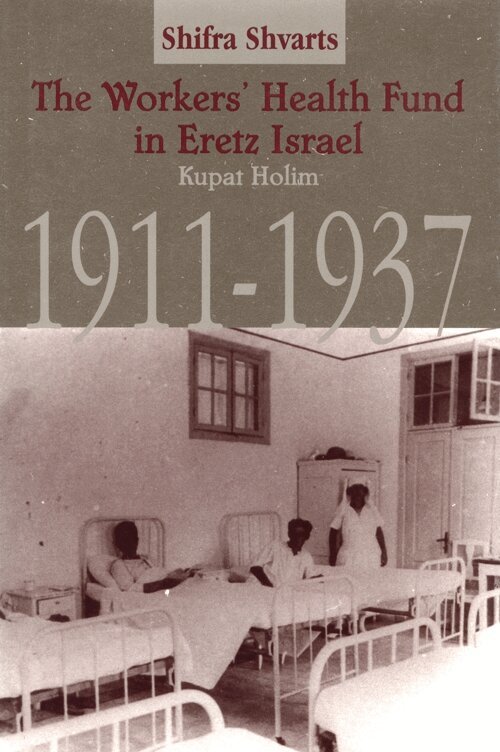
Workers' Health Fund in Eretz Israel
Kupat Holim, 1911-1937
Inbunden, Engelska, 2002
958 kr
Tillfälligt slut
The first study to research the history of the health funds established by Jewish laborers in Israel.The history of Kupat Holim, the health organization of workers in Israel, began at the 2nd Convention of Jewish agricultural workers in Judea in December 1911. Due to the lack of health services within the economic means of the workers, and the refusal of the farmer-employers to extend health services to their employees, the Jewish agricultural workers in Eretz-Israel -- at that time, a distant province of the far-flung Ottoman empire -- decided to establish a workers' health fund [kupat holim in Hebrew]. In the years 1912-15, two funds similar to the ones in Judea were also established in the north and center of the country. In the first years, the health funds did not provide workers with medical assistance on their own. Only in 1913, with the outbreak of the First World War, were the health funds transformed from insuring organizations into ones that provided medical assistance services themselves.With the establishment of the General Federation of Labor [1920], the health funds were amalgamated into a single organization -- the Federation's Kupat Holim [1921]. The unification of Kupat Holim ultimately determined theorganization's future -- transforming it from a small, local, temporary body with a few dozen members into a national entity and a key factor in health services in Israel to this day. This volume seeks to describe the growth of Kupat Holim up to the point where it was transformed into a central health organization in Israel; its relationship with its parent-organization, the General Federation of Labor and its rivalry with its competitor in the health field, Hadassah; its evolution from an organization solely for laborers to one open to all; the efforts on the part of Kupat Holim during the British Mandate [1918-1948] to bring about legislation for a compulsory health insurance law; and the formulation of the basic principle that underlie the work of Kupit Holim to this day -- the principle of national and social responsibility for the provision of equal health services to all.Dr. Shifra Shvarts is the head of the Health Systems Management Department of the Faculty of Health Sciences and School of Management at Ben-Gurion University.
Del 13 - Rochester Studies in Medical History
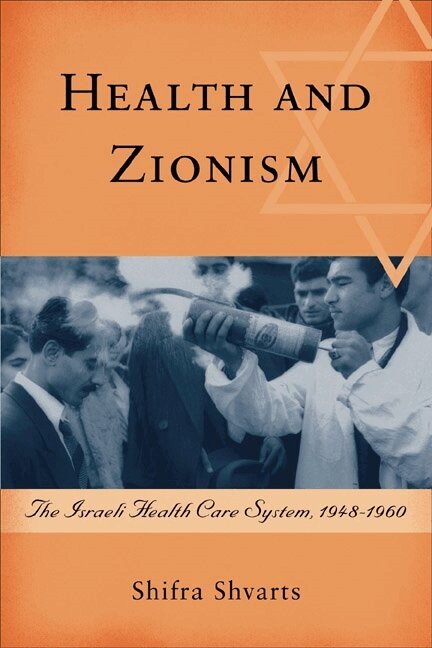
Health and Zionism
The Israeli Health Care System, 1948-1960
Inbunden, Engelska, 2008
958 kr
Tillfälligt slut
An exploration of the major conflicts and historic events that shaped the current Israeli health care system.In this follow-up to her 2002 book, The Workers' Health Fund in Eretz, Israel: Kupat Holim, 1911-1937, historian Shifra Shvarts investigates the political and social forces that influenced Israel's health care system and policy during the early years of state building. Among the struggles Shvarts explores in this penetrating study are the debate over immigration health policy and the Law of Return, enacted in 1950; the battles over universal healthcare between the Workers' Health Fund and the Israeli government led by prime minister Ben Gurion; the urgent organization of military medical services during wartime; and the contested establishment of renown civilian medical facilities.These early conflicts have had far-reaching implications that continue to be felt throughout Israeli society. While many European countries successfully established unified, state-run health care systems, Israel's political rivalries and social turbulence gave rise to a mélange of "sick funds," large and small, public and private, that influence and complicate the delivery of health care to this day. Health and Zionism: The Israeli HealthCare System, 1948-1960, sheds light on the major conflicts, leaders, and historic events that shaped the current Israeli health care system, and has relevance to developing health care systems worldwide.Shifra Shvarts is Associate Professor, Faculty of Health Sciences, Ben Gurion University, Israel, and is author of The Workers' Health Fund in Eretz Israel Kupat Holim, 1911-1937 (University of Rochester Press, 2002).